
In partnership with 
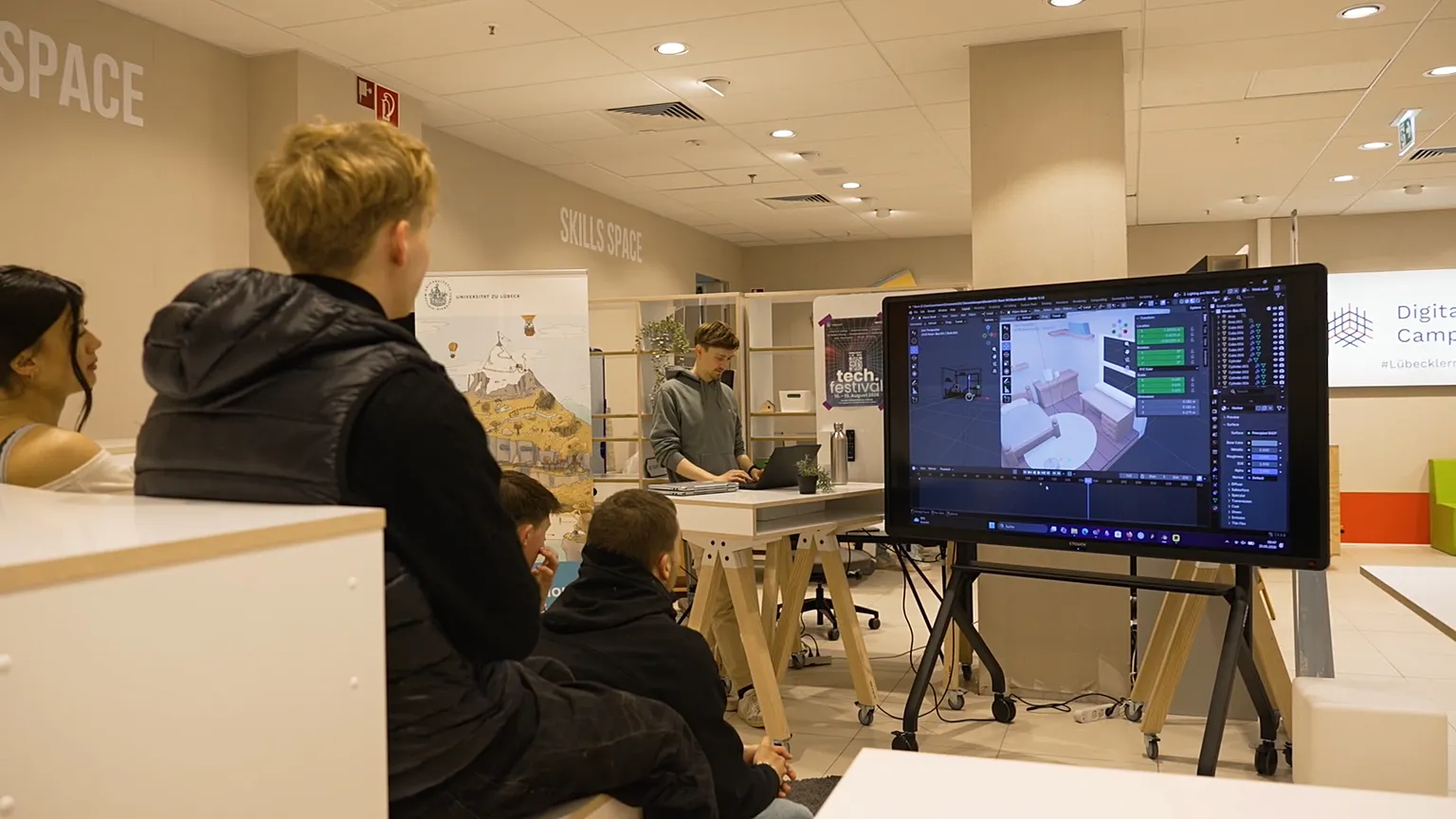
The German state of Schleswig-Holstein has inaugurated a digital campus featuring more than 600 courses available both online and onsite, covering AI, virtual and augmented reality, and other advanced technologies. The program is accessible to everyone at no cost.
In today’s digital era, swift learning is essential. Established in March 2024, the Digital Learning Campus (DLC) capitalizes on this educational chance. Situated in Schleswig-Holstein—home to 2.9 million residents—this innovative learning environment blends online and face-to-face opportunities. Eleven cities, including Flensburg, Enge-Sande, Schleswig, Eckernförde, Kiel, Heide, Neumünster, Itzehoe, Elmshorn, and Bad Oldesloe, provide venues located in uncommon settings like gardens, marketplaces, and shopping centres, as exemplified by Lübeck. Participants only need to show up and enroll in any of the approximately twelve workshops offered. Prior technical knowledge of programming, artificial intelligence, virtual reality, or robotics isn’t required. A variety of regional companies and universities employ these modules to demonstrate expertise, educate the public, and boost learning. This pilot initiative receives partial funding from the European Union and is administered by the Schleswig-Holstein Ministry of Education.
 ADVERTISEMENT
  ADVERTISEMENT
Thomas Lange, who leads the DLC initiative in Lübeck, explains that hosting workshops outside traditional venues such as universities, schools, and businesses enhances their appeal. Additionally, these courses are delivered by entrepreneurs and university academics, ensuring that the instruction aligns closely with the demands of the labour market.
Thomas Lange Head of the DLC project in Lübeck
For instance, the Lübeck branch of the DLC encourages youth, particularly girls, to explore careers in engineering, mathematics, physics, and technology. The MINT4Girls association, formed by female students from Munich University of Applied Sciences, aims to boost female engagement in STEM fields and supports around fifty local young learners. The digital campus facilitates 400 in-person courses, with this visit representing a vital element of the MINT4Girls program, according to project manager Printha Tharmabalan.
Printha Tharmabalan Project manager, MINT4Girls  View Gallery 4 Photos
Extracurricular subjects for the future
DLC also serves as an online educational platform, hosting 230 courses with durations spanning from one to six hours. These courses address subjects that schools may not cover but are relevant in the current environment and crucial for future employment. Enrolment is just a single click away. “Several teachers recommended I check this out and I find it quite useful. I’m not sure if it earns me points, but receiving a certificate to present during applications is definitely beneficial,” shares Arthur Feliz Redlin, a student based in Kiel.
With 5,000 enrolled students, 20,000 classes, and 60,000 visits, the DLC platform plans to grow further, explains Stefan Lemke, Policy Adviser for Future Skills at Schleswig-Holstein’s Ministry of Education.
Stefan Lemke Policy Adviser for Future Skills, Ministry of Education of Schleswig-Holstein
The entire budget allocated for this initiative amounts to €38 million: with 50% funded by the Schleswig-Holstein region, 40% covered by the European cohesion policy, and the remaining 10% contributed by 29 partners, including various universities and public institutions.