
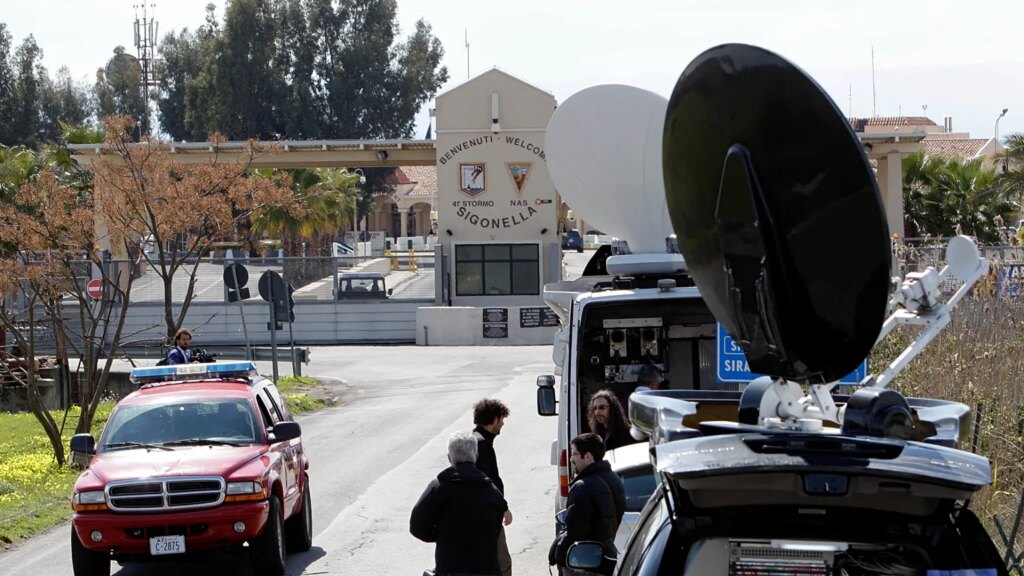
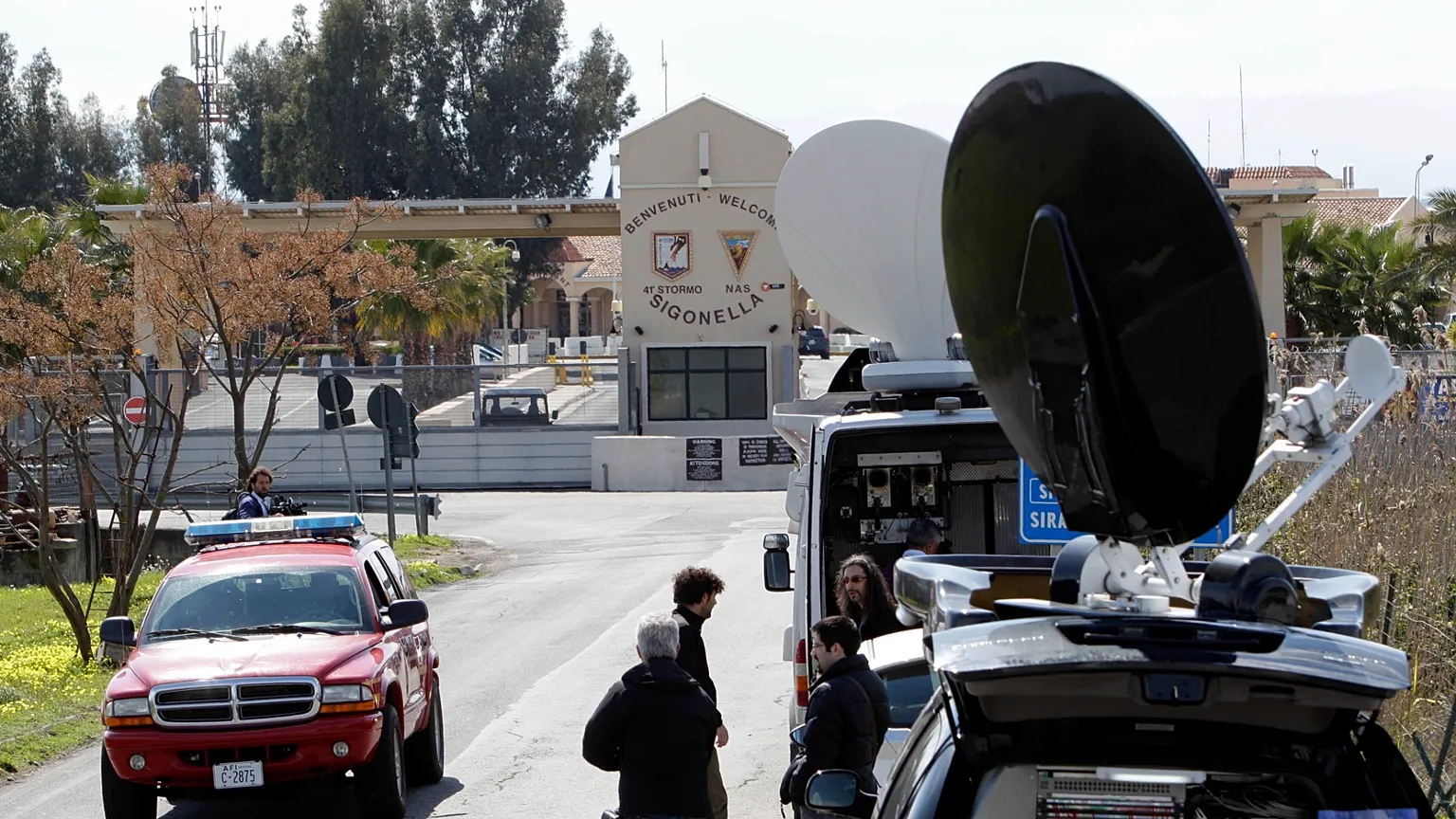
Allegations online claim Italy blocked US military aircraft from landing at the Sigonella base in Sicily due to political motives related to the Iran conflict. Nevertheless, official accounts and numerous reports indicate the issue was primarily procedural rather than politically driven.
Between 27 and 28 March, Italy declined a request from the US military to permit aircraft landing at the Naval Air Station Sigonella in Sicily, prior to their onward flight to the Middle East.
 ADVERTISEMENT
  ADVERTISEMENT
This decision arrived shortly before Spain declared it would close its airspace to US aircraft allegedly engaged in strikes on Iran, sparking speculation about a joint political gesture by the two European nations.
On social platforms, some users interpreted the refusal as a political message from Prime Minister Giorgia Meloni, implying Italy was distancing itself from US policies or reacting to wider NATO-Iran tensions.
However, these narratives misrepresent the actual circumstances.
A procedural matter
According to reporting by the Italian newspaper Corriere della Sera, Washington sought approval to utilize Sigonella after the aircraft had already departed the United States. Italian laws require prior authorisation for foreign military aircraft accessing national bases.
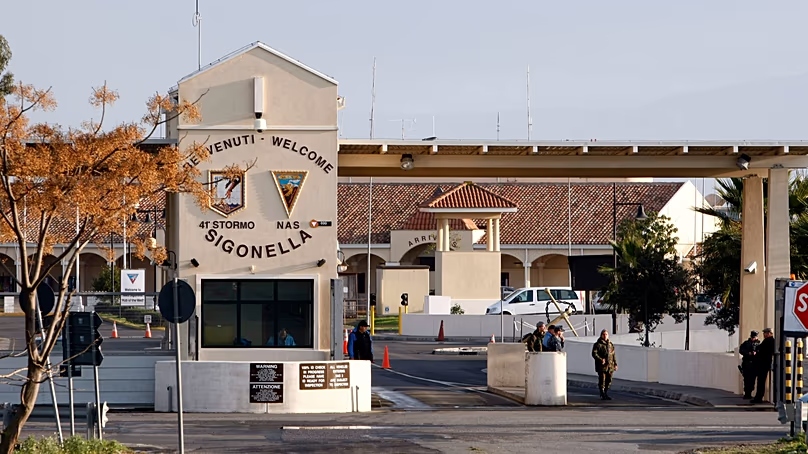
This protocol is part of established administrative procedures, meaning each request is reviewed beforehand and individually, the Italian government has explained.
In this particular case, since the application arrived post-departure, it failed to fulfill the required conditions and was thus rejected.
What do the agreements specify?
The deployment and operations of US military personnel in Italy are regulated by bilateral defence accords initiated in 1954 during NATO’s formative period, and these agreements have been updated regularly since. They grant the US access to specific facilities, including Sigonella, but under explicitly defined conditions.
Generally, routine tasks fall under what Italian authorities classify as «technical authorisations» — encompassing logistics, transportation, and support activities.
These missions are frequently labeled «non-kinetic,» indicating they do not entail direct combat or physical force.
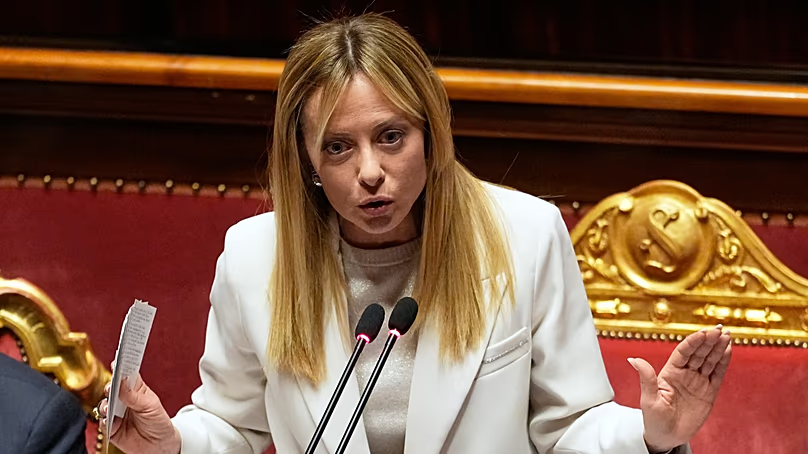
In an interview with Italian radio RTL 102.5 earlier in March, Prime Minister Giorgia Meloni reaffirmed that these accords permit only logistical and non-combat operations at the base, emphasizing that “no use of the base beyond these agreements will occur.” She noted that requests for missions involving military action would be assessed individually, and possibly require parliamentary approval.
Broadening on this, during her March 11th address to the Senate, Meloni underscored Italy’s cautious stance stating: «Italy is not at war, nor is it seeking to enter one,» and stressed that any changes concerning the use of Italian bases must follow proper political procedures.
What has the government communicated?
According to an official communiqué from the Italian government, the refusal to grant US aircraft access to the base should be viewed through an established legal and procedural lens rather than interpreted as a political signal.
Palazzo Chigi, the prime minister’s official residence, clarified in its press release that Italy “operates fully in compliance with prevailing international agreements” and adheres to the policy guidelines presented to parliament.
The statement characterizes the government’s stance as “transparent” and supported by parliamentary consensus, with no alteration in policy.
Moreover, it highlights the decision-making process in practice, noting that every request for military base usage is “carefully reviewed on an individual basis,” following procedures that “have consistently been applied.”
This points to a systematic evaluation rather than an isolated or politically motivated denial.
These declarations emerge amid escalating tensions within NATO, after former President Donald Trump renewed critiques of the alliance and its members’ leadership, suggesting the possibility of a US exit and accusing European partners of inadequate military contribution.
European leaders, such as French President Emmanuel Macron, have warned that such rhetoric might weaken alliance unity and strategic reliability, calling instead for sustained cooperation.
In the UK, Prime Minister Keir Starmer reiterated NATO’s fundamental role in collective defense, while acknowledging a growing transatlantic divide regarding security priorities.