
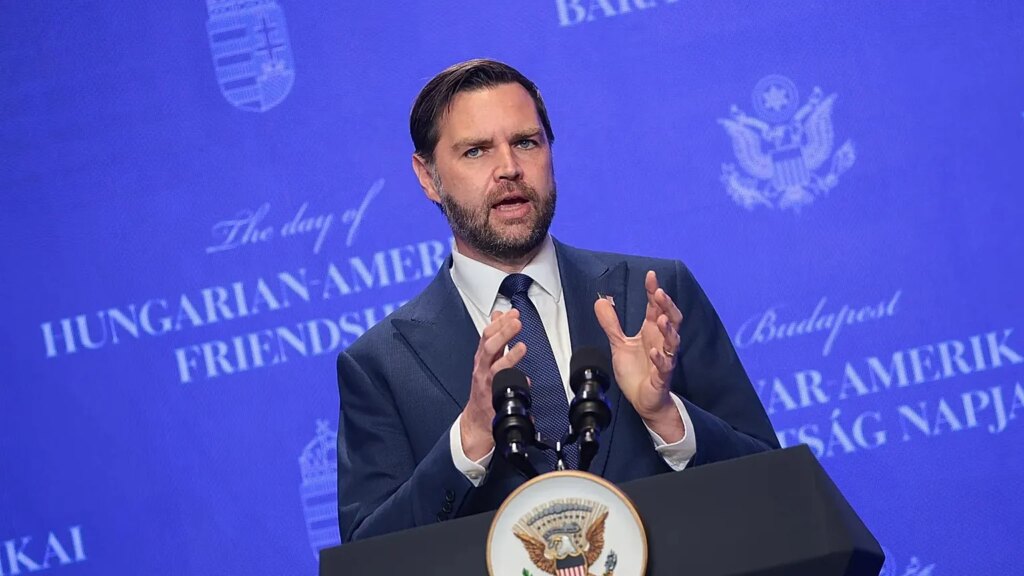
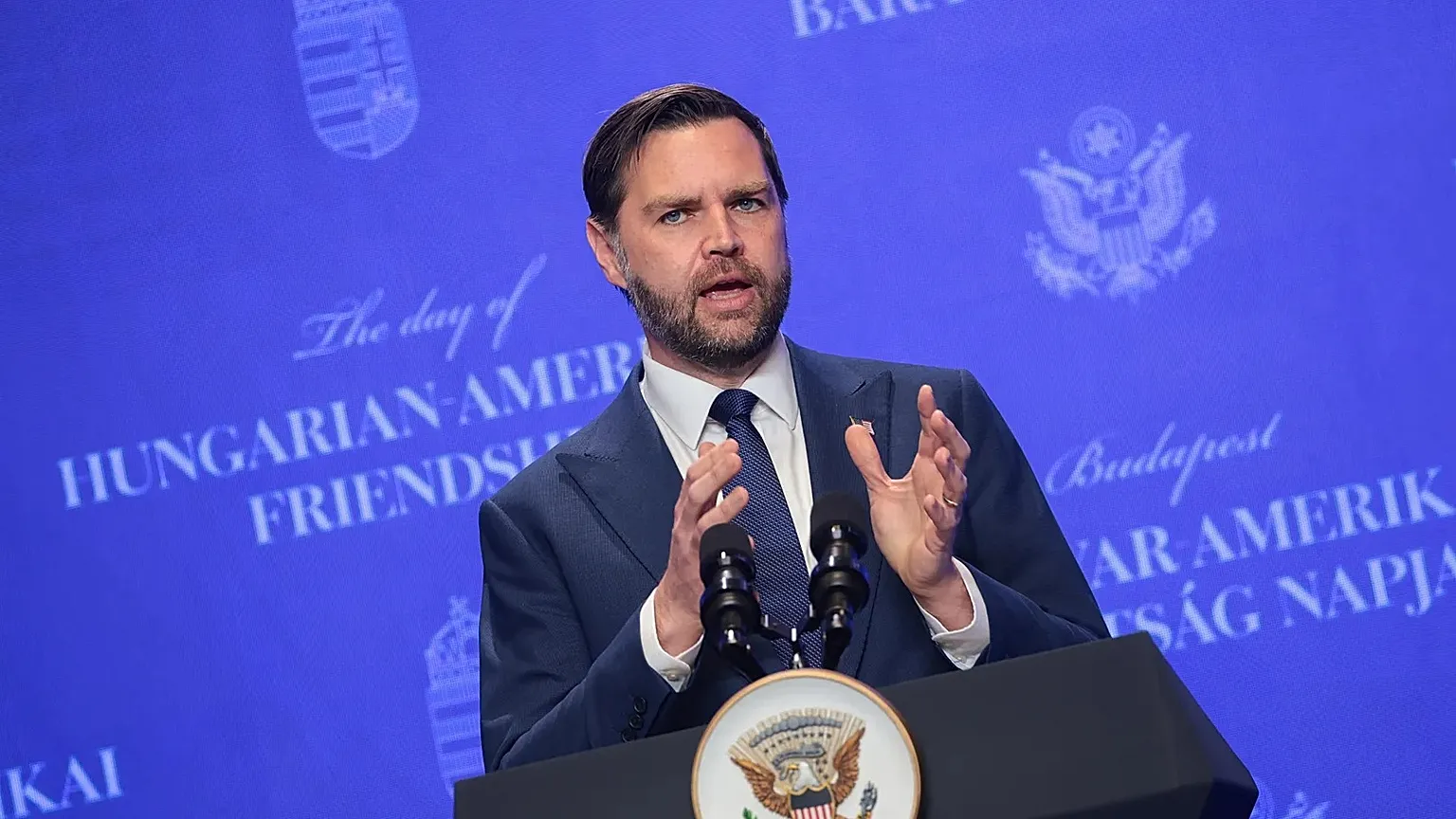
Vance accused the European Union of meddling in Hungary’s election campaign during his visit to Budapest. Standing beside Orbán, Vance called the Hungarian Prime Minister a “model” for Europe.
JD Vance, the US Vice-President, charged the European Union with interfering in Hungary’s electoral process and enforcing censorship during his visit to Budapest, just days before a crucial vote on Sunday that could bring substantial governmental change.
 ADVERTISEMENT
  ADVERTISEMENT
Vance’s visit took place five days prior to Sunday’s elections, where Prime Minister Viktor Orbán confronts the toughest opposition he has seen in 16 years. The Tisza party, headed by Péter Magyar, currently leads Orbán’s Fidesz according to recent polls.
During a joint news briefing, Vance complimented Orbán’s governance, stating it “could serve as an example for the entire continent,” while sharply criticising the authorities in Brussels.
“Brussels bureaucrats have attempted to undermine Hungary’s economy, weaken its energy autonomy, and increase costs for Hungarian consumers,” Vance stated, claiming that the EU’s measures were politically driven to penalise Orbán for opposing liberal political norms.
He also criticised the digital regulations from the bloc, such as the Digital Services Act, which obliges platforms to combat misinformation and harmful materials, though he did not present supporting proof.
“Why are officials in Brussels directing social media companies on what information they must provide to Hungarian voters?” he questioned, arguing that Hungarians are fully capable of making their own electoral choices.
Moreover, Vance accused Ukrainian intelligence agencies of attempting to influence the Hungarian elections.
“We are aware that some elements within Ukraine’s intelligence services are trying to tilt the scales,” he added, without offering evidence.
The Hungarian administration has repeatedly asserted that Kyiv and Brussels aim to unseat Orbán and has taken steps to reinforce protections around critical energy infrastructures, citing risks of foreign meddling.
Vance, who has openly admired Orbán’s efforts to eliminate what he views as liberal bias in universities, pledged support for the Hungarian Prime Minister in the campaign’s final days.
«He expressed a strong intention to assist as much as possible,» reporters were told in Budapest.
Former US President Donald Trump has also expressed support for Orbán, calling him “a true ally” and commending his policies on migration. Trump has a history of backing several right-wing figures internationally.
Relations between Hungary and the EU have deteriorated. Orbán vetoed a €90bn aid package for Ukraine in March, while Brussels has withheld billions of euros in funding due to concerns over corruption and legal standards. Hungary has additionally faced criticism within the EU for its close ties with Russia and reliance on Russian energy supplies.
Meanwhile, opposition leader Péter Magyar warned against foreign interference in the electoral process, urging respect for Hungary’s sovereignty from all nations.
“No external country should meddle in Hungarian elections,” he declared. “This is our nation.”
A poll released last week by the 21 Research Institute showed the opposition Tisza party leading decided voters with 56% support, compared to 37% for Fidesz — a difference of 19 percentage points.
Despite his support for Orbán, Vance indicated that Washington is ready to collaborate with whichever candidate wins the election.