
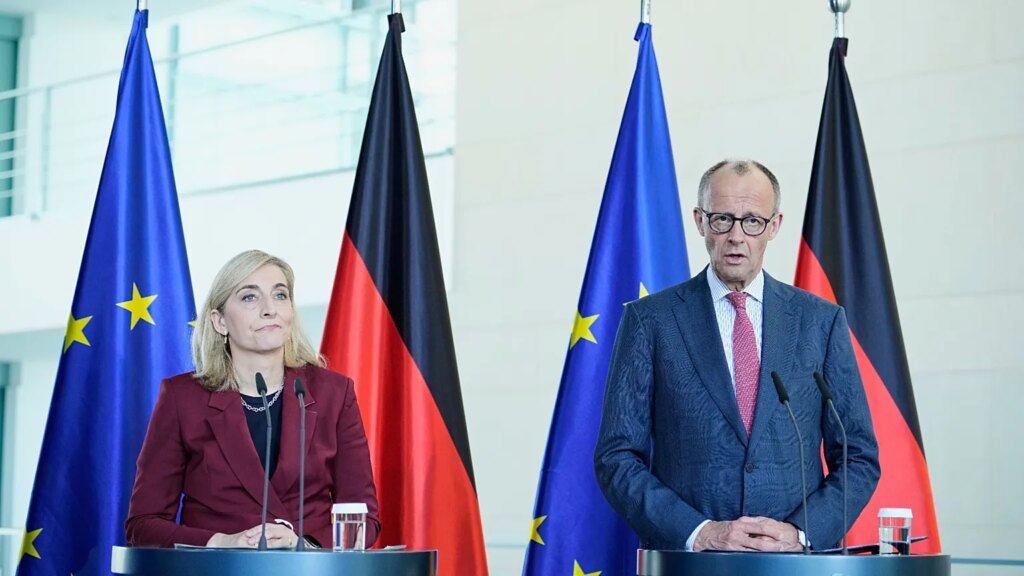
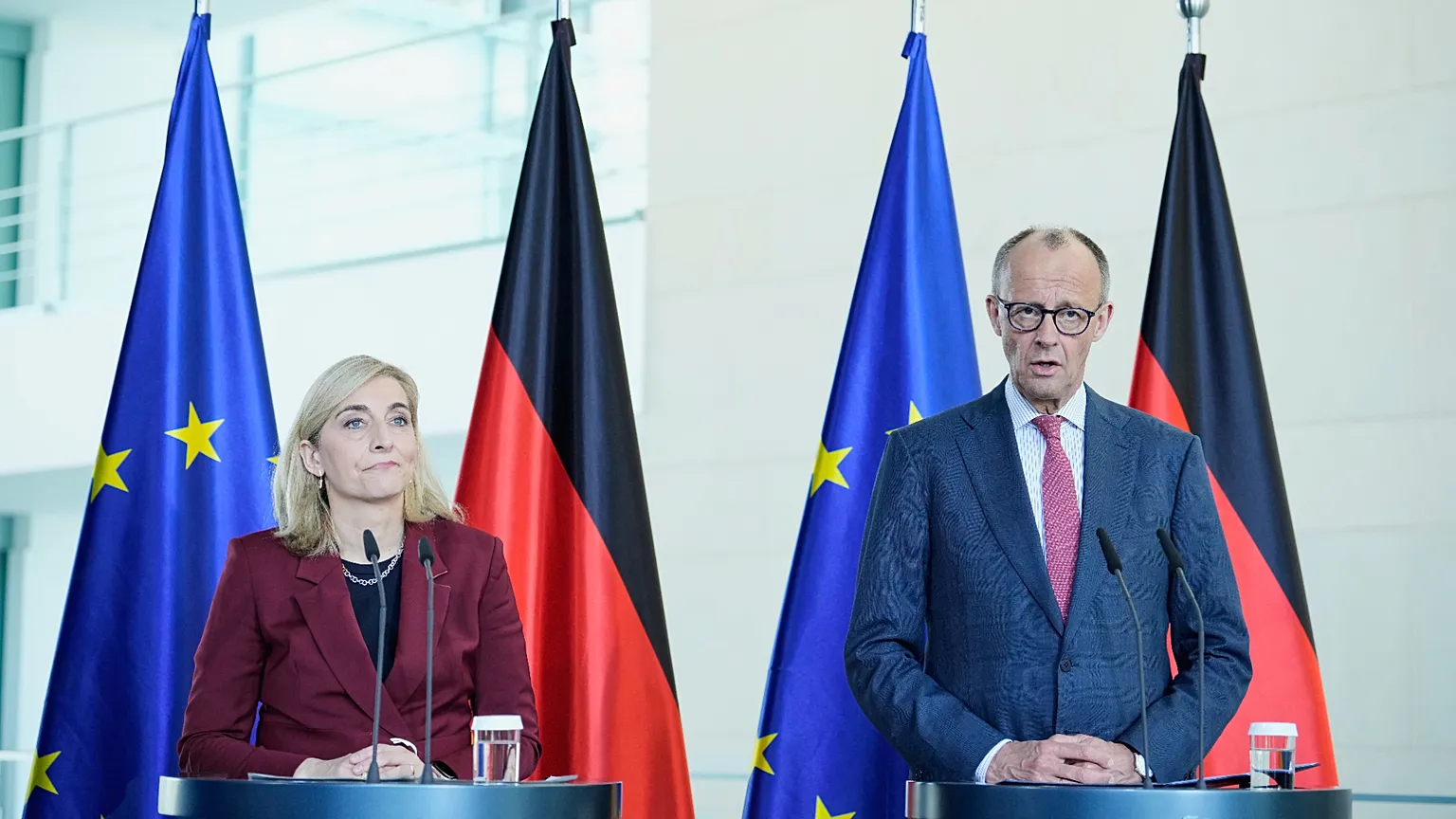
Nina Warken will take over from Thorsten Frei (CDU) as chancellery chief. Subsequently, Carsten Linnemann, previously CDU general secretary under Merz, is slated to replace Warken as health minister.
On Friday, German Chancellor Friedrich Merz unveiled a significant cabinet reshuffle in preparation for upcoming critical regional elections.
 ADVERTISEMENT
  ADVERTISEMENT
This decision aims to revitalize Merz’s faltering administration, which has yet to deliver on its commitment to boost economic growth.
Polls indicate waning support for Merz alongside rising popularity for the far-right Alternative for Germany (AfD), as attention focuses on the state elections in Berlin, Saxony-Anhalt, and Mecklenburg-Vorpommern.
The reshuffle
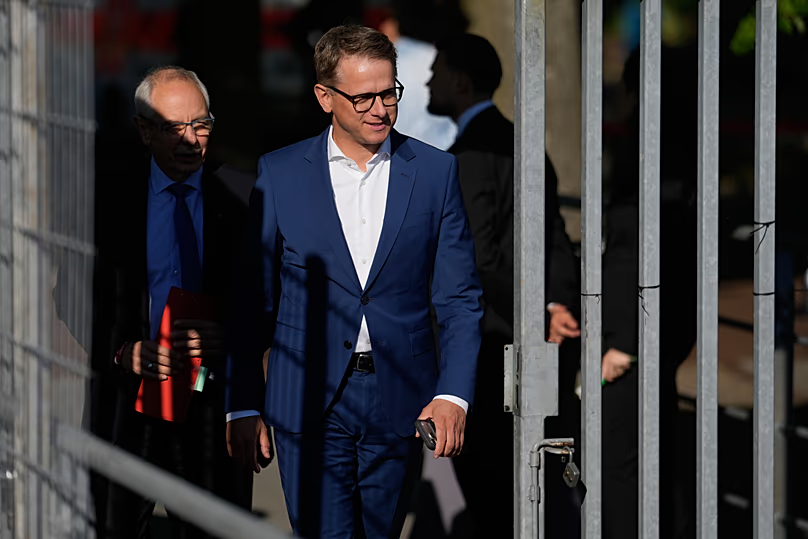
Carsten Linnemann, who served as CDU general secretary, is poised to succeed Nina Warken as health minister, while Warken will replace Thorsten Frei as head of the chancellery.
Following Jens Spahn’s resignation last week amid a surrogacy scandal, Frei was already appointed as the new leader of the Union’s parliamentary faction.
Spahn and his husband publicly revealed their parenthood through a surrogate in the United States, provoking controversy because surrogacy is prohibited in Germany and remains opposed by the CDU.
Additionally, Transport Minister Patrick Schnieder is believed to be stepping down, as initially reported by Germany’s Bild newspaper, with Bundestag member Fritz Güntzler considered a potential successor.
Over the weekend, Merz suggested in an interview that Spahn’s resignation might open the door for a broader cabinet reshuffle.
Further specifics about the personnel changes are expected to be announced by Merz tomorrow, with additional adjustments likely forthcoming.