
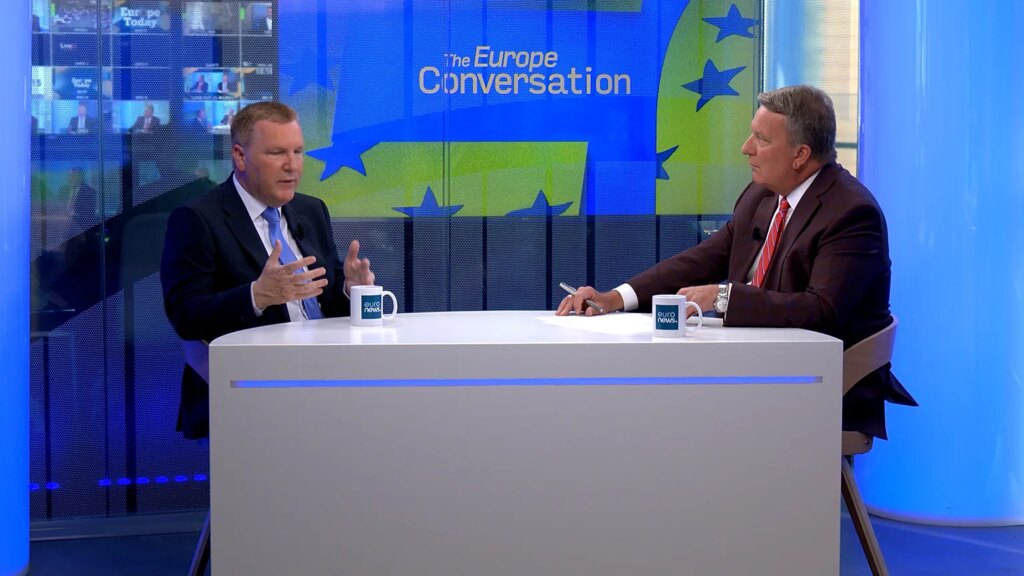
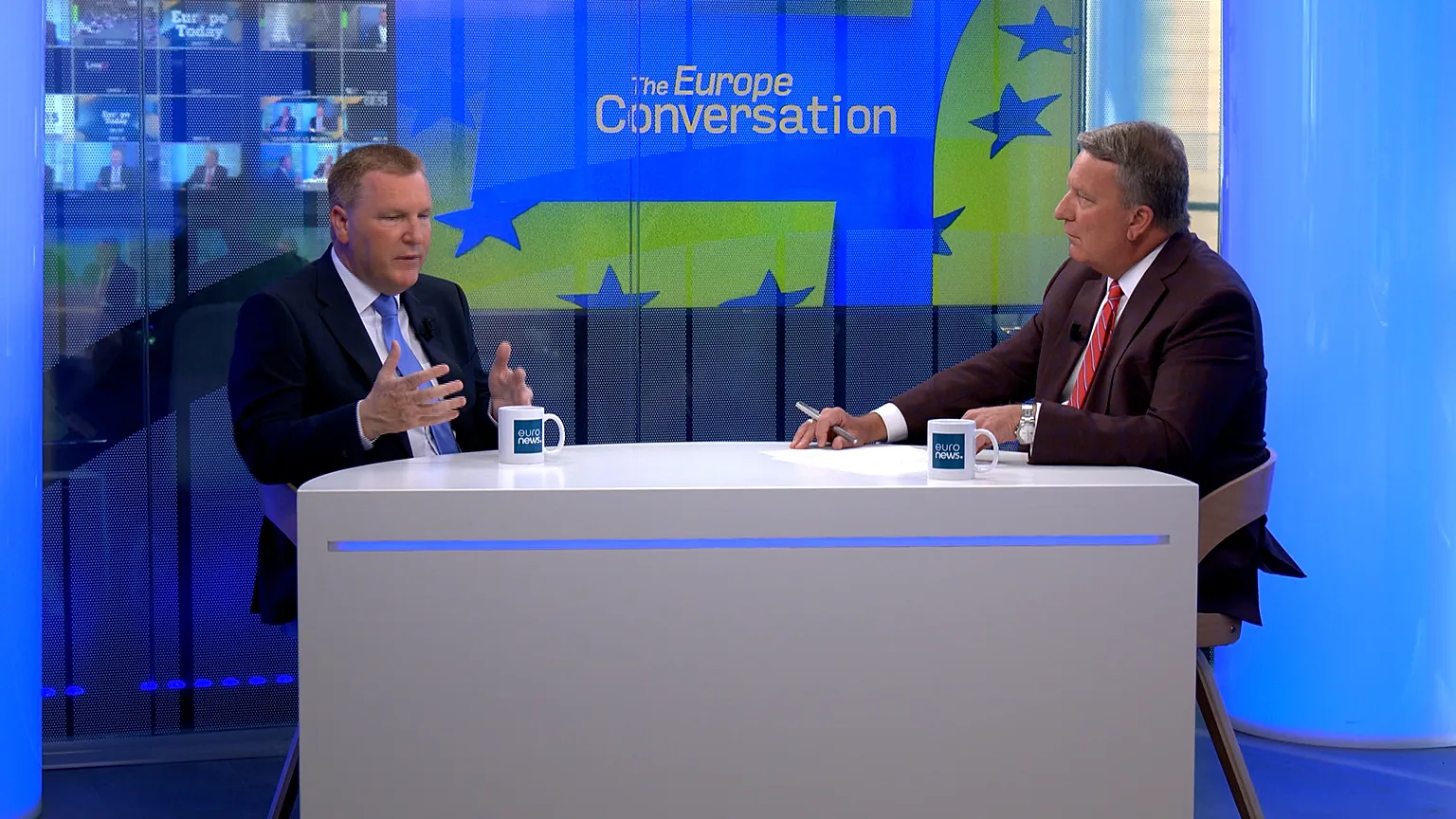
In an extensive interview with Euronews, the EU Justice Commissioner tempered expectations about the imminent release of Hungary’s frozen EU funds.
Michael McGrath, the EU Commissioner for Democracy, Justice and the Rule of Law, told Euronews that Hungary’s new government must advance reforms—including those concerning the rule of law—not only to regain access to frozen EU funds but fundamentally to improve conditions for its own population.
 ADVERTISEMENT
  ADVERTISEMENT
Prime Minister Péter Magyar is scheduled to meet with European Commission President Ursula von der Leyen on Friday. He aims to unfreeze €10 billion in recovery funds that have been withheld due to persistent doubts about judicial autonomy, corruption, and democratic regression during Viktor Orbán’s tenure, with an August deadline looming.
Nevertheless, McGrath emphasized that reforms are not merely a matter of meeting Brussels’ requirements but restoring rights, freedoms, and advantages for Hungarian citizens themselves.
“This is not something they must do solely for the EU. The imperative lies in benefiting the Hungarian people so they can fully enjoy the rights and privileges membership in the European Union grants,” he explained during Euronews’ flagship show The Europe Conversation.
He referenced Hungarian students who lost access to segments of the EU’s Erasmus exchange program, a consequence of governance issues linked to public foundations established under the former administration.
“The earlier these issues are addressed, the sooner ordinary Hungarians experience an improved quality of life. That is the core objective,” the commissioner added.
Challenging road ahead
McGrath affirmed that Brussels is prepared to assist Hungary’s new leadership throughout the process of implementing necessary reforms. Still, he warned that reestablishing full compliance with rule-of-law standards is a gradual endeavor.
“Challenges and complexities will certainly arise, and change cannot occur instantly,” he remarked.
“What matters is observing a persistent dedication to the rule of law, including reversing some of the changes from recent years.”
These statements follow the electoral success of Prime Minister Péter Magyar, whose administration has committed to mending ties with Brussels and rolling back critical components of Orbán-era governance that repeatedly generated tensions with the European Union.
During Orbán’s and his party Fidesz’s years in power—from 1998 to 2002 and 2010 to 2026—Hungary faced repeated accusations from the European Commission, the European Parliament, and international watchdogs regarding democratic deterioration and erosion of judicial independence.
Concerns were raised about issues such as judicial autonomy, press and academic freedom, corruption, public procurement, and the protection of minority and LGBTQ rights.
McGrath noted the Commission welcomes the new government’s active dialogue with Brussels, highlighting ongoing high-level communication. He is personally scheduled to visit Budapest the following week to meet with Márta Görög, Hungary’s justice minister.
“Positive steps are underway, and we will assist Hungary in restoring the rule of law for the benefit of its citizens,” McGrath stated.
Unavoidable political changes
However, the transition process is already sparking constitutional and political tensions within Hungary.
Magyar has publicly urged several senior officials appointed during the Orbán period, including the president, to resign, even threatening constitutional reforms in the face of refusal.
When questioned about the legitimacy of such pressure, McGrath acknowledged that personnel changes are inevitable after a significant electoral shift but underscored the necessity of respecting due process and individual rights.
“A profound political transformation inevitably leads to changes in personnel,” he acknowledged.
“Still, adherence to due process must be maintained, and the rights of all citizens, including those holding public office, must be upheld.”
He added that the Commission is closely observing Hungary’s developments as part of its annual comprehensive rule-of-law evaluation covering all EU member states, with the next report expected in July.
The Hungarian government is also contemplating amendments to the constitution that would restrict future prime ministers to serving two terms—a step broadly interpreted as an effort to prevent Orbán’s political comeback.
Yet the commissioner refrained from commenting directly on this proposal, emphasizing that electoral legislation and constitutional frameworks are principally matters for national authorities.
“Regulation of electoral processes is the sovereign prerogative of member states,” he affirmed. “Our role is to respect these competencies.”
Europe is closely monitoring Hungary’s political transformation as a crucial case for assessing whether democratic institutions weakened under years of populist governance can be restored internally—and the speed at which Brussels is willing to reward reforms with the reinstatement of funding and political backing.