
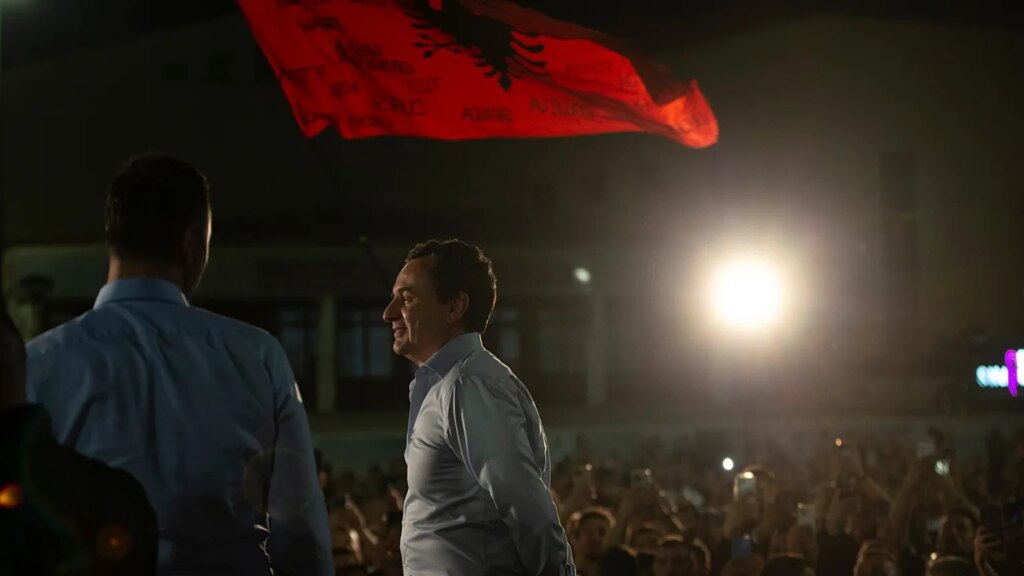
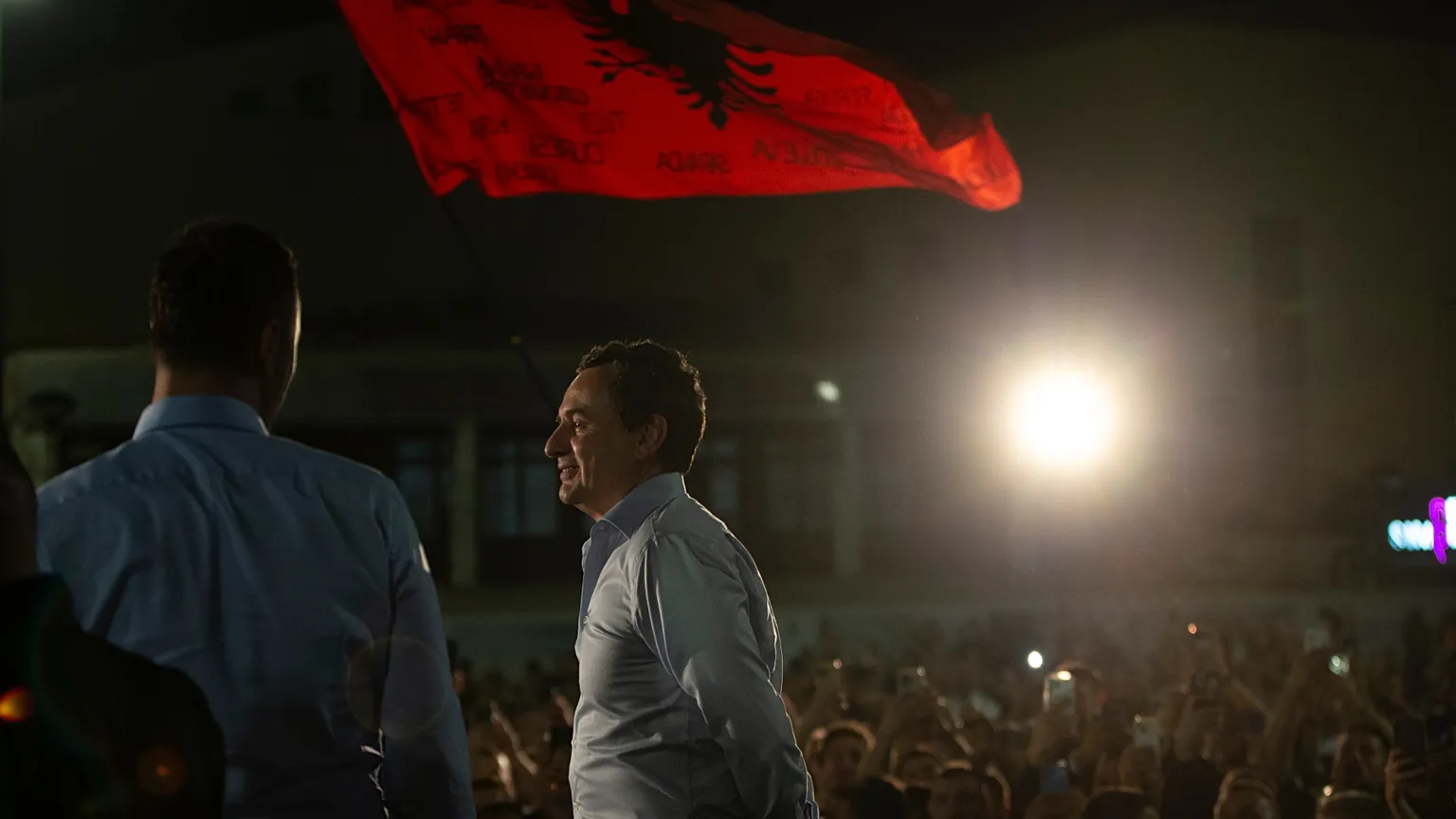
In Kosovo’s third election within just over a year, Kurti’s Vetëvendosje party secured nearly 43 percent of the votes based on data from almost all polling stations.
In the snap election held Sunday, Kosovo Prime Minister Albin Kurti’s party received the highest number of votes amid low voter turnout; however, these results are insufficient for Vetëvendosje to govern independently, indicating upcoming complex negotiations to form a coalition, as almost all ballots have been counted.
 ADVERTISEMENT
  ADVERTISEMENT
During Kosovo’s third election in a span just exceeding one year, Kurti’s Vetëvendosje party achieved close to 43% of the votes, according to nearly complete polling data.
Nonetheless, this is a decline from the December election, where the party attained 51%, a percentage that had allowed Vetëvendosje to attempt forming the government alone. The current outcome suggests that coalition building will present a significant challenge.
The opposition parties, Democratic Party of Kosovo (PDK) and Democratic League of Kosovo (LDK), captured 21% and 17% of the votes, respectively.
This election took place after several months characterized by institutional deadlock. Kosovo’s parliament, deeply fragmented, failed to elect a president in April, worsening a crisis that began following inconclusive elections held in February 2025.
In the February 2025 vote, Prime Minister Albin Kurti’s Vetëvendosje party emerged as the dominant party but did not secure enough seats to form a government, which led to a prolonged political impasse and triggered a new election in December.
Though Kurti’s party gained the majority of seats in December (51.1%, an increase from 42% in February) and established a government supported by minority group representatives, political tensions carried on. An opposition boycott during the parliamentary vote for a new president eventually led to the parliament’s dissolution, resulting in Sunday’s election.
Former President Vjosa Osmani, currently running for parliament under the Democratic League of Kosovo (LDK), told Euronews: “There is strong hope that Kosovo’s population will enable the creation of a democratic balance among political forces in Kosovo, resulting in all parties engaging constructively to reach an agreement on forming institutions promptly.”
Regarding the ongoing deadlock, she described it as “an avoidable crisis, a totally unnecessary stalemate that harms the nation.”
Political analysts caution that this recent election may not resolve the pattern. Ardi Uka, a political researcher, noted that Kosovo seems trapped in a cycle of repeated elections with limited signs of negotiation among competing parties.
“The crisis will persist,” stated Uka.
Fuentes adicionales • AP, AFP