
The European Parliament’s largest political faction has called on the Commission to prolong free carbon permits for select industrial sectors beyond 2030, according to a document obtained by Euronews.
The European People’s Party (EPP) has pressed Climate Action Commissioner Wopke Hoekstra to notably adjust the EU’s carbon market, the Emissions Trading System (ETS), by permitting additional free pollution credits for heavy industries past 2030.
 ADVERTISEMENT
  ADVERTISEMENT
Released in an internal paper outlining the EPP’s stance, seen by Euronews, this request arrives ahead of the European Commission’s planned ETS revision scheduled for 15 July.
The EPP argues that safeguarding the manufacturing foundation of Europe now holds equal weight to cutting emissions.
«The system has delivered emission reductions in a market-driven and economically viable way,» the document states. «Yet additional modifications are necessary to maintain industrial competitiveness and guarantee a decarbonisation route that is both effective and cost-efficient.»
The ETS serves as the EU’s tool to charge companies for their pollution, aiming both to lower emissions and to motivate industries toward greener alternatives.
Since its inception in 2005, this scheme has reduced the covered greenhouse gas emissions by roughly 50 percent, becoming the EU’s most impactful climate policy instrument.
Nonetheless, certain sectors benefit from free allowances or “pollution permits” instead of purchasing them, mainly because of their high energy consumption, competition with companies in regions lacking carbon pricing, or the difficulty of rapidly cutting emissions.
EPP demands increased free allowances
Despite existing flexibilities, the EPP wants the Commission’s upcoming review to reduce the burden on heavy industry by slowing down the reduction rate of the allowances that cover their carbon emission costs.
The document reveals that the EPP—the political party of Commission President Ursula von der Leyen—intends to prolong free allocations beyond 2030 for sectors where complete emission elimination is currently unachievable and international competitors have less stringent climate obligations.
«Reducing the Linear Reduction Factor (which gradually decreases the total ETS allowances available each year) starting from 2030 in line with the European Climate Law’s 85 percent domestic target, and securing allocation after 2039 to account for remaining emissions from industrial processes, maritime transport, and aviation,» the document reads.
This position essentially supports the Commission’s May proposal to extend polluting credits from 2026 to 2030, while urging the EU to push extensions past 2030.
Within the 2026-2030 timeframe, industry will keep receiving free allowances covering about 75% of emissions, the Commission stated, anticipating a financial shortfall near €4 billion.
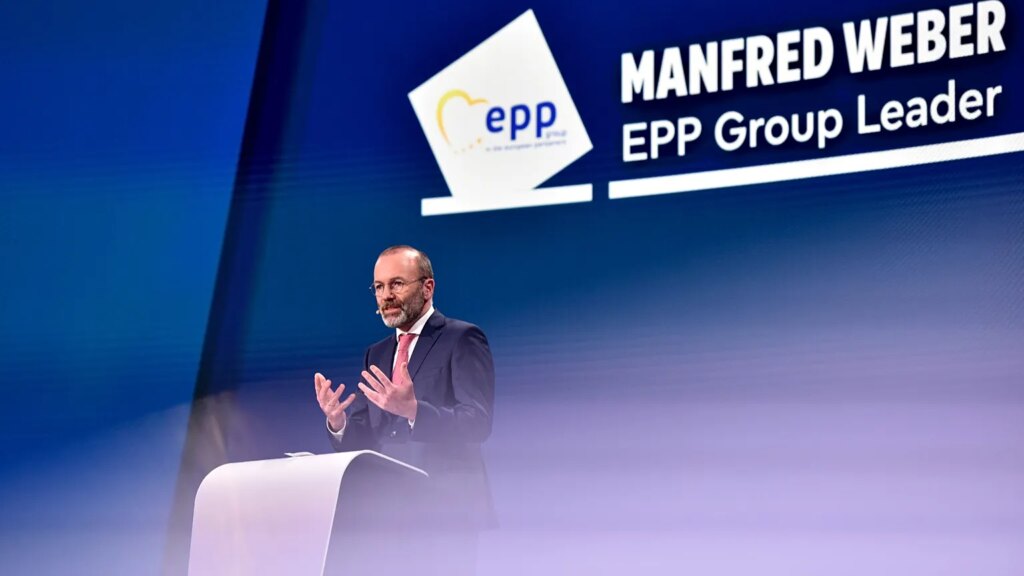
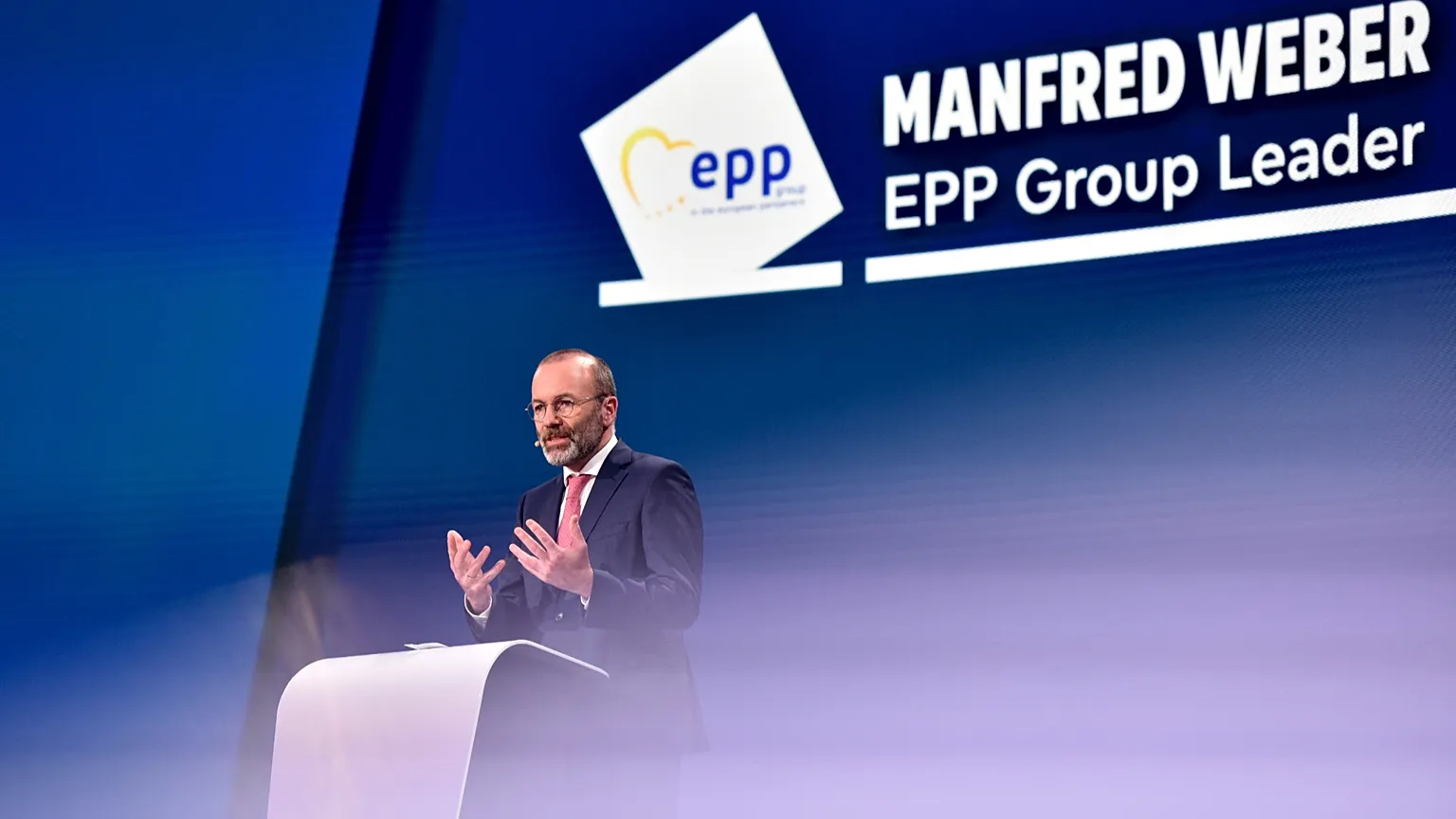
EPP President Manfred Weber expressed to Euronews on Wednesday that the EU cannot afford to «destroy its industry due to the climate agenda.»
The EPP’s stance has already garnered backing from various EU nations and industrial groups, leading EU leaders to reconsider plans to reduce pollution permits for heavy industry announced during the June EU summit of Heads of State and Government.
«The European Council notes the Commission’s plan to present a concrete proposal by mid-July 2026 on ETS review, including free allowances (…) whilst maintaining the vital role of the ETS in the climate and energy transition,» state the Council’s conclusions.
Yet, the debate over the ETS is more complex than it seems.
Industry opinions split
Advocates of the ETS have appeared among heavy industrial sectors—the same groups the EPP and some EU states insist require protection from carbon costs.
These supporters warn that weakening the ETS would disadvantage the early adopters, undermine investment confidence, and delay both industrial transformation and decarbonisation, precisely when these are urgently necessary.
Six steel producers based in Europe—Outokumpu Corporation, SSAB, Salzgitter AG, Saarstahl, Dillinger, and SHS – Stahl-Holding-Saar—are openly urging the Commission to “uphold the integrity” of the EU’s carbon market and “prevent actions that artificially suppress the carbon price.”
«Diluting the ETS will not enhance Europe’s competitiveness. Quite the opposite: it would decrease investment certainty, penalize innovators, and slow the crucial industrial transition Europe demands,» the industry leaders stated jointly on 30 June.
«The chief pressure on competitiveness arises from excessive electricity prices caused by fossil fuel dependence, infrastructural deficiencies, and global steel overcapacity, rather than carbon pricing.»
According to the watchdog SteelWatch, the EU’s top three steelmakers—ArcelorMittal, thyssenkrupp, and voestalpine—demonstrated that the free ETS allowances’ value they received did not translate into equivalent decarbonisation investments.
Out of €25.7 billion in free ETS permits obtained by these steelmakers, only €3.2 billion was directed towards decarbonisation, SteelWatch warned, indicating that further extension of free allocations would hinder investment in greener technologies.
Enforcing polluter accountability
A recent poll commissioned by the civil society network Beyond Fossil Fuels, conducted by YouGov across six European countries—France, Germany, Italy, the Netherlands, Poland, and Spain—reveals widespread endorsement of the “polluter pays” principle that underpins the ETS.
Surveying 6,156 adults, results show 72 percent of Europeans—including supporters of parties typically viewed as skeptical of EU climate policies—agree companies with highest emissions or those failing to reduce them should incur greater costs.
Boris Jankowiak, steel transformation policy coordinator at Climate Action Network Europe, dismissed claims that the ETS is responsible for industrial decline in Europe.
«Despite decades of free allowances and billions in public funding, Europe continues to lose industrial capacity and jobs across several sectors,» he stated, adding that maintaining free allowances without conditions will not yield different results nor ensure retention of production or jobs within Europe.
«On the contrary, this approach shrinks the funds available for supporting industrial transition and penalizes pioneering companies.»