
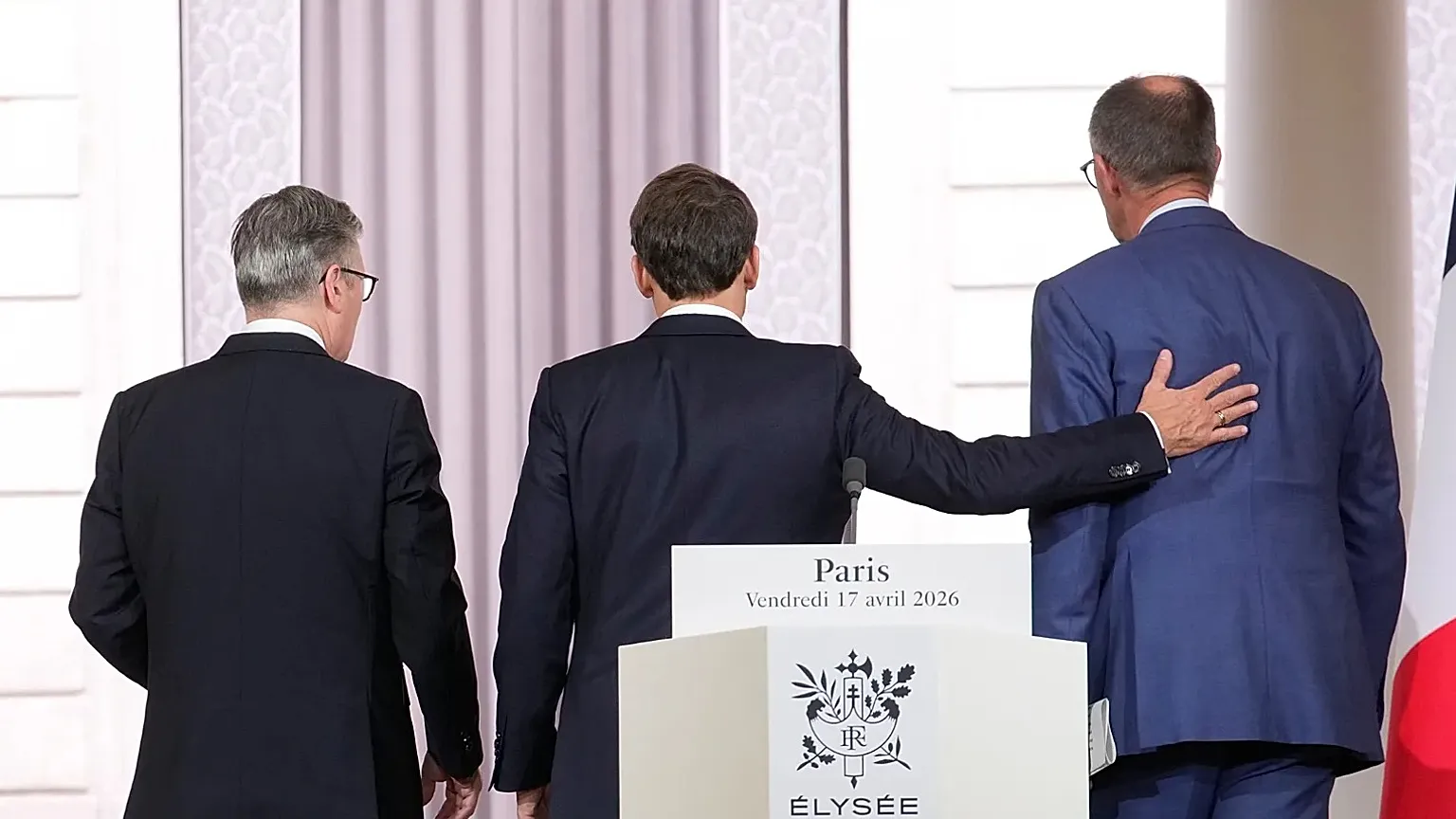
During their meeting in Paris, the leaders emphasized that a neutral mission might still be necessary to protect shipping lanes and avoid further disturbances in this critical trade corridor.
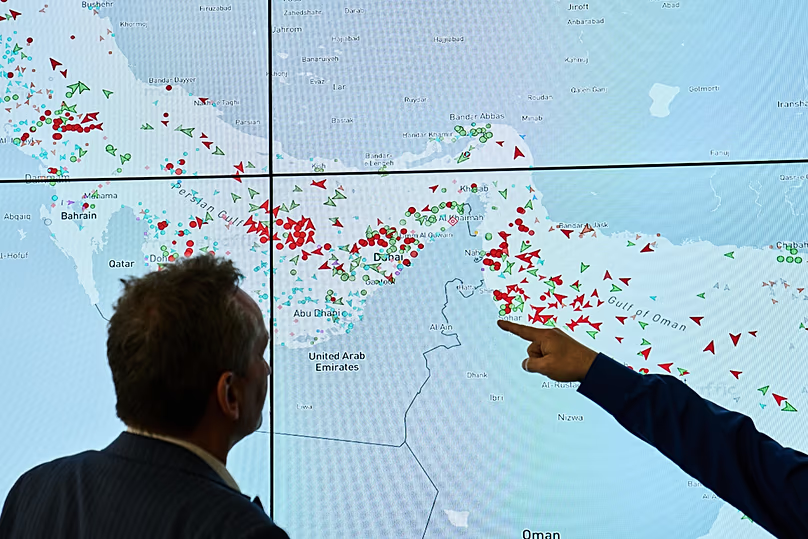
On Friday, European leaders revealed plans to expedite the development of a neutral, defensive multinational mission meant to protect shipping in the Strait of Hormuz, despite Iran’s earlier announcement that the waterway would remain fully accessible to maritime traffic throughout the ceasefire set to conclude on 22 April.
 ADVERTISEMENT
  ADVERTISEMENT
The gathering in Paris, co-led by French President Emmanuel Macron and British Prime Minister Keir Starmer, assembled 49 countries, primarily via video link, to discuss forthcoming defensive measures intended to guarantee freedom of navigation when circumstances permit.
The initiative did not include the United States, as France and Britain positioned it as independent from the belligerents and distinct from Washington’s ongoing blockade policy, according to statements by Donald Trump.
The US President declared in an emphatic social media message that the US Navy’s blockade on Iranian ports would stay effective «UNTIL SUCH TIME AS OUR TRANSACTION WITH IRAN IS 100% COMPLETE.»
Macron praised the ceasefire between Iran and the United States as well as the truce involving Lebanon, noting that recent progress appeared to be heading «in the right direction.»
However, he emphasized the necessity for all involved parties to guarantee the waterway’s complete, immediate, and unconditional reopening.
He also rejected any proposals to impose tolls or restrictions on Hormuz passage, insisting that the route must not undergo privatisation.
Starmer echoed similar sentiments, acknowledging Iran’s announcement but stressing that a «durable and practical solution» is required.
He mentioned that leaders agreed to advance military preparation for a multinational mission «as soon as conditions permit,» and revealed plans for an additional military conference next week in London, following offers from over a dozen countries to supply assets.
Approximately 20% of the global oil and liquefied natural gas shipments transit the Strait of Hormuz, and weeks of blockage have disrupted energy markets, stalled ships, and left upwards of 20,000 seafarers stranded in the area.
European governments have declined participation in the US blockade of Iranian ports, arguing that joining would equate to engaging in the conflict.
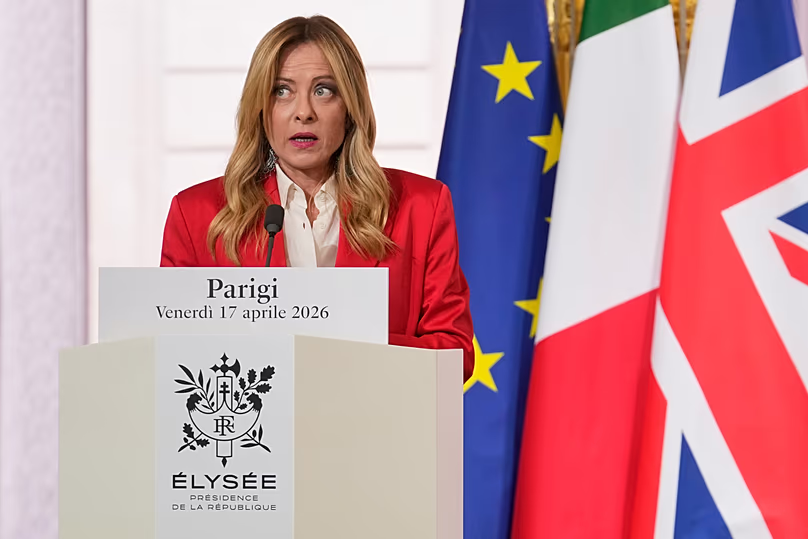
Italian Prime Minister Giorgia Meloni, attending the Paris meeting, highlighted that the implications exceed energy supplies, pointing out that fertilizers are also crucial for worldwide food security.
She stated that Iran must cease any nuclear weapons ambitions and affirmed Italy’s readiness to contribute to a forthcoming operation.
Meloni specified that Italy’s role would concentrate on providing reassurance to existing commercial vessels in the strait, including assistance to ensure mine-free passage, all within the framework of a strictly defensive mission.
German Chancellor Friedrich Merz cautioned against the possibility of an expanded and «multidimensional global war» if the crisis escalates unchecked.
He suggested Germany might contribute to future operations, potentially including mine clearance efforts.
Merz expressed a preference for the United States’ involvement if feasible, stating, «we believe this would be desirable,» which contrasts with President Macron’s earlier remarks excluding all belligerents from participation in the mission.