
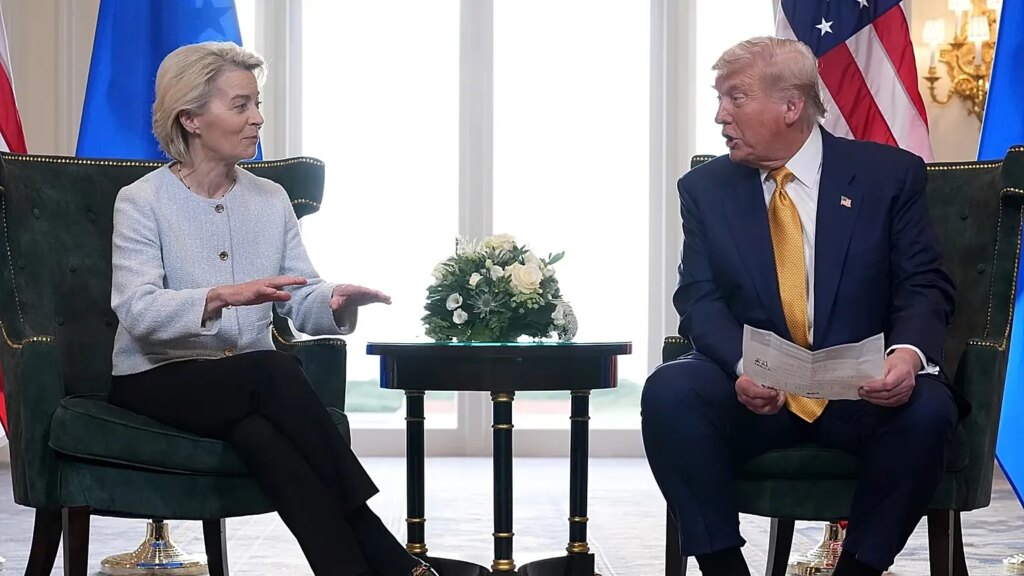
The political factions within the European Parliament are nearing the conclusion of their talks on the EU-US trade agreement, which the Commission has requested to be approved by the end of March.
The disputed EU-US trade agreement is approaching a possible endorsement by the European Parliament, following numerous advances and obstacles.
 ADVERTISEMENT
  ADVERTISEMENT
On Tuesday, negotiators representing the Parliament’s political groups convened with Trade Commissioner Maroš Šefčovič to review recent progress, and sources indicate an agreement is likely to be reached in the upcoming session on March 17. Consequently, the Committee on International Trade will vote on the deal two days thereafter, with the final approval expected from the Parliament’s Plenary on March 26.
Commissioner Šefčovič urged legislators on Tuesday to proceed despite US President Donald Trump’s announcement of new tariffs, which cast doubt over the entire agreement’s provisions.
The 10% tariffs imposed on imports from US allies, including the EU, as declared by Trump in February, paused the ratification process—already suspended once due to Trump’s concerns regarding Greenland.
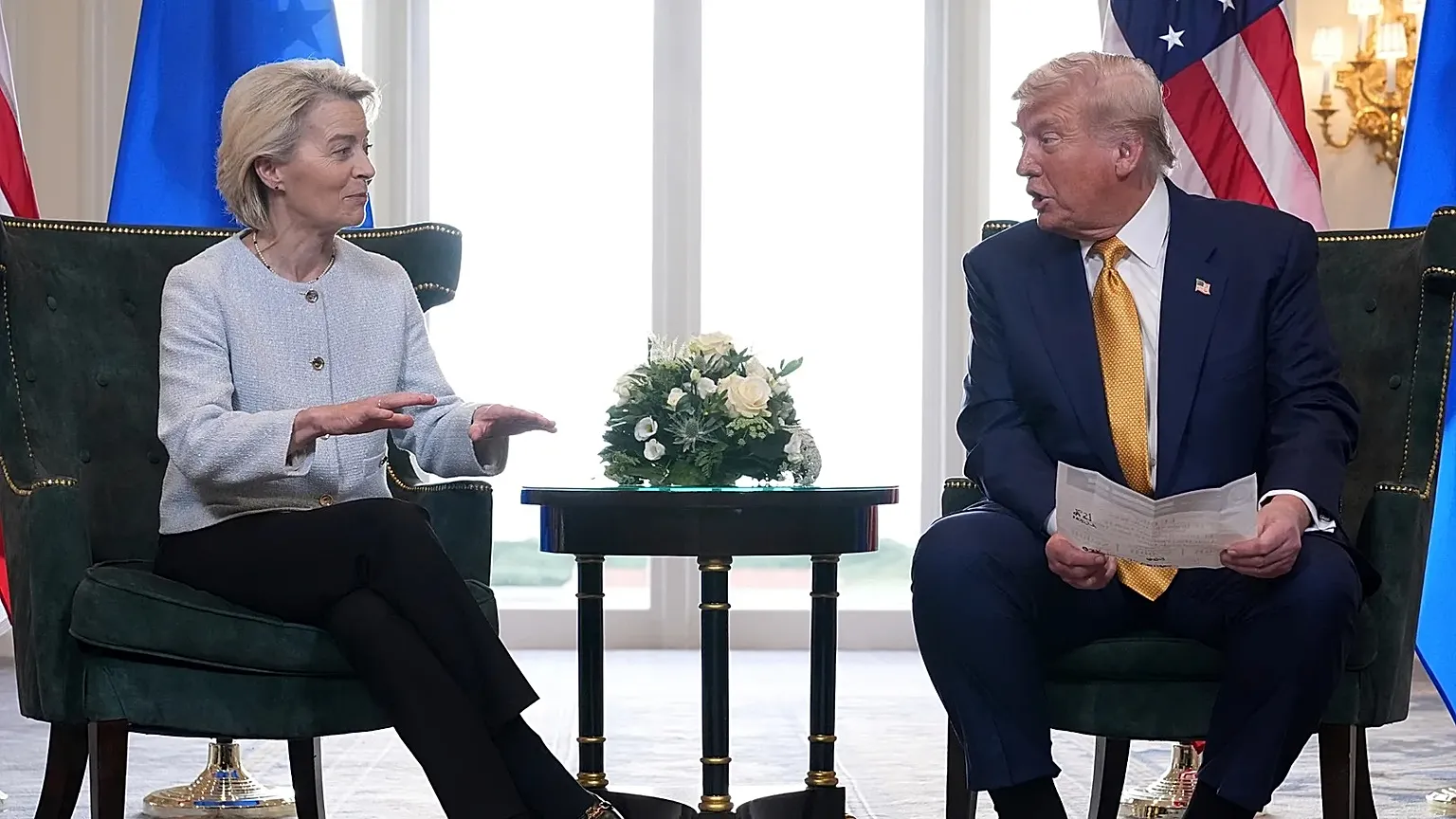
Members of the European Parliament worried that these new tariffs might be added on top of existing ones, potentially exceeding the 15% total established in last year’s agreement signed by Trump and Commission President Ursula von der Leyen in Scotland.
The Parliament resolved to continue its work, encouraged by the Trade Commissioner, while persistently requesting clarifications from the US administration on these matters.
Following multiple meetings, negotiators from the political groups appear prepared to finalize a draft ready for voting. This includes a «sunset clause,» which would terminate EU tariff exemptions by the end of March 2028 unless explicitly extended, along with a «suspension clause» to be activated if the US breaches the agreement’s stipulations.
The remaining elements to be refined include a «sunrise clause» proposed by the European People’s Party negotiator Jörgen Warborn. He explained to Euronews, «This clause ensures the deal will only commence once it’s confirmed that every aspect of the agreement is respected,» adding that the uncertainty introduced by the conflict in the Middle East increases the urgency for this and other trade agreements.