
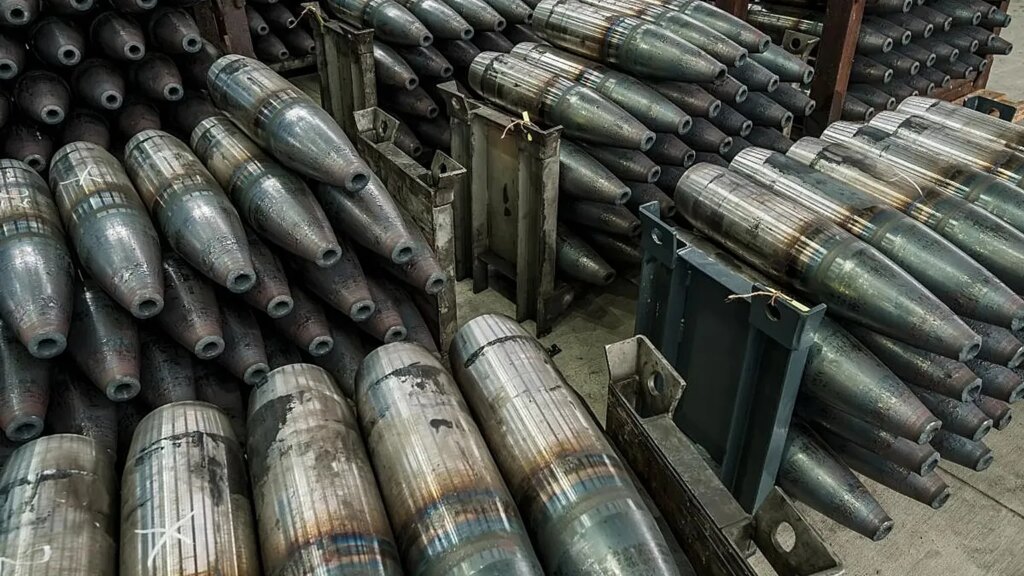
SAFE represents a key element of the EU’s Readiness 2030 initiative, designed to allocate hundreds of billions of euros to defence investment before the decade concludes – a timeframe during which intelligence agencies foresee a potential Russian assault on another European nation.
On Monday, the European Commission authorized the national investment plans for Estonia, Greece, Italy, Latvia, Lithuania, Poland, Slovakia, and Finland under the EU’s newly established €150 billion defence loan facility.
These eight nations collectively requested approximately €74 billion in funding – roughly half of the total €150 billion the Commission aims to raise through the market to support its Security Action for Europe (SAFE) programme – with Poland requesting €43.7 billion on its own.
This marks the second phase of approval subsequent to a prior group of eight countries – Belgium, Bulgaria, Denmark, Spain, Croatia, Cyprus, Portugal, and Romania – whose combined plans totaling €38 billion were approved on 15 January.
«With this second wave of SAFE projects, Europe is at last backing its security goals with the indispensable financial resources,» stated Defence Commissioner Andrius Kubilius. «No longer are we merely formulating strategies; we are creating tangible hard-power capabilities.»
«This sends a firm message to European industries and our opponents alike: Europe is committed to its strength and sovereignty, and our armed forces require the best equipment delivered promptly.»
Preparing for conflict
Nineteen member states have so far submitted applications to access SAFE funds, with provisional funding decisions reached last September. The investment proposals from Czechia, France, and Hungary remain under review.
Part of the Commission’s broader Readiness 2030 blueprint intended to mobilize up to €800 billion for defence prior to 2030, SAFE focuses on enhancing the acquisition of prioritized defence assets.
These assets encompass ammunition and missiles, artillery systems, drones alongside counter-drone technology, air and missile defence systems, protection of critical infrastructure, safeguarding space assets, cybersecurity measures, AI technologies, and electronic warfare capabilities.
A further requirement mandates that procured equipment must be manufactured within Europe, with at most 35% of component costs sourced from outside the EU, EEA-EFTA, or Ukraine. Canada, having established a bilateral agreement with the EU, is permitted to participate on equal terms with these regions.
This scheme benefits member states with lower credit ratings compared to the Commission’s, as they secure financing at more favorable interest rates. For example, Germany did not submit any funding requests under SAFE.
EU ministers are allotted four weeks to ratify the plans, with initial disbursements projected for March 2026.
Von der Leyen noted late last year that due to strong demand among member states – the 19 participating countries initially requested sums exceeding €150 billion – the programme may be expanded further.