
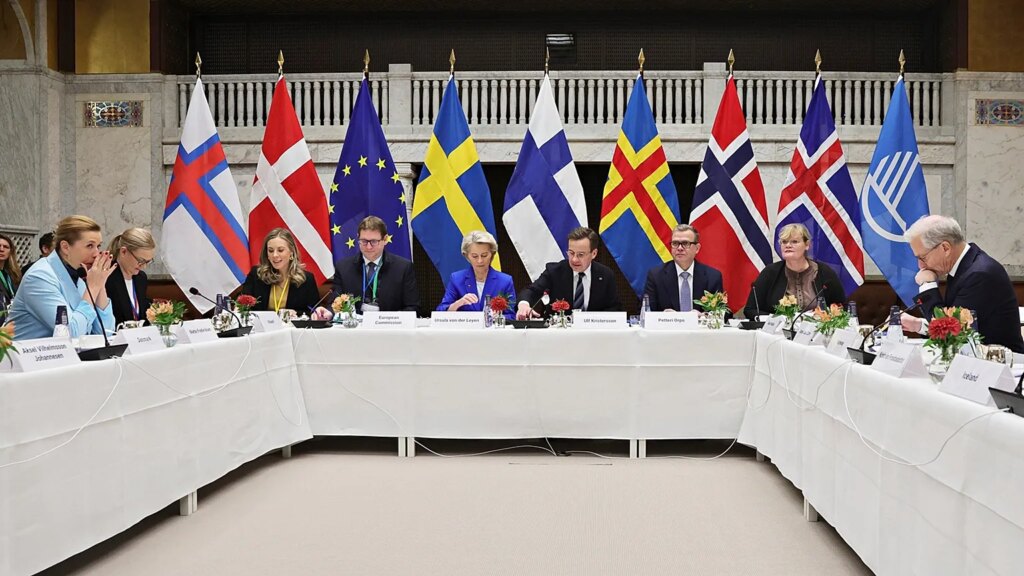
The idea of issuing new joint debt at the European level to back Ukraine faces resistance among Nordic leaders. They maintain that funding should come from frozen Russian assets as the Commission seeks ways to overcome the stalemate.
Nordic leaders have dismissed the proposal to issue common debt within the European Union framework to offer a €140 billion reparations loan to Ukraine, arguing that the funds must originate from immobilized Russian assets rather than from national budgets.
«Frankly, I believe this is the only viable way forward, and I strongly support the notion that Russia must pay for the harm it inflicted on Ukraine,» stated Danish Prime Minister Mette Frederiksen on Tuesday.
This initiative, referred to as a «reparations loan», was blocked last week by Belgium, which holds the majority of frozen funds from the Russian Central Bank.
Belgium raised several legal concerns, risks related to arbitration and confiscation, and emphasized the necessity of involving other G7 allies.
This impasse significantly diluted the summit’s concluding statements, which included a directive for the European Commission to urgently explore options to finance Ukraine’s military and financial needs through 2026 and 2027.
One possible approach is issuing joint debt at the EU level to create a macro-financial assistance (MFA) program, something the Union has implemented previously, though on a smaller scale, to aid Kyiv.
This joint debt would avoid using Russian assets, thereby eliminating the risks highlighted by Belgium, but it would increase the financial obligations of member states, some of which are struggling to control public spending and reassure concerned investors.
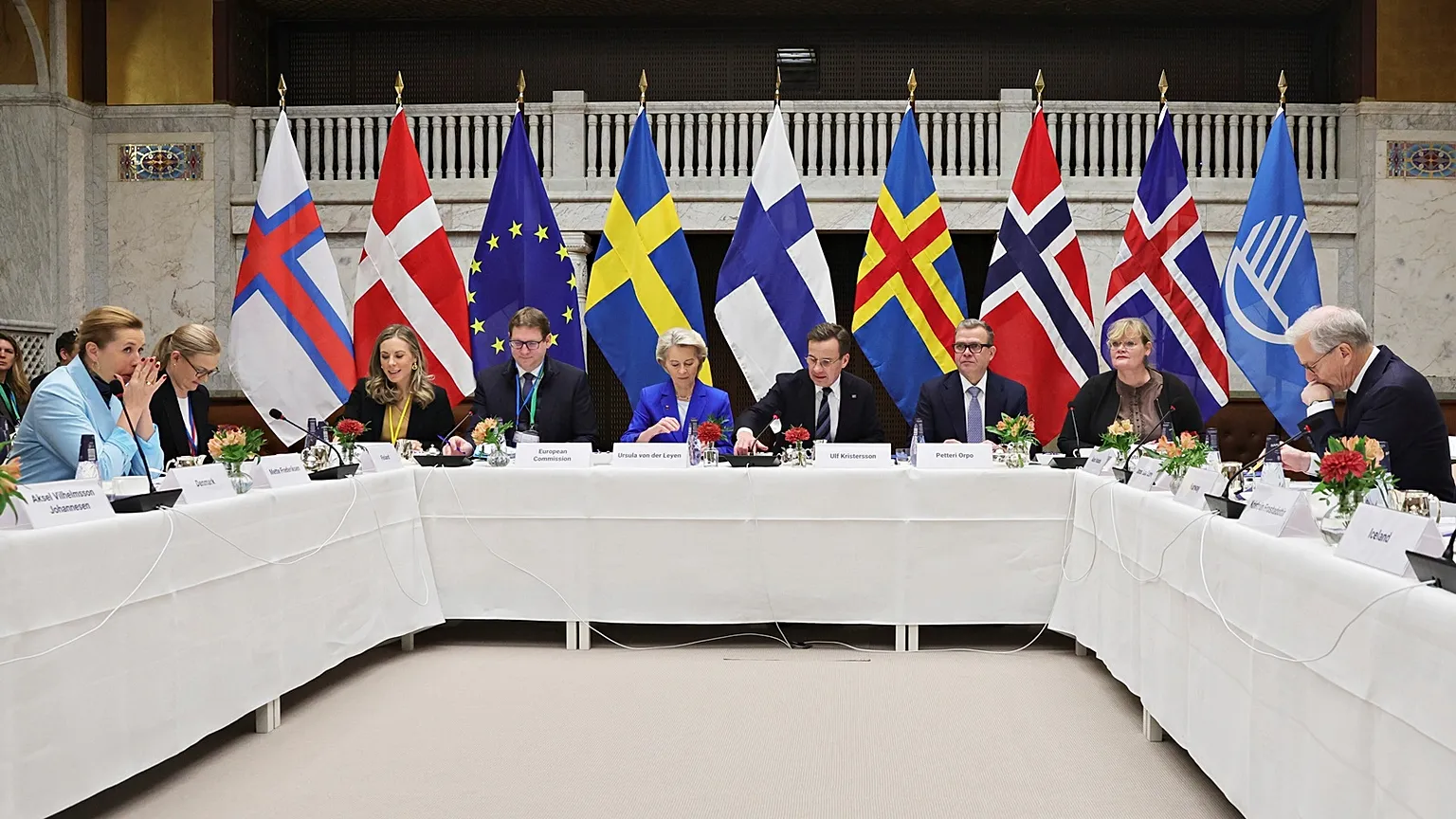
«For me, the reparations loan remains the only option,» Frederiksen said during a Nordic Council meeting in Sweden.
«Naturally, some technical issues need resolution,» she added, «but fundamentally, this is a political decision.»
Supporting her viewpoint, Finnish Prime Minister Petteri Orpo emphasized that «the sole sensible solution is to utilise Russian frozen assets.»
Meanwhile, Swedish Prime Minister Ulf Kristersson described the summit’s conclusions as a «significant» and «essential» step towards making the reparations loan a reality.
The three Nordic leaders expressed optimism that an agreement could be reached in December, when the 27 heads of state are scheduled to convene again.
Evaluating alternatives
Ursula von der Leyen, invited to participate in the Nordic meeting, avoided discussing joint debt prospects and defended her innovative plan.
«The proposal intends to utilize cash balances from the Russian assets to provide Ukraine with a loan, which Ukraine would repay if Russia compensates for reparations. Legally, it’s a robust proposal—not simple, but sound,» explained the Commission president.
Von der Leyen remarked that these options address «technical questions» concerning the reparations loan. A spokesperson later clarified that the precise range of options «is yet to be determined,» emphasizing that Russian assets remain the primary focus.
Comments on Tuesday indicate limited enthusiasm among capitals for new debt issuance and sharply contrast with the stance of Belgian Prime Minister Bart De Wever, who has become the main obstacle in the discussions.
Last week, De Wever argued that Ukraine’s Western allies have sufficient resources to bear the costs themselves without relying on Russian assets.
«If Europe wants to create funds, it can do so through issuing debt. But, naturally, this is a sensitive issue,» De Wever said at the summit’s conclusion.
«The major advantage of debt is its predictability—you know the amount, duration, and responsible parties,» he added.
«The downside of relying on Russian funds is the uncertainty about the extent and duration of litigation, along with potential unforeseen issues.»
Member states—particularly Belgium—await the Commission’s forthcoming options paper, which may propose alternatives such as loans and grants for Ukraine, supported by the EU budget, national contributions, or a combination.
One potential approach to persuade De Wever is to include sovereign assets held outside Belgium, such as in France and Luxembourg, although some of these assets are deposited in private banks, creating likely complications.
The timeframe to finalize a deal is tight: Ukraine has indicated it will require new financial support by the second quarter of 2026.