
In today’s newsletter: Members of the European Parliament visit China, Spain’s current champions parade through Madrid, and an expert sheds light on the significance of Europe’s military displays.
Good morning. Angela Skujins here with your newsletter update, guiding you through the key news from Brussels and beyond as we approach the last week before the summer break.
 ADVERTISEMENT
  ADVERTISEMENT
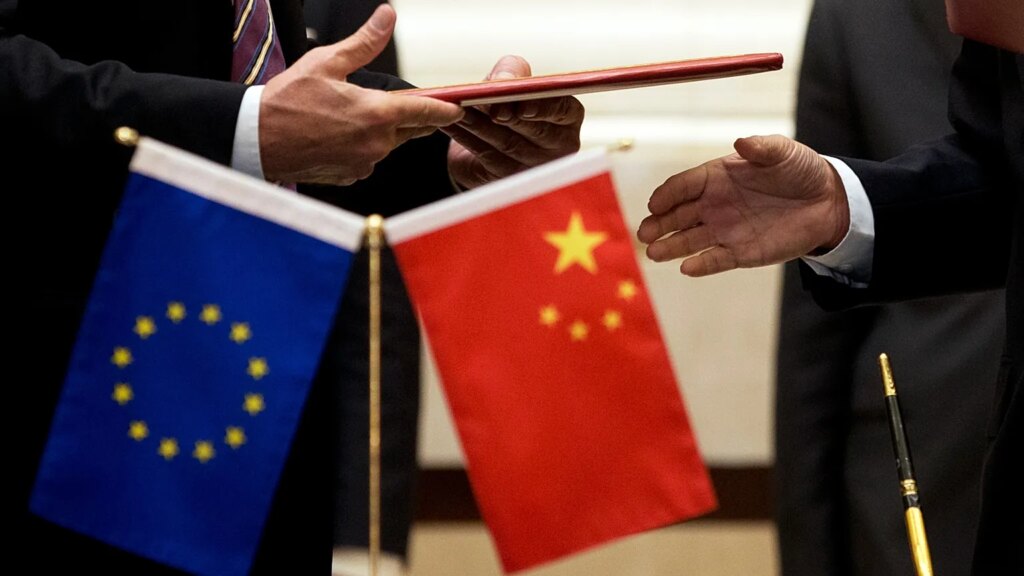
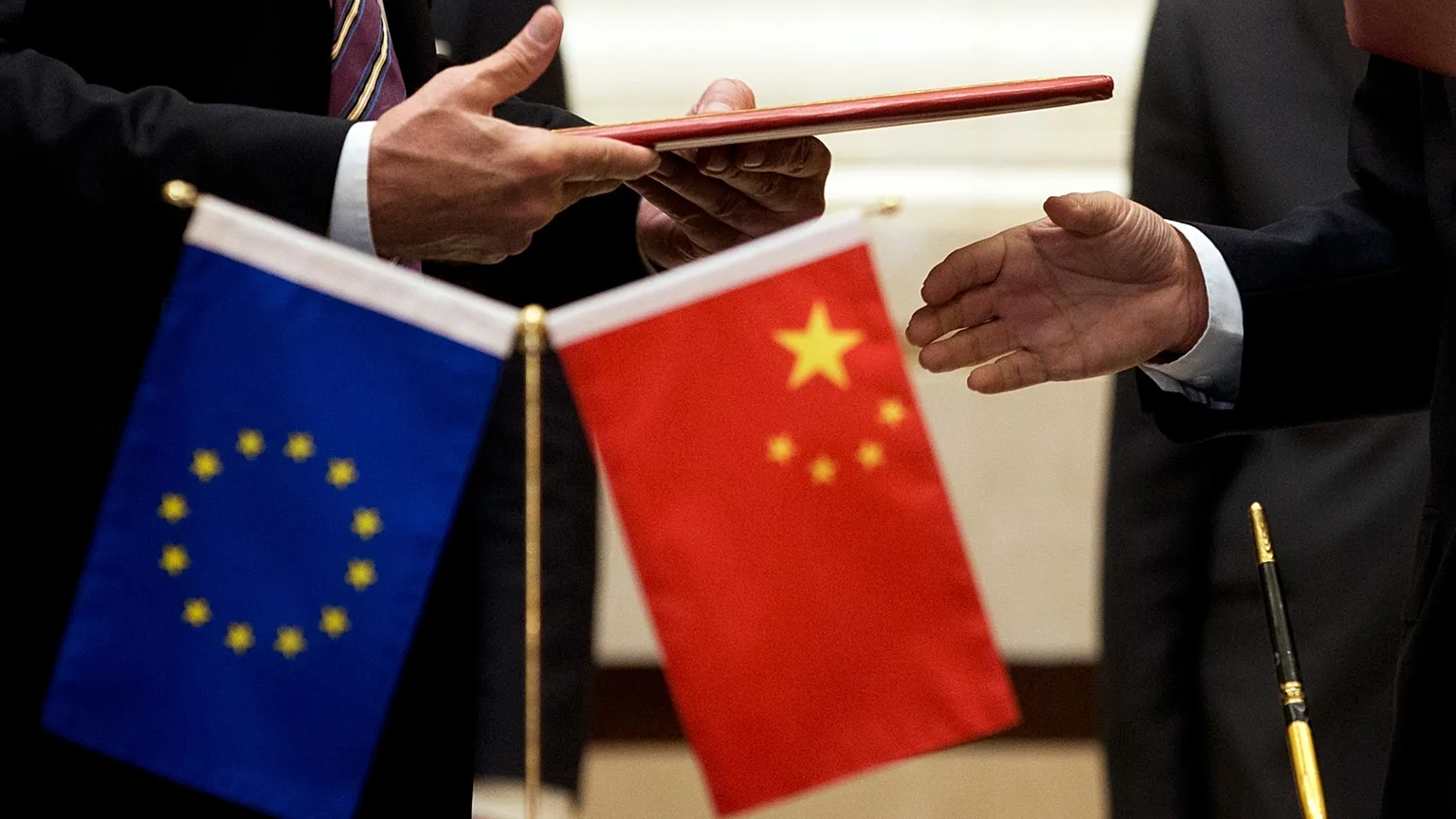
Trade Insights. A delegation from the European Parliament’s Committee on Foreign Affairs, headed by MEP and chair David McAllister, is currently in China for discussions with Chinese officials.
Attempts to reach the delegation during their visit were unsuccessful, as they informed us their phones had been confiscated by local authorities, leaving them out of contact. The timing of this trip is particularly significant.
With Brussels and Beijing aiming to resolve the EU’s massive trade deficit with China by October, economic relations are once more the center of attention.
In this context, Euronews trade correspondent Peggy Corlin turns the spotlight onto another vital connection: that between the EU and the United States. One year following the Turnberry agreement, she analyzes a transatlantic relationship marked by ongoing challenges.
New UK leadership. The United Kingdom’s new Prime Minister, Andy Burnham, plans to expand on his policy agenda today, just hours after being sworn in as the UK’s seventh prime minister of the past decade.
Mared Gwyn, anchor of Europe Today and EU correspondent, observed that Burnham used his initial public speech on Monday to present himself as a leader close to the people. His speech was delivered without notes or a lectern, appearing more spontaneous and genuine than those of his predecessors.
He prioritized domestic issues over foreign policy but made a key statement that should reassure NATO allies.
“We will increase the number of council homes — this is the just and sustainable path to reduce welfare expenses, adhere to fiscal rules, and maintain our defence commitments to international partners,” Burnham declared.
He promised a long-term strategy to rebuild the nation, stating that Britain requires a «circuit-breaker» from years of economic and political stagnation. «Britain must demonstrate to the world that stability can be restored,» he affirmed.
His appointment has been welcomed by European Commission President Ursula von der Leyen, who shared on X that they discussed several topics over the phone.
“We are both dedicated to strengthening ties between the EU and the UK. Together, we will strive for a successful summit that benefits businesses, young people, and shared security,” was von der Leyen’s message.
Sharp-eyed Mared also pointed out that the EU-UK summit originally planned for Wednesday, 22 July, was postponed following Starmer’s departure from premiership.
Professor Tony Travers from the London School of Economics commented on Europe Today that Burnham is expected to inject «greater energy» into EU-UK relations compared to former PM Keir Starmer. Watch.
“During his tenure as Mayor of Greater Manchester, Burnham made several statements suggesting a closer UK-EU relationship than Starmer, who was more cautious and keen not to disturb public opinion. Public sentiment has evolved somewhat,” he explained.
Spanish triumph continues. After La Roja’s win at the 2026 FIFA men’s World Cup on Sunday, the 26-player Spanish team continued their celebrations on Monday. Spain narrowly edged Argentina by one goal in New Jersey, capping a thrilling conclusion to an expanded tournament.
On Monday, the team was welcomed by Spanish royalty and Prime Minister Pedro Sánchez in Madrid prior to boarding an open-top bus for a parade through the city.
With Spain also winning the 2024 European Football Championship (the Euros) and the women’s team claiming the 2023 FIFA Women’s World Cup, curiosity grows about the secret behind Madrid’s success.
Football analyst Pablo Montaño told Europe Today that although the men’s team lacks a single star of overwhelming fame, their key players — Lamine Yamal, Rodri, and Pau Cubarsí — function seamlessly, especially under the leadership of coach Luis de la Fuente.
“They operate like a well-tuned engine,” he noted.
However, controversy did not end with the celebrations. The expert explained that FIFA launched an investigation into the Argentine team following a post-match brawl because the team “failed to accept defeat gracefully.”
Lastly, to our Belgian readers, Fijne Nationale Feestdag! Joyeuse Fête nationale! Schönen Nationalfeiertag!
Belgium is marking its national holiday today, 21 July 2026, with devoted supporters of the Benelux nation able to partake in various scheduled events.
Among these is a display of military strength. Flemish public broadcaster VRT reports the event will feature a military and civilian parade including newly introduced drones and F-35 fighter jets, commencing at 4 pm from Paleizenplein in the Royal Quarter.
What is the parade’s significance? Ian Lesser from the German Marshall Fund explained that such military parades are meant to highlight a country’s “military and technological capabilities,” though their meanings vary by nation.
“There’s a vast contrast between Belgium’s parade and those held in England or France, versus those in North Korea, China, or Russia,” he stated.
For Belgium, today’s march offers the chance to project its identity and arsenal on an international stage. “It’s an occasion to affirm its modern identity as a united country,” he added.
Space as a priority. European Defence Commissioner Andrius Kubilius is traveling to Warsaw, Poland, today to attend an 8:55 am signing event concerning contributions to the IRIS² initiative. Poland is providing PLN 211 million (€51 million) towards the EU’s major satellite constellation programme.
“Space is no longer a distant goal. It is essential for security, sovereignty, economic resilience, and technological leadership,” the Defence Commissioner said in a statement to Euronews.
Montenegro’s potential impact on the EU’s already complex budget negotiations
Montenegro is poised to set a benchmark for how the EU finances its enlargement, adding a further layer of complexity to the ongoing discussions about the bloc’s forthcoming multiannual financial framework.
Last month, the European Commission unveiled the financial package for Montenegro’s accession — the advancement furthest ahead among current EU candidates.
The estimated economic cost for this Western Balkan country of roughly 626,000 residents stands at €3.2 billion — less than €1 per EU taxpayer, or, as Commission officials describe, less than the price of a coffee.
While the financial burden is minimal relative to the EU’s nearly €2 trillion long-term budget, Montenegro’s influence on the delicate budget negotiations could far exceed what its size implies.
Read the full article by Luca Bertuzzi.
Additional news from our newsrooms
What is Spain’s World Cup win truly worth to the national economy?
Spain’s 1-0 triumph over Argentina in Sunday’s World Cup final secures a record $50 million (€43.7m) payment from FIFA and, according to historical data, yields a noticeable, yet short-lived, boost to the economy. Quirino Mealha explores the details.
The EU imposes €550 million fine on AliExpress over illegal and counterfeit products
The EU is intensifying its crackdown on Chinese e-commerce platforms, increasing compliance enforcement and import fees on fast-fashion outlets like Temu and Shein. Vincenzo Genovese reports the latest developments.
Cyprus commemorates the 52nd anniversary of Turkey’s invasion of the island
Turkey launched its invasion on 20 July 1974, subsequently occupying about 37% of the island. Approximately 3,000 people, mostly civilians, perished during the invasion, with 1,619 reported missing. Read the full story.
We are also following
- An informal gathering of Research and Innovation Ministers in Dublin, Ireland.
- European Commissioner for Democracy, Justice, the Rule of Law, and Consumer Protection, Michael McGrath, meets with the Chairman of the U.S. Federal Trade Commission, Andrew Ferguson.
That concludes today’s newsletter. Contributions by Mared Gwyn and Peggy Corlin.