
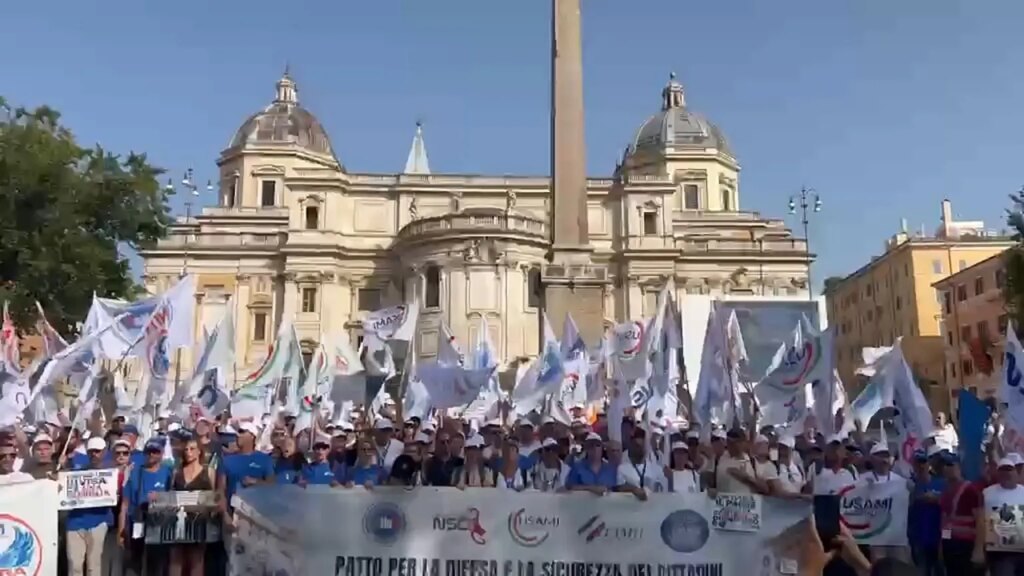
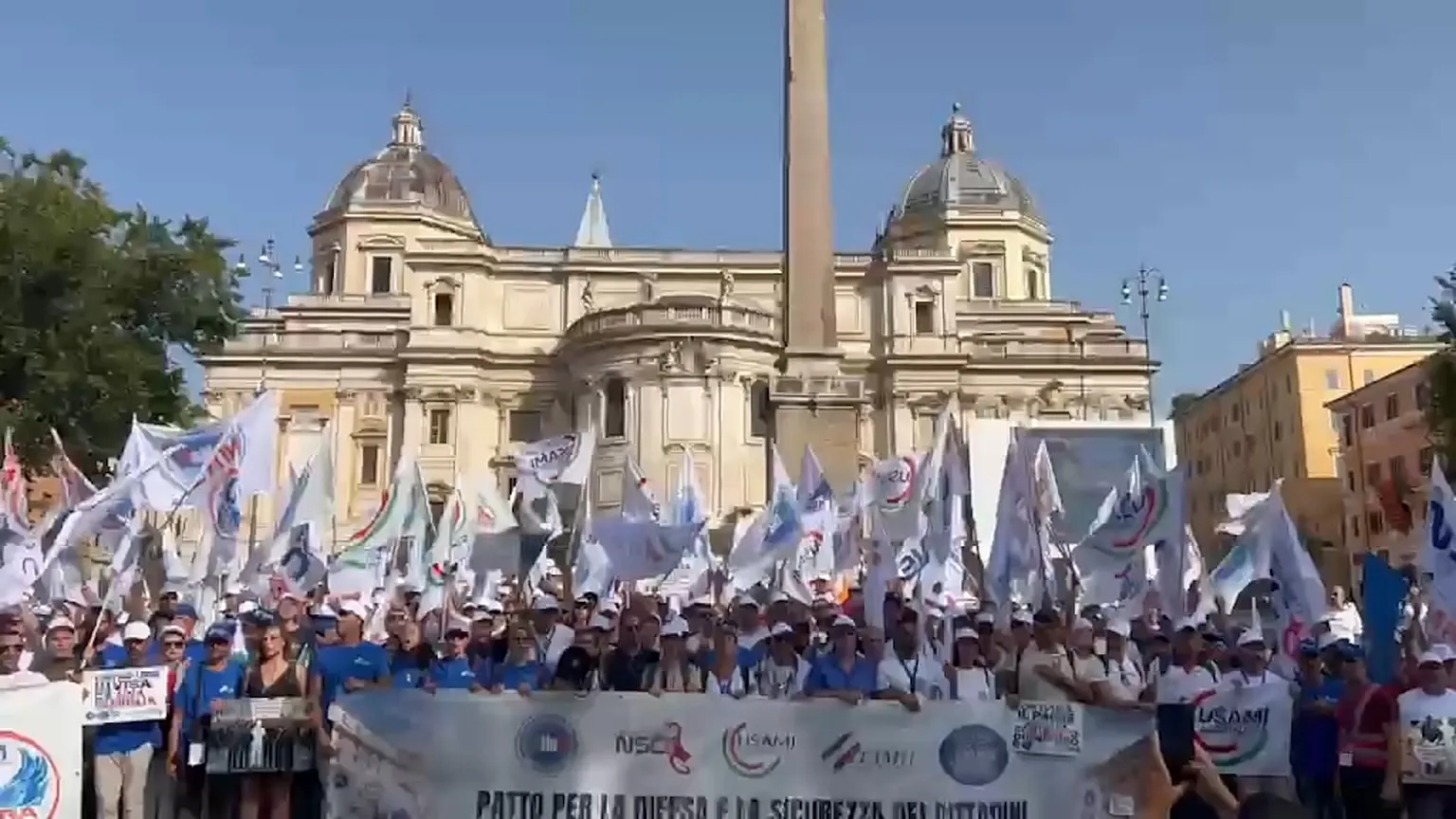
Thousands of personnel from security and defence sectors rallied on Saturday, calling on the government to address the economic downturn and ensure enhanced protections for those defending the State.
Approximately 6,000 individuals from Italy’s armed forces and security agencies marched across Rome on Saturday, advocating for increased wages, improved pension benefits, and stronger workplace safeguards.
 ADVERTISEMENT
  ADVERTISEMENT
The protest united members of the Army, Navy, Air Force, Carabinieri, and Guardia di Finanza in the inaugural joint demonstration organised by the principal defence and security unions of the nation.
This event occurred shortly after the government approved a renewed collective agreement concerning roughly 430,000 military and security staff. The agreement offers a gross monthly salary increase of €188, a lump sum back payment of €2,448, and a pledge to initiate discussions on pension system reform.
Several unions, such as Sinafi, the New Carabinieri Union (NSC), Usami Aeronautica, Itamil, and Silmm, declined to endorse the agreement, arguing it insufficiently addresses issues related to remuneration and retirement. These unions arranged Saturday’s protest to demand further governmental actions.
Marching beneath the slogan, «Every day we serve Italy. Today we demand respect», protesters displayed banners throughout Rome’s streets.
In a pre-demonstration statement, the unions set forth four primary demands: reform of the supplementary pension scheme with a stoppage of proposed retirement age hikes to 65 years, enhanced legal protections for security personnel, salary adjustments aligned with inflation, and increased investment in recruitment, training, and professional modernization.
The rally concluded with a conference addressing the future of Italy’s security, defence, and emergency services, attended by union representatives including those from the New Carabinieri Union (NSC), which rejected the new pay agreement.
“The reason for our refusal to sign this contract was simple: the financial commitments promised have yet to materialize,» stated NSC secretary-general Massimiliano Zetti.
«Within these uniforms working for the state, beneath the state emblem, are not faceless figures, but families and individuals, men and women who serve. Fair compensation is their right. Security carries a cost.»
Law enforcement protests in Europe
Though infrequent, armed forces and law enforcement demonstrations have occurred in multiple EU nations over recent years.
In Italy, police unions held protests in 2023 demanding increased funding for salary raises, wages matching inflation rates, and higher recruitment to ease staffing shortages.
In France, police unions organized strikes and pickets early in 2024, pushing for bonuses and assured shift and leave arrangements ahead of the Paris Olympics, which required significant security preparations.
In Spain, the Jusapol union repeatedly demonstrated in 2024, seeking equal pay for National Police and Guardia Civil officers compared to regional forces like Catalonia’s Mossos d’Esquadra. Some police unions also opposed the government’s Catalan amnesty law at the end of 2023.
Belgian police unions staged protests in 2022 and 2023, including «white strikes,» roadblocks, and temporarily withholding issuing fines for minor infractions. These actions occasionally disrupted access to Brussels Airport.