
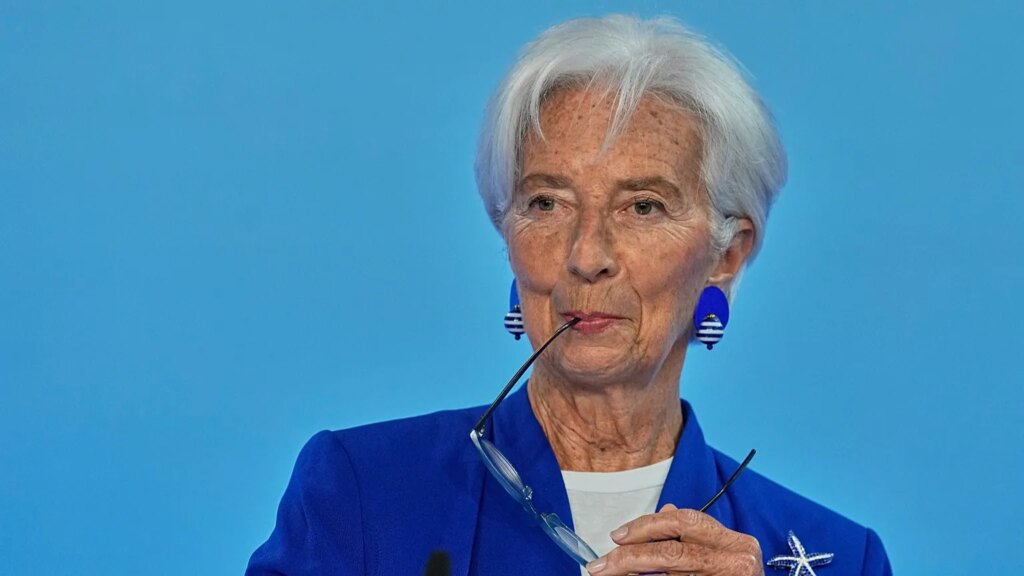
In this edition: an exclusive conversation with EBC President Christine Lagarde, Spain’s proposal for €850 billion EU joint borrowing, and the race among ambassadors to finalize the 21st sanctions package against Russia.
Greetings, this is Angela Skujins delivering this Friday’s newsletter, with Mared Gwyn taking over the editorial duties next week.
 ADVERTISEMENT
  ADVERTISEMENT
Before attention shifts to tonight’s Belgium versus Spain FIFA match at 10 pm (go Red Devils), one topic dominates the political landscape today: finance.
Major borrowing initiative. EU finance ministers convene in Brussels to deliberate a series of matters, notably the Spanish proposal to establish a mechanism enabling joint EU borrowing up to €850 billion annually.
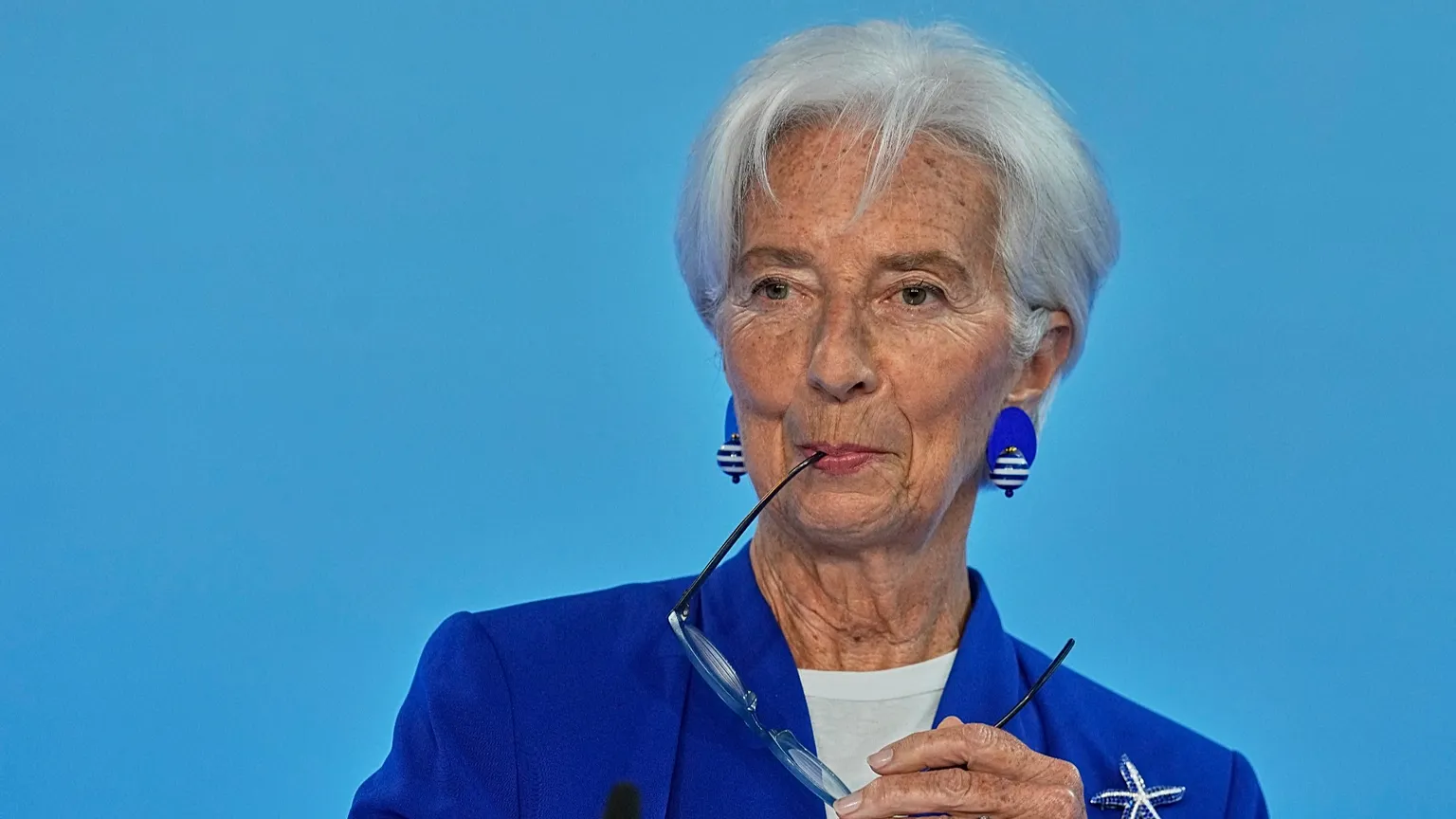
“This deserves discussion,” European Central Bank (ECB) President Christine Lagarde told Euronews’ Europe Editor Maria Tadeo during an exclusive interview on Thursday about the initiative.
«It’s positive that a country like Spain proposes such an idea and brings it to the table for debate. Now it is up to others to indicate which parts they support and which they don’t, plus how to reconcile differences. Progress is necessary,” she stated.
Clarification: Lagarde will neither participate in the meeting nor cast a vote. The ECB’s mandate focuses on monetary policy, price, and financial stability, while this dialogue unfolds among finance ministers and European Commission officials.
For those less familiar, the former French minister who guided France’s economic response during the 2008 crisis is among Europe’s leading economic policymakers.
Her views on subjects such as the digital euro carry weight; similarly, when she declares she is “not a candidate” for the 2027 French presidential race, it draws public attention.
Back to the proposal. Spanish Economy Minister Carlos Cuerpo, the mastermind behind the plan, explained to Euronews that this could reduce borrowing costs by billions and limit market fragmentation.
«We believe the timing is right to advance this proposal. Recent discussions on the international role of the euro included strong arguments about the necessity for a safe asset,» he remarked.
According to my colleague Eleonora Vasques, amid complex geopolitical uncertainties, innovative thinking is essential.
Energy prices might increase again following the resumption of US strikes on Iran, while the EU must shield itself from further shocks and invest in key sectors like artificial intelligence and defense.
Regarding defense, the EU has already created a €150 billion Security Action for Europe (SAFE) joint debt scheme. Nevertheless, some member states advocate for even broader flexibility to address future challenges.
Beyond energy, ministers will further discuss the pressing capital markets reform. EU governments aim for an October agreement, but according to an EU diplomat speaking to Eleonora, meeting the deadline seems unlikely.
Continued disagreements on technical aspects, including the centralization of capital markets supervision, complicate the timeline.
Roland Lescure, French Minister of the Economy, Finance and Industrial, Energy and Digital Sovereignty, recently stated on Euronews’ flagship morning show Europe Today that while Lagarde is «fixated» on the Capital Markets Union, he considers himself «obsessed» with it. Watch.
What’s the status in Budapest? EU finance ministers are expected to endorse Hungary’s updated National Recovery Plan, worth €10 billion. Sándor Zsíros spoke with an EU diplomat expressing optimism about Friday’s talks.
Hungary modified its Recovery Plan following Péter Magyar’s landslide election victory in April, with funding expected to unlock further EU disbursements.
«This meeting is critical as it represents the final legal step before our country gains access to multiple thousands of billions of forints in EU financing,» said Hungarian Finance Minister András Kármán in a social media post prior to traveling to Brussels.
Sanctions on Russia. The EU’s 21st sanctions package addressing Russia’s ongoing invasion of Ukraine is also under intense negotiation today.
Jorge Liboreiro reports that EU ambassadors will gather to attempt finalizing the package, while issues such as cod and LNG remain unresolved.
If no agreement is reached by 15 July, the cap on Russian oil prices will automatically increase to $58 per barrel. Brussels is determined to prevent this unfavorable outcome.
“We are close,” said one diplomat. “I hope for a final discussion on Friday.” (More on this in the main story below).
Trade ban on illegal Israeli settlements. EU ambassadors will today review options proposed by Brussels on Wednesday concerning a complete prohibition of trade with Israeli settlements, along with stricter export licenses and increased tariffs.
This follows a highly anticipated “options paper” sent by Commission President Ursula von der Leyen to EU capitals earlier this week, first reported by my colleagues Maïa de la Baume, Mared Gwyn, and Luca Bertuzzi.
As Mared explains, ambassadors will discuss the matter today before the paper is formally presented at the Foreign Affairs Council on Monday. However, it already faces strong opposition and significant divisions, Luca details in his essential analysis.
EU nations scramble to prevent adverse revision of Russian oil price cap
The European Union is in the final phase of talks to secure a new sanctions package on Moscow, as member states work to avoid a politically damaging increase in the Russian oil price cap.
According to existing rules, the cap—currently $44.10 per barrel—must be automatically recalibrated every six months to stay 15% below the average market price.
The upcoming review is set for 15 July.
Since Russian oil prices surged after the Strait of Hormuz closure, this adjustment will likely raise the cap to about $58 per barrel, potentially easing Kremlin pressure as its economy faces mounting challenges and Ukraine gains momentum militarily.
The European Commission finds this scenario unacceptable and has proposed postponing the review until January to maintain the cap at $44.10 per barrel.
However, Malta, Cyprus, and particularly Greece, countries with strong maritime industries, have voiced concerns about the delay.
«The oil price cap was introduced by the G7 not only to reduce Russia’s fossil fuel income but also to maintain global energy market stability. This goal is particularly vital given the Middle East crisis,» a diplomat stated.
«Any changes to the automatic adjustment of the price cap must be carefully coordinated with G7 partners.»
Read the full story.
Additional reports from our news teams
European Parliament aims to exempt end-to-end encrypted chats from message scanning
A law permitting online communication scanning for child sexual abuse material was amended by Members of the European Parliament on Thursday to safeguard user privacy. Nevertheless, the revised law is expected to trigger disputes among member states. Vincenzo Genovese and Luca Bertuzzi provide further details.
US greenlights sale of Tomahawk missiles to Germany, Chancellor Friedrich Merz confirms
The United States pledged formal approval for the sale of Tomahawk missiles and ground-launched Typhoon systems by August, though the precise missile quantities remain classified. Gavin Blackburn reports.
A World Bank for defense? The financial institution Europe’s major powers have yet to join
Nine nations support a new multilateral bank aimed at funding Western rearmament. However, the notable hesitation of Europe’s largest military and economic powers raises doubts about whether it can effectively finance defense. Quirino Mealha explores the issue.
Also on our radar
- European Commissioner for Enlargement Marta Kos continues her tour in Montenegro.
- European Commissioner for Budget Piotr Serafin holds talks with European Investment Bank President Nadia Calviño in Brussels, Belgium.
This concludes today’s newsletter. Contributions were made by Eleonora Vasques, Sándor Zsíros, Mared Gwyn, Jorge Liboreiro, and Vincenzo Genovese.