
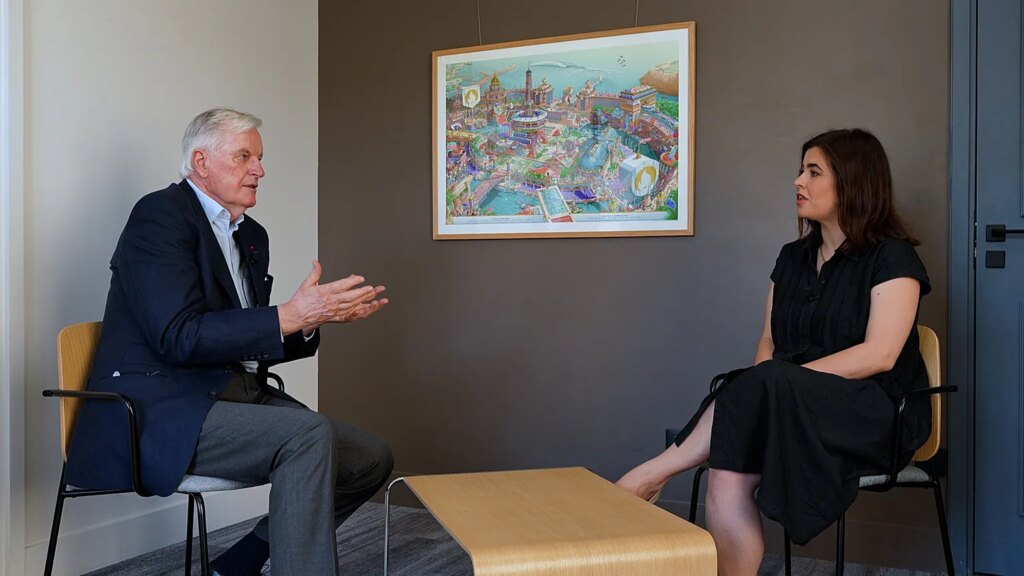
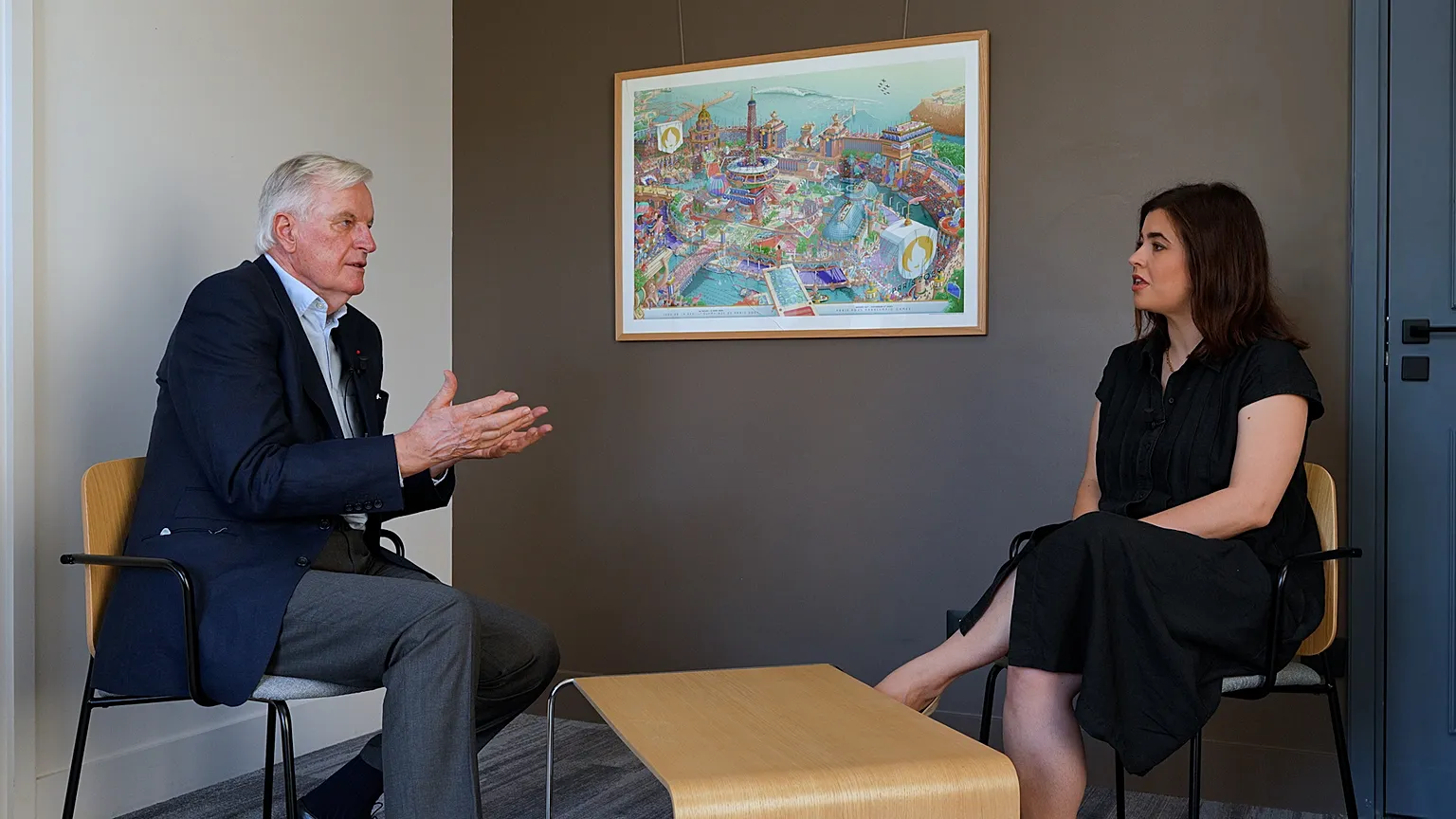
A decade after the pivotal vote, the EU’s former Brexit negotiator affirmed that the bloc remains open to the UK, though London «cannot pick and choose» EU policies.
Michel Barnier, former Brexit negotiator for the European Union, told Euronews that the decision to rejoin the bloc lies with the United Kingdom, while Brussels has clearly outlined its prerequisites.
 ADVERTISEMENT
  ADVERTISEMENT
His remarks arrive on the tenth anniversary of the UK’s referendum to exit the EU, where 52% voted to leave and 48% to stay, at a moment when polls indicate a significant majority of Britons across political lines now view that decision as erroneous.
“Brexit, finalized following a sovereign vote 10 years ago, is settled, yet the future remains open, and the door is still open,” Barnier, a notable centre-right figure and France’s Prime Minister from September to December 2024, stated on Euronews’ show 12 Minutes With.
He emphasized that the UK’s government and political parties understand the terms required for re-entry, highlighting that London cannot negotiate its future ties with Brussels while selectively adopting EU regulations.
Barnier described Brexit as a lose-lose scenario and added that the UK could, theoretically, join the single market—the EU’s borderless economic space—without EU membership, a path followed by Iceland, Liechtenstein, and Norway.
“However, the requirements for any country joining the single market are explicit,” he commented, noting that one such key condition is “respecting the four freedoms”—the free circulation of goods, services, people, and capital.
Currently, full participation in the single market is regarded as off the table.
For instance, not joining the single market was a fundamental “red line” for the Labour government under outgoing Prime Minister Keir Starmer. This stance reflected a commitment to the party’s pre-election manifesto, aiming to retain Leave voters’ support while recalibrating relations with the EU.
Starmer has, instead, sought deeper integration into certain market sectors. Yet this approach, resembling a selective or “à la carte” deal, has historically been rejected by the EU. Barnier reaffirmed that the UK should not be permitted to pick and choose among EU policies.
Uncertainty remains regarding Andy Burnham, currently an MP and the leading candidate to succeed Starmer at Number 10 after his Monday resignation, on his position about this issue.
The Liberal Democrats and pro-EU Labour MPs have already called on Burnham to “drop the red lines” concerning the single market and customs union, which Brussels views as a significant obstacle to rapprochement.
Possibility of swift re-entry
Barnier suggested a potentially expedited process for the UK’s return, should regulatory alignment endure, avoiding the protracted, intricate accession procedures faced by candidate nations like Ukraine, Moldova, and Western Balkans states.
“How long it takes is up to the UK,” he asserted. “If the UK diverges significantly from established standards for food safety or security between now and the start of new negotiations, complications will arise, leading to extended delays.”
He added, “Without substantial divergence, the process could be very swift.” He differentiated this from the lengthy procedures required for new countries to join the EU compared with former members.
Meanwhile, Barnier pointed out that cooperation between Brussels and London remains possible on various fronts.
“There is much to collaborate on, such as defense, security, intelligence sharing, as well as investments in artificial intelligence and emerging technologies,” he remarked.
He proposed establishing a new institution to enable such cooperation between the UK and the EU, describing it as “a kind of European Council for Defence and Security,” which would operate “alongside existing institutions.”
“This body could include countries that are no longer members or not yet members of the EU, such as the UK, Norway, and Ukraine,” he explained.
The UK and the EU are currently engaged in “reset talks,” aiming to finalize agreements on agrifood trade (reducing barriers through aligned sanitary and phytosanitary standards), emissions trading, and youth mobility programs (offering special visas to young Europeans and Britons) at a summit scheduled for 22 July.
Nevertheless, European Council President António Costa confirmed earlier this week that the summit, arranged only last week at the G7 meeting in France, will be postponed due to Starmer’s resignation.