
In this edition: A high-profile conference in Gdańsk faces notable absences from the Ukrainian government, NATO Secretary General Mark Rutte showcases «Trump Trillion» graphs during his visit to the Oval Office, and an EU Commissioner travels to Malta to tackle corruption concerns.
Good morning from Brussels.
 ADVERTISEMENT
  ADVERTISEMENT
This scorching Thursday, Angela Skujins brings this newsletter from Brussels, where temperatures are rising significantly across Europe—including in Belgium’s capital, which has joined numerous countries issuing heat warnings.
Simultaneously, intense activity is expected nearly 1,300 kilometres away in Gdańsk for the Ukraine Recovery Conference. NATO’s Secretary General Mark Rutte is concluding a two-day visit to Washington, DC, where he employed charts for persuasive effect amid potentially heated discussions. Meanwhile, a senior EU official will visit Malta to address the pressing topic of corruption.
To begin, the focus turns to Ukraine.
As detailed by my colleague Sasha Vakulina in a morning briefing, Ukraine’s President Volodymyr Zelenskyy’s absence from the two-day event commencing today may mark the conference’s pivotal political moment.
Divisions among allies. At first glance, Ukraine and Poland are confronting their most severe disagreement in years, triggered by a resurgence of a sensitive and unresolved dispute. President Zelenskyy’s nonattendance coincides with escalating tensions regarding Poland’s objections to naming a military unit after the World War II-era Ukrainian Insurgent Army (UPA).
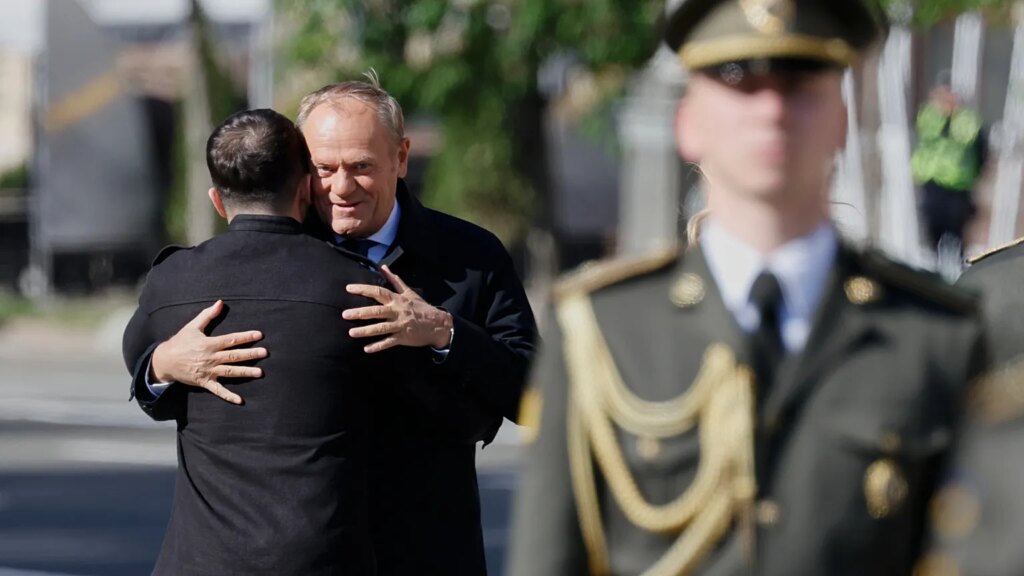
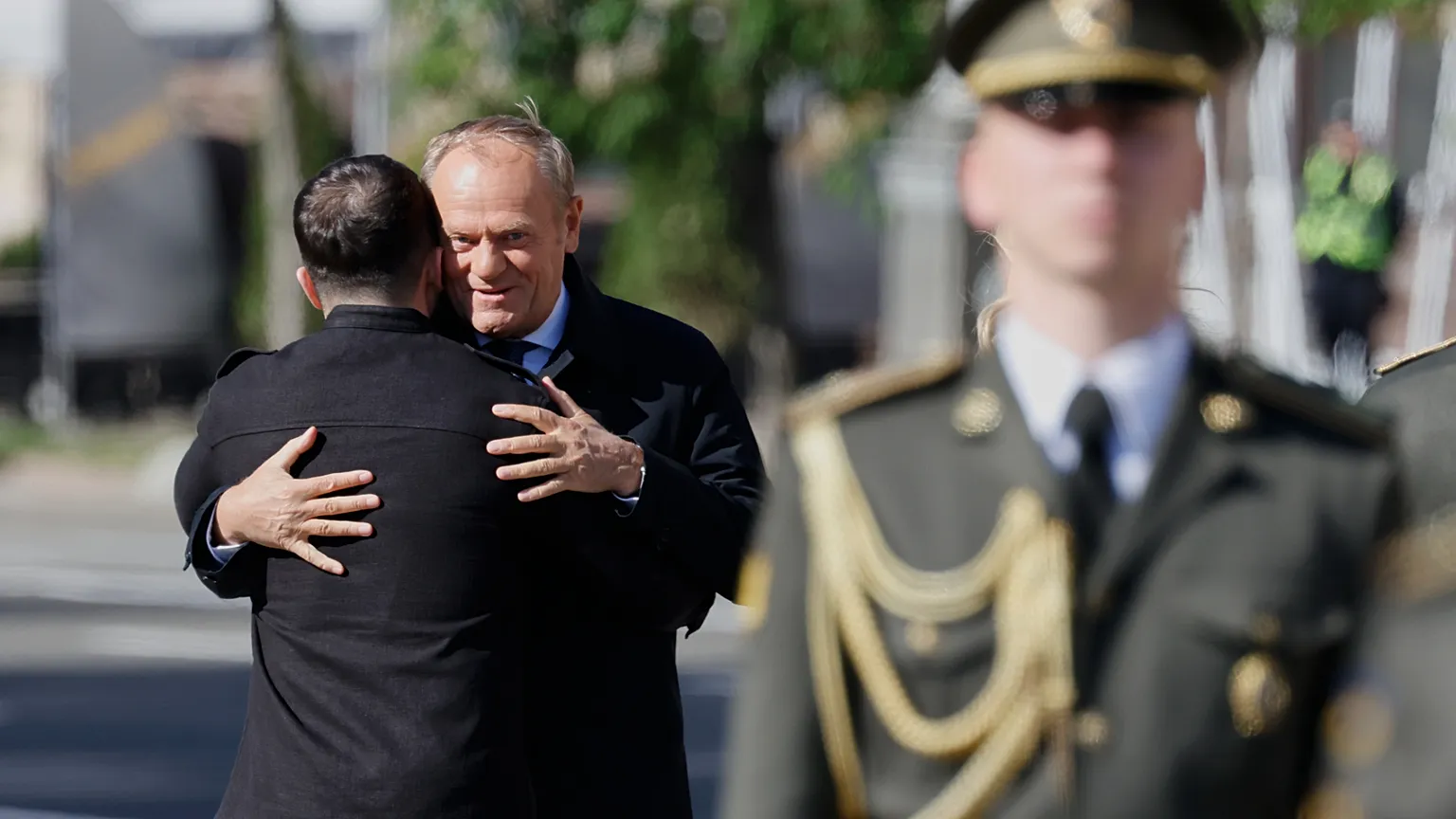
Leading the Polish delegation, Prime Minister Donald Tusk aims to either resolve the conflict or at least prevent escalation. “Considering Poland’s strategic security interests, I will not contribute to exacerbating these tensions,” he stated.
“It is in Poland’s long-term interest to foster relations with Ukraine grounded in a shared vision of the future.” Ukraine’s delegation is headed by Prime Minister Yulia Svyrydenko.
Other prominent international attendees expected include German Chancellor Friedrich Merz, Lithuanian President Gitanas Nausėda, Czech Prime Minister Andrej Babiš, European Council President António Costa, and European Commission President Ursula von der Leyen.
However, the mood is not entirely bleak. Von der Leyen is scheduled to announce the initial €3.2 billion disbursement to Ukraine from the €90 billion loan package EU leaders approved in December. This tranche will assist Kyiv with budgetary and financial demands, while a second payment of approximately €5 billion, allocated for drone manufacturing, is anticipated before the month’s end.
Visual aids on Capitol Hill. Mark Rutte, NATO Secretary General, extends his Washington DC engagements before the upcoming summit in Ankara on 7-8 July, amidst strained relations between the Trump administration and Western allies over the conflict in Iran.
During his visit, Rutte met with senior officials of the Trump administration, including Vice President Vance, as reported by my Euronews colleague Shona Murray. His approach involved a deliberate charm offensive to mitigate US frustrations with Europe’s reluctance to support military actions against Iran.
The US administration has repeatedly criticized its allies for insufficient defense spending, with US Secretary of War Pete Hegseth labeling NATO countries as “freeloaders” at last week’s defense ministers’ meeting in Brussels. Ahead of that summit, Euronews disclosed Rutte’s demonstration of oversized whiteboards illustrating unprecedented increases in European and Canadian defense expenditures since Trump’s presidency began.
“I start with this chart,” Rutte announced, pointing to a graph representing a steep rise in contributions from allies following Trump’s inauguration. His schedule today includes meetings with members of the US Congress and CIA officials. More visual tools are expected.
Challenges in Malta. The European Commissioner for Rule of Law, Michael McGrath, arrives in Malta today to engage with journalists and meet the country’s new Prime Minister, Robert Abela. Malta’s Labour party secured a historic fourth consecutive term in a snap election in May, with 48-year-old Abela at the helm.
Abela has governed Malta since 2020, following his predecessor’s resignation amid a political crisis triggered by the 2017 assassination of investigative journalist Daphne Caruana Galizia, who uncovered extensive corruption at high levels.
In a statement given for this newsletter, McGrath confirmed that Thursday’s discussions, occurring ahead of the 2026 Rule of Law annual report release next month, include meetings with representatives from the Daphne Foundation.
“These talks represent a valuable chance to evaluate progress, address ongoing challenges, and reaffirm our dedication to robust institutions, judicial independence, transparency, and accountability,” he remarked.
MEP David Casa, leader of the European People’s Party Maltese delegation, expressed more skepticism about the visit. “Commissioner McGrath should pose the straightforward question: is the rule of law in Malta stronger today than a few years ago? Many Maltese citizens would respond negatively,” he said.
Nearly nine years after Caruana Galizia’s assassination, justice is still “unfinished,” with an urgent need for “meaningful accountability” and scrutiny of weakened protections. “There remain serious concerns warranting thorough examination during McGrath’s visit,” Casa added.
EU trims Ukraine accession schedule amid Hungarian objections
The European Union has moderated its expectations for Ukraine’s accession negotiations, now aiming to open only two negotiating clusters in July instead of five.
The adjusted schedule in Brussels seeks to advance Cluster 6 (external relations) and Cluster 2 (internal market) before the summer recess, according to multiple officials and diplomats who reported to my colleagues Sándor Zsíros and Jorge Liboreiro. The remaining three clusters will be addressed progressively thereafter.
Ukraine and Moldova, informally linked in this process, initiated Cluster 1 (fundamentals) earlier this month after a two-year delay caused by Hungary’s veto.
This change results from Hungary renewing its opposition and declining to endorse joint letters needed to proceed further.
Budapest views opening all six clusters in a short timeframe as equivalent to expedited accession, a characterization most other member states reject, viewing the clusters merely as initial stages in a prolonged, complex process.
“Issues exist, but we anticipate they will be resolved in time to open at least two clusters in July,” a duly informed EU official told Euronews.
The revised objectives constitute a notable concession by Brussels and Kyiv, who had aimed to unlock all five pending clusters by July’s end.
However, Hungary’s new Prime Minister, Péter Magyar, favors a slower approach and has advised his counterparts to temper their expectations.
Read the full story.
Additional news from our correspondents
Europe’s top five military powers convene ahead of crucial NATO summit focusing on Ukraine
On Wednesday, the leaders of Europe’s largest military forces gathered in Berlin to prepare for next month’s critical NATO summit, concentrating on support and security guarantees for Ukraine, as well as strengthening NATO’s European pillar. Luca Bertuzzi provides the full report.
Twelve EU countries pursue green funding beyond 2030 to manage energy transition
These member states have been more reliant on fossil fuels compared to others in the EU, receiving special funding since 2021 to manage the accelerating transition to renewable energy. Details on this story are from Marta Pacheco.
Brent crude slips below $74 for the first time since the Iran conflict began
As detailed by Doloresz Katanich, Brent crude fell beneath $74 per barrel on Wednesday—its lowest since the onset of the Iran conflict in late February—as investors reduced the geopolitical risk premium that previously drove energy prices upward during the crisis.
Other upcoming events
- Executive Vice-President Raffaele Fitto visits Paphos, Cyprus.
- European Commissioner for Agriculture and Food Christophe Hansen travels to Taranto, Italy to attend the European Wine Summit.
This concludes today’s briefing. Contributions were made by Sasha Vakulina, Shona Murray, and Jorge Liboreiro.