
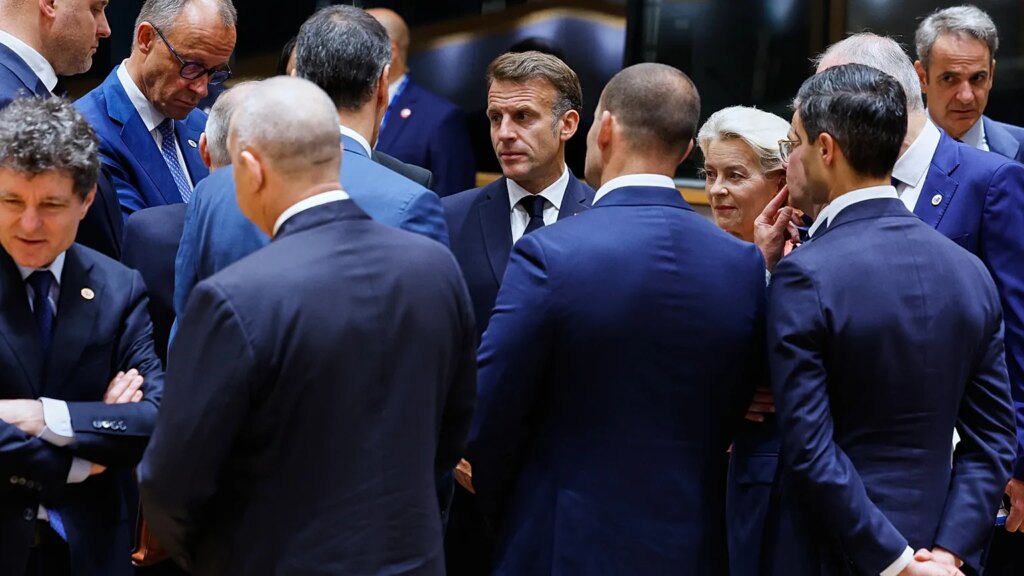
The 27 leaders of the EU have commenced their second day of discussions in Brussels. Central to the agenda is the contentious topic of the forthcoming long-term budget, which is dividing member states into two distinct factions.
The EU summit’s second day is now underway, focusing on debating the Union’s next seven-year financial framework, as outlined by the European Commission with a tentative €2 trillion figure.
 ADVERTISEMENT
  ADVERTISEMENT
Cyprus, holding the EU’s rotating presidency, has tabled a «moderate» 2% reduction, equating to €32.8 billion, to the initial budget draft. For those prioritizing the preservation of agricultural and cohesion funding, this cut is considered sufficient.
However, a bloc traditionally labelled as the «frugals,» who now prefer the term «modernisers,» argue that a 2% decrease falls well short. German Chancellor Friedrich Merz remarked the current offer is «clearly excessive» and insisted «the figures must be lowered.»
Additionally, several EU officials point out that crucial elections in member states like France and Poland next year create urgency to finalize agreements beforehand, as newly elected administrations might disrupt ongoing negotiations.
On Friday, leaders are anticipated to reinforce their non-negotiable demands, red lines, and stipulations, which remain firmly in place despite the collective aim to secure a deal by December at the latest.
Follow our blog for live updates.
${updatedAt}

 ${title}
${body} ${author} 10:56 GMT+2
‘Putin is not ready to negotiate,’ says Austrian Chancellor
Austrian Chancellor Christian Stocker declared that Russian President Vladimir Putin is currently unwilling to engage in peace negotiations to end the conflict in Ukraine, though he welcomed steps taken by the EU to initiate contacts with Moscow’s diplomats.
«It is prudent to be prepared and maintain communication channels for when the time arrives,» Stocker commented, noting ‘there has been no criticism of Costa.»
«Preparations are underway for the eventuality of talks, enabling the European Union to assess its interests during negotiations,» he added.
Marta Pacheco 11:03 GMT+2
EUCO’s second day of meetings begins
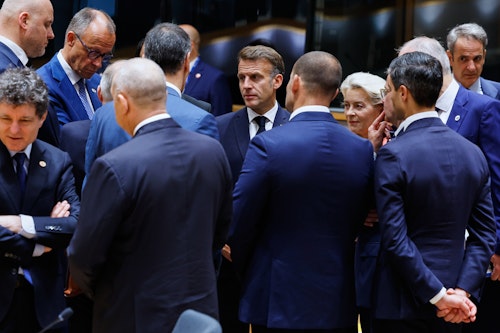
Euronews confirms that the second day of EUCO’s discussions has officially commenced.
Credit: Associated Press
Angela Skujins 10:39 GMT+2
Austrian Chancellor calls MFF’s current framework ‘inadequate’ and demands ‘significant cut’
Austrian Chancellor Christian Stocker criticized the EU’s multiannual financial plan as ‘inadequate’, referring to the proposed «excessively high» budget for the period 2028-2034, which EU leaders are negotiating across various sectors.
«The budget spans nearly seven years, and only then the duration of its decisions becomes evident. (…) The present framework requires a substantial volume reduction,» Stocker emphasized.
He highlighted Austria’s priority on ensuring adequate funds are allocated to agriculture and regional development.
«Furthermore, integrating the rebate issue into the multiannual financial plan to establish a fair distribution remains essential,» Stocker noted.
Marta Pacheco 10:28 GMT+2
Irish PM calls Israel’s communication cut with EU diplomat Kallas ‘unacceptable’
During the European Council’s second day, Irish Prime Minister Micheál Martin strongly defended EU foreign policy chief Kaja Kallas.
«Such a move is unacceptable. Kaja Kallas serves as the European Union’s High Representative,» he stated.
This statement followed Israel’s Foreign Minister Gideon Sa’ar’s announcement to sever dialogue with Kallas after media reports suggested she allegedly likened Israel’s treatment of Palestinians to apartheid South Africa.
Kallas has neither confirmed nor denied these accusations and urged that communication lines remain open.
Luca Bertuzzi 10:23 GMT+2
German Chancellor says MFF figures ‘excessive’ and must be ‘reduced’
German Chancellor Friedrich Merz criticized the present proposal for the EU’s multiannual budget 2028-2034 as «clearly excessive,» calling for a scale-back in numbers following the agreement put forth by the Cypriot EU Presidency, which frugal countries deemed too generous.
«We need to discuss the EU’s revenue since expenditures must align with available funds,» Merz noted, adding that joint borrowing mechanisms that increase EU debt are «not permissible.»
«A coherent conclusion is necessary. Therefore, I expect today’s debate on this contentious matter to proceed with a spirit of strong European collaboration,» the German Chancellor continued.
«A fresh proposal is required on the table, after which the focus will shift to revenue sources and spending structure, promising a compelling dialogue.»
Marta Pacheco 10:38 GMT+2
Irish Taoiseach anticipates ‘progress’ at EU-UK summit in late July
Irish Prime Minister Micheál Martin expressed anticipation ahead of the EU-UK summit scheduled on July 22 in Brussels, coinciding with Ireland’s rotating presidency of the EU Council, and foresees “progress” across multiple agreements aimed at restoring post-Brexit relations.
«We believe substantial developments are possible,» he remarked, hinting at a potential Sanitary and Phytosanitary (SPS) agreement concerning agri-food exports and alignment of emission trading mechanisms between the EU and the UK.
He additionally mentioned the possibility of advancements on integrating the UK into the EU internal electricity market.
Ongoing negotiations between London and Brussels also involve a youth mobility scheme that offers special visas allowing young citizens from both sides to live, study, and work. However, the talks face challenges around visa caps and duration, exposing divisions.
Nick Thomas Symonds, the UK Minister for EU relations, told Euronews in London that he remains «very confident» the UK will secure several agreements at the July summit despite Prime Minister Keir Starmer facing an imminent leadership contest.
Recently, Andy Burnham secured a by-election win in Manchester’s Makerfield constituency and is expected to formally challenge Starmer’s leadership alongside former health secretary Wes Streeting in the near future.
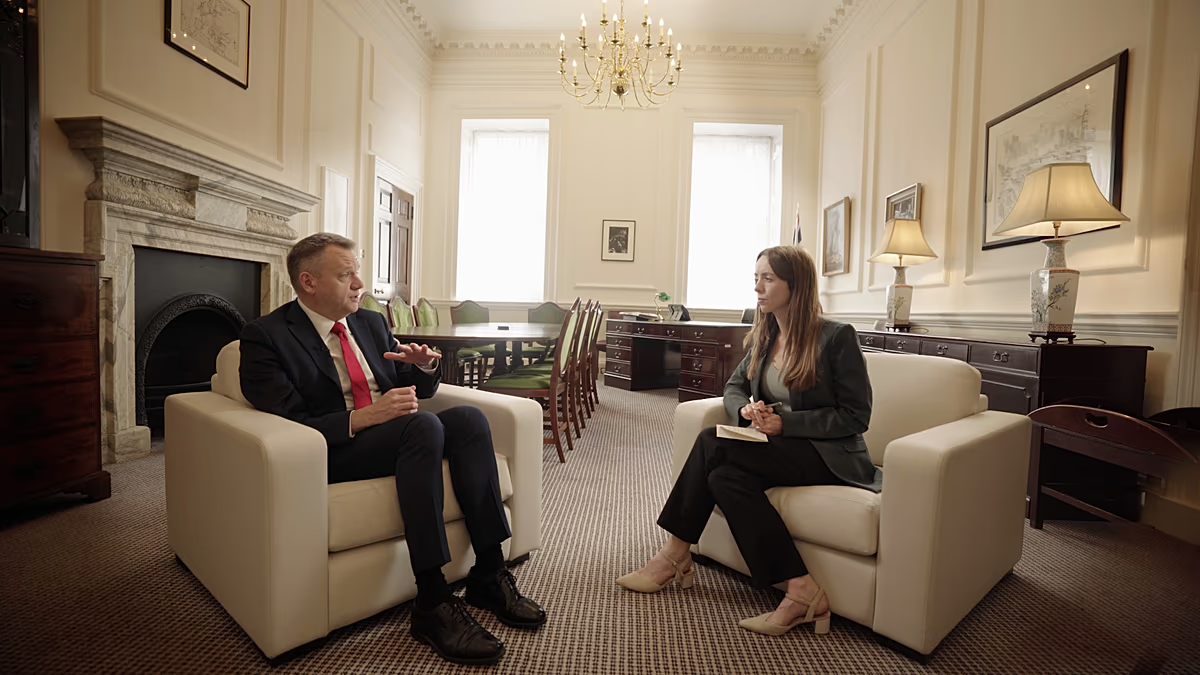
UK minister ‘very confident’ of triple EU reset deal at July summit
Nick Thomas-Symonds expressed optimism about London and Brussels finalizing new commitments on agri-food exports, electricity, and youth mobility during the…
Mared Gwyn Jones 10:17 GMT+2
Opening diplomatic channels with Moscow ‘not an error,’ says Martin
Irish Prime Minister Micheál Martin considers it prudent to establish diplomatic channels with Russia in anticipation of potential peace talks regarding Ukraine.
The statement follows reports that European Council President Antonio Costa authorized an associate to engage with the Kremlin.
«Establishing communication is not an error in our assessment. I have confidence in Antonio Costa,» Martin commented.
«Should negotiations commence within the EU’s jurisdiction, he would represent the Union; however, considerable groundwork remains. Drawing from our experience in conflict resolution, initiating dialogue channels is neither condemnable nor unwarranted.»
Luca Bertuzzi 10:17 GMT+2
EU budget talks expected to be ‘very tough,’ says Irish PM
Irish Prime Minister Micheál Martin anticipates the budget negotiations to be «very tough» as Ireland prepares to assume the EU Council’s rotating presidency in the latter half of the year.
«Numerous conflicting demands exist,» Martin stated, noting one faction pursuing significant budget cuts while others advocate for increased funding in defence, cohesion, and agriculture. «Resolving the core issue of budget size will be extremely challenging.»
He particularly highlighted eastern European countries perceiving Russia as a severe threat, emphasizing their urgent need for defence investments that strain national budgets.
Asked about red lines concerning own resources and potential new taxes to directly fund the EU budget, Martin noted that Ireland, as the upcoming president, holds no fixed positions but recognizes widespread objections, referencing the European Parliament’s proposal of a digital tax given Ireland’s hosting of major US tech firms’ European headquarters.
Luca Bertuzzi 10:12 GMT+2
19 countries encourage willing members to establish return hubs and advance migration policies
In a letter addressed to all European Council members, 19 EU nations urge the implementation of the newly approved returns regulation allowing the establishment of migrant return hubs outside the EU.
The letter, led by Danish Prime Minister Mette Frederiksen and Italian Prime Minister Giorgia Meloni, stresses the importance of delivering “concrete outcomes” and expediting the deployment of solutions based in third countries.
“Full utilization of new modalities is essential, alongside preparedness to effectively overcome existing obstacles to realize these initiatives,” the letter emphasizes.
It notes that some frameworks are already active, such as the Italy-Albania agreement, with other member states working towards utilizing the new options.
This correspondence follows a migration-focused breakfast gathering of several EU heads of state in Brussels.
Signatories include Denmark, Italy, Austria, Bulgaria, Czechia, Greece, Latvia, Malta, Poland, Slovakia, Sweden, Belgium, Cyprus, Estonia, Hungary, Lithuania, Netherlands, Romania, and Slovenia.
Angela Skujins 9:59 GMT+2
Dutch PM calls for EU budget modernization to address emerging challenges
Dutch Prime Minister Rob Jetten highlighted the necessity to adapt the EU budget to evolving priorities ahead of an important discussion scheduled for Friday morning.
«Building a resilient economy for the upcoming decade cannot rely on a budget conceived in the 1990s. It is therefore crucial to align financial resources with current priorities—security and enhanced competitiveness,» he asserted.
«Our shared objective is a Europe that is both safer and more competitive, demanding a budgetary framework that reflects these aims.»
Luca Bertuzzi 9:58 GMT+2
Macron arrives at pivotal summit after G7 achievements
French President Emmanuel Macron has joined the second day of European Council discussions in Brussels, following his successful hosting of the recent G7 summit in Évian-les-Bains.
The G7 summit represented one of Macron’s last major platforms for global influence prior to leaving office next year. It was notable for a welcome resurgence of unity among Western leaders, particularly as US President Donald Trump engaged constructively on Ukraine issues.
For those who missed the G7 details, Euronews has compiled a comprehensive summary.
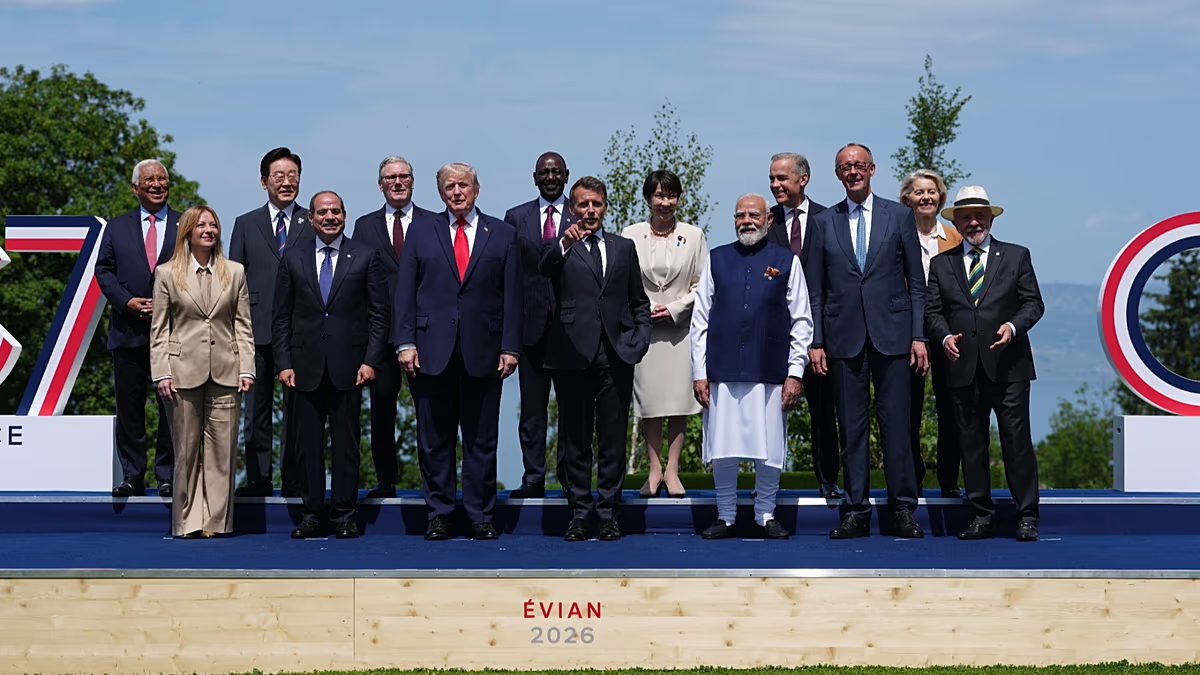
Six key points from the G7 summit in Évian
G7 leaders convened in France to deliberate on Ukraine, Middle Eastern affairs, and global challenges during a high-profile three-day meeting. Here’s what you must know…
Luca Bertuzzi 9:58 GMT+2
Leaders agree not to dispute EU representation in negotiations with Russia, says Jetten
Dutch Prime Minister Rob Jetten affirmed that Europeans will stand united when negotiations with Russia commence, speaking ahead of the European Council’s second day.
«Putin currently shows no readiness to negotiate,» remarked Jetten, emphasizing the need for continued support to Ukraine and maximum pressure on Russia meanwhile.
«When negotiations become an option, the EU stands prepared to engage on security guarantees and future EU-Russia relations. There will be no dispute over who leads such talks for the Union,» he concluded.
Luca Bertuzzi 10:15 GMT+2
Council unable to decide on EU envoy to Russia, states Czech PM
Czech Prime Minister Andrej Babiš addressed controversy surrounding European Council President António Costa’s diplomatic contacts with Russia, facing criticism over potential EU envoy designation.
Babiš contended it would be unreasonable for only Ukrainian President Volodymyr Zelenskyy to participate at negotiations given Europe’s financial contributions.
«Meloni is an excellent leader with pragmatic views, and our perspectives align on nearly everything,» Babiš said, alluding to Italian PM Giorgia Meloni as a possible mediator.
He also acknowledged the European Council’s inability to finalize consensus on whether to proceed or on participant roles in potential agreements.
«Thus, prolonged discussions continue without resolution,» he summarized in reference to evening talks among EU leaders.
Maïa de La Baume 9:54 GMT+2
Magyar tells EU peers he prioritizes representing Hungarians over popularity
Hungarian Prime Minister Péter Magyar reflected on his inaugural European Council session, stating his opening remarks emphasized “honesty” and moving past “political correctness and doublespeak.»
«I stressed that my aim is not to be popular in the chamber or in Brussels but to represent the Hungarian people at all times. I honor that commitment and expect reciprocity from my country,» Magyar posted on social media, noting his speech received applause.
The Prime Minister also expressed support for tougher EU measures on illegal migration.
Sandor Zsiros 9:51 GMT+2
‘They call me the Emissions Trading System in the European Council,’ says Czech PM
Czech Prime Minister Andrej Babiš revealed that EU leaders nickname him ‘ETS,’ referring to the Emissions Trading System, the EU’s carbon market that mandates polluters pay for CO2 emissions related to their operations.
His moniker stems from his candid stance advocating that the European Commission should abolish the ETS, warning that failure to do so would further erode the competitiveness of European industries.
The debate centers on the Commission’s recent proposal to curtail free emission allowances for sectors, a plan that has prompted concern even among supporters of ETS.
«The Commission does not seem inclined to revise its course. We have achieved extensions of permit validity, advocated rational benchmarks, and defended against volume cuts originally planned,” Babiš stated, pointing to challenges in Germany’s automotive sector.
A revised ETS proposal is expected on 15 July.
9:42 GMT+2
Czech PM skeptical of EU ability to seal trade deal with China
Czech Prime Minister Andrej Babiš described the EU’s dependence on China for critical resources as “quite dramatic” amid discussions on trade imbalances between Beijing, Washington, and the Union.
«I am rather doubtful that the EU could unify with China similarly to agreements like Mercosur or with other European countries,» Babiš remarked, acknowledging Trade Commissioner Maroš Šefčovič’s efforts to advance international commercial accords.
Maïa de La Baume 9:44 GMT+2
Latvian PM criticizes Costa as Russia interlocutor and voices Worries over MFF
Latvian Prime Minister Andris Kulbergs reiterated his opposition to European Council President António Costa speaking on the EU’s behalf with Russian President Vladimir Putin.
“There must be clear indications that Russia is open to dialogue. At this moment, there are none,” Kulbergs told journalists upon arriving at the European Council’s second day in Brussels.
“Establishing diplomatic links is pointless without legitimate grounds for negotiations.”
His comment followed discussion that Costa initiated communication channels with Putin’s administration on behalf of Ukrainian President Volodymyr Zelenskyy, a move dividing opinion across the bloc.
Meanwhile, Kulbergs emphasized that the upcoming Multiannual Financial Framework requires “particular focus” on regions along Europe’s eastern border, where communities face depopulation due to proximity to the Ukraine conflict.
“Essential are schools, healthcare, and housing,” Kulbergs said.
“We cannot allow population outflows driven by geopolitics; that would weaken our borders.”
Angela Skujins 9:35 GMT+2
The ‘frugals’ versus the ‘friends of cohesion’ – who belongs to which group?
Friday’s second day of European Council negotiations is centered on the EU’s long-term budget, known in Brussels as the Multiannual Financial Framework (MFF). The talks are shaping into a contest between the so-called “frugal” countries and the “friends of cohesion.” But what do these labels actually signify?
The frugals mainly consist of net contributors: Germany, the Netherlands, Denmark, Sweden, Finland, and Austria. Their small but influential alliance pushes for an overall budget cut and a shift away from traditional policies like cohesion and common agricultural funds towards emergent priorities such as economic competitiveness and defence. Because of this stance, they prefer the term «modernisers.»
In contrast, the «friends of cohesion» are a larger group including 17 nations: Bulgaria, Croatia, Cyprus, Estonia, Greece, Italy, Latvia, Lithuania, Malta, Poland, Portugal, the Czech Republic, Romania, Slovenia, Slovakia, Spain, and Hungary.
This coalition favors a more ambitious budget aimed at preserving funding for Europe’s poorest regions and agricultural sectors. However, approval requires unanimity among all member states, and leaders remain far apart on consensus.
Luca Bertuzzi 9:16 GMT+2
Italian PM Meloni meets Commission chief VDL, prepares for migration talks
Italian Prime Minister Giorgia Meloni convened with European Commission President Ursula von der Leyen on the sidelines of the European Council summit Friday morning.
The meeting preceded the summit’s formal second day start, which opens with a breakfast on innovative migration solutions, organized jointly by Italy, Denmark, and the Netherlands.
Luca Bertuzzi 9:35 GMT+2
How does the EU’s seven-year budget process unfold?
The 27 EU heads of state convened in Brussels for what promises to be a heated debate regarding the European Commission’s €2 trillion proposal for the multiannual financial framework (MFF). Here is a concise overview.
- 16 July 2025: The European Commission proposes a €2 trillion budget for 2028–2034, marking the MFF.
- 26 May 2026: Sixteen countries, styling themselves as the «Friends of Cohesion,» sign a document demanding increased agricultural and regional aid within the MFF, voicing concerns over funding cuts to the Cohesion, Common Agricultural (CAP), and Common Fisheries Policies (CFP).
- 11 June 2026: Cyprus, chairing the EU Council presidency and representing all 27 members, suggests a 2% (€32.8bn) cut to the initial €2 trillion draft to reconcile frugal and cohesion-supporting states.
- Future: Final approval of the budget demands unanimous consent from all 27 members and the European Parliament’s agreement.
Angela Skujins 8:57 GMT+2
EU leaders begin arriving for second day of critical summit
EU heads of state and government have started arriving in Brussels to continue the European Council’s second day.
Notable arrivals include Czech Prime Minister Andrej Babiš, European Commission President Ursula von der Leyen, and Swedish Prime Minister Ulf Kristersson.
Also present are Italy’s Giorgia Meloni, Belgium’s Bart De Wever, Bulgaria’s Rumen Radev, and Slovenia’s Janez Janša.
Hungary’s new Prime Minister Péter Magyar, attending his first EU leaders meeting, canceled his doorstep statement ahead of the session resuming.
Luca Bertuzzi 8:32 GMT+2
EU leaders prepare for intense discussions on the next long-term budget
The EU’s forthcoming long-term budget is a primary topic as European leaders reunite in Brussels for the summit’s second day.
The debate is anticipated to be contentious. The so-called “frugals,” also known as modernisers, expressed strong dissatisfaction with the Cypriot presidency’s recent budget proposal, which calls for only a 2% overall cut while focusing reductions on competitiveness and defence funding.
“This proposal belongs in the trash bin,” Dutch PM Rob Jetten declared upon arrival yesterday, capturing the sentiment among net contributor states who claim the plan unduly favors the “friends of cohesion” bloc, including Cyprus.
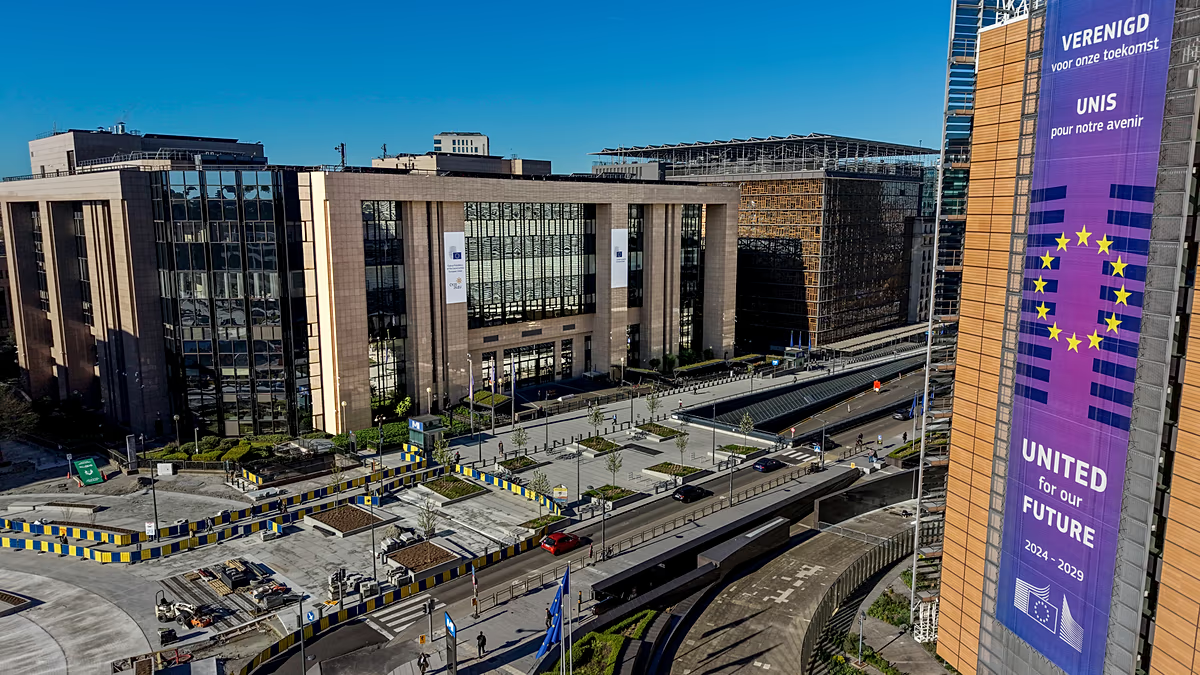
EU leaders negotiate on shared budget amid cash disputes
Governments hold intense talks over the allocation of €2 trillion in EU funds for the next seven years, with frugal nations pushing for deeper cuts…
Luca Bertuzzi 8:30 GMT+2
Day two of EUCO meetings about to begin
Good morning EU enthusiasts,
Today marks the start of the European Council summit’s second day in Brussels, with statements from a number of the 27 EU heads anticipated around 8:35 CET.
The agenda comprises a breakfast session on migration followed by ongoing talks throughout the day on the EU’s long-term budget, concluding with a press briefing in the afternoon.
Formally, the focus yesterday was to address “macroeconomic concerns” — a term referring mainly to the EU’s trade deficit with China — however, much of the spotlight shifted to European Council President António Costa’s decision to open communication channels with Russian President Vladimir Putin at the request of Ukrainian President Volodymyr Zelenskyy.
Angela Skujins