
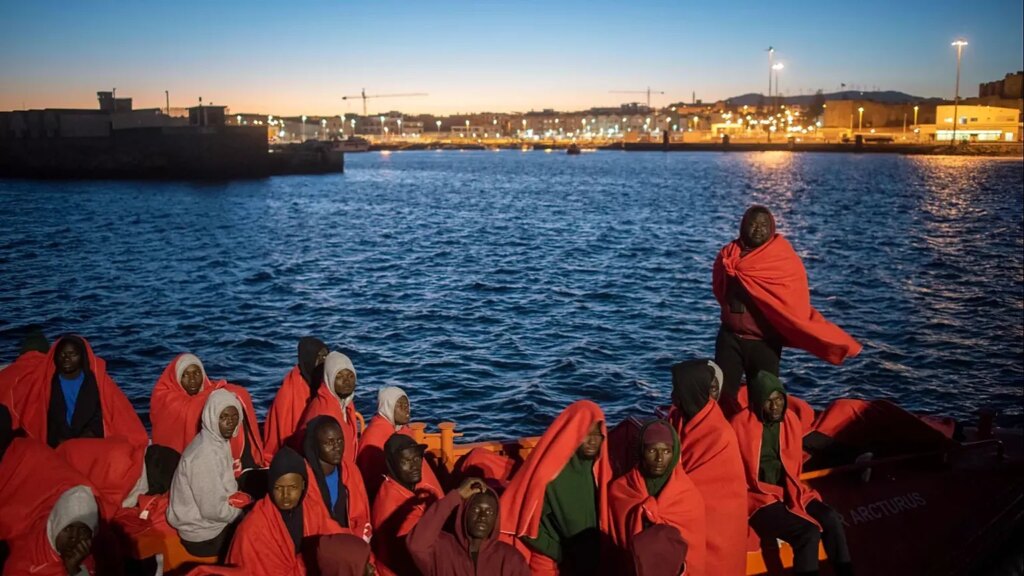
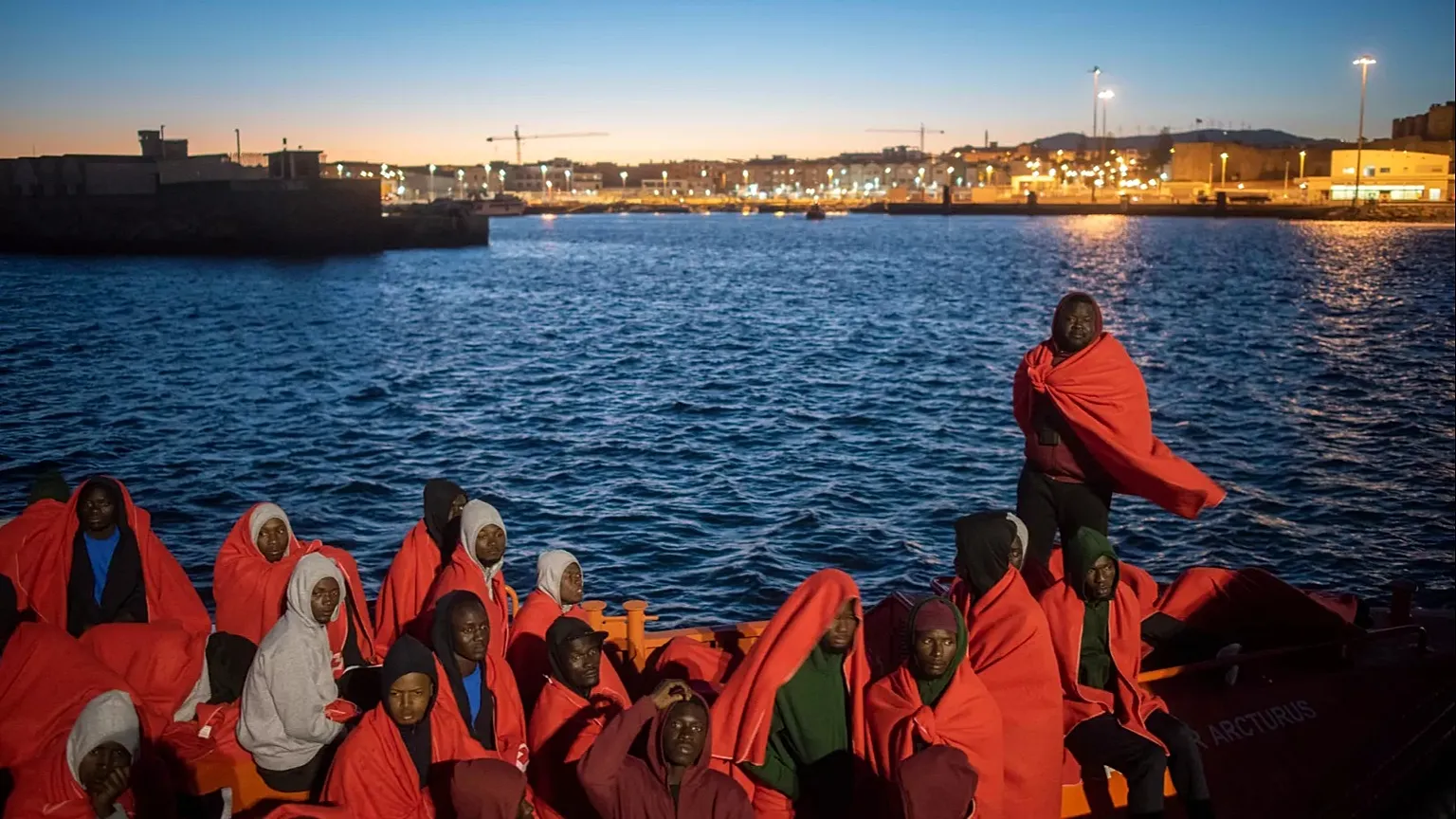
A new migration regulation implementing «mandatory solidarity» has effectively been bypassed by EU member states, which plan to relocate fewer than 9,000 asylum seekers this year—despite the annual minimum being established at 30,000.
The European Union’s new Pact on Migration came into effect on Friday, granting the bloc a uniform framework to handle migration across all member countries—at least in theory.
 ADVERTISEMENT
  ADVERTISEMENT
The pact contains eight legislative measures aimed at enhancing cooperation among member states on migration, imposing stricter duties on frontline countries to curb irregular entries, and accelerating asylum processing.
The legislation introduces a border procedure that reduces the evaluation time for asylum claims for specific applicant groups to 12 weeks, with an additional 12 weeks allocated for returning those denied protection.
While it maintains the fundamental rule that third-country nationals must seek asylum in the EU member where they first arrive, it also establishes a «mandatory solidarity» framework, providing three options for countries to manage migration flows: hosting asylum seekers on their territory, financially supporting frontline states, or contributing to border personnel, equipment, surveillance, and operational costs.
However, the «mandatory solidarity» commitment the pact enforces is not strictly obligatory in the originally intended sense. Rather, member states have employed diverse strategies to limit their support for frontline countries and minimize the intake of migrants.
Consequently, the target figures for 2026 fall significantly short of the pact’s required minimum annual contribution. Fewer than 9,000 asylum seekers will be relocated, despite nearly 669,000 people having claimed asylum in the EU last year and about 800,000 individuals currently within the asylum system. Simultaneously, less affected countries will contribute a mere €76 million in financial support to those under migratory pressure.
Juan Fernando López Aguilar, a Socialist MEP who was responsible for negotiating the solidarity mechanism in the previous parliamentary term, described this year’s forecasted contributions as «ridiculous» in an interview with Euronews.
But how did the pact’s minimum contribution target erode so drastically?
Diminished solidarity
Per the EU’s Asylum and Migration Management Regulation—which comprises the main framework of the pact—the Commission is required to propose annually a «solidarity pool» detailing the aid member states must provide to one another for the upcoming year.
This pool features two core components: a mandatory quota for relocating asylum seekers from countries deemed «under migratory pressure» and financial contributions from other members, including funding «alternative solidarity measures» like infrastructure and equipment procurement.
The minimum threshold for the solidarity pool is set at 30,000 relocations and €600 million in financial contributions. Each member state’s «fair share» is calculated based on its population and GDP, allowing governments to decide how they fulfill their obligations.
The European Commission has consistently emphasized that «solidarity is mandatory but flexible,» a phrase frequently reiterated by EU Commissioner for Internal Affairs and Migration Magnus Brunner.
For 2026, Spain, Italy, Greece, and Cyprus are classified as countries under migratory pressure, thus eligible for solidarity support. Conversely, Czechia, Croatia, Austria, and Poland have been fully exempted from quotas for facing a substantial migratory challenge. The other 19 member states are expected to contribute through either payments or relocation of asylum seekers.
MEPs who reviewed the full solidarity pool proposal—kept confidential—reported that the Commission set both the minimum relocation numbers and financial contributions as low as possible to align with member states’ limited ambitions. Despite this accommodation, national governments further lowered their commitments.
During discussions to determine 2026 contributions, several states argued that initial solidarity obligations should be prorated because the new migration framework will only apply to the latter half of the year. Although this proration is not explicitly stated in the law, an agreement was reached to diminish the solidarity pool accordingly.
At a Brussels meeting on 8 December 2025, EU Interior Ministers consented to 21,000 relocations «or other solidarity efforts» and €420 million in financial contributions, specifying each member state’s expected share.
The minimum threshold has faced pressure from other directions as well. According to multiple EU officials, the appropriate level of the threshold—and whether one should exist—is a legally contentious issue, with the Commission and certain member states holding divergent views.
The legal agreement specifies the solidarity pool “shall be at least” 30,000 relocations and €600 million but also that these figures should be based “on the needs identified by the Commission.”
This wording has been interpreted by the Council’s legal service as allowing for a potential reduction of the minimum threshold; while the European Commission will propose maintaining the baseline and encourage compliance, it lacks the legal power to enforce adherence by member states.
Unwilling participants
Meanwhile, during negotiations setting the solidarity pool, Hungary and Slovakia intentionally chose not to make contributions in either relocations or funding—breaching the “mandatory solidarity” principle without facing penalties from the Commission thus far.
Talks between Brussels, Bratislava, and Budapest continue. An EU official informed Euronews that Hungary’s new Prime Minister, Péter Magyar, shows greater willingness to cooperate than his predecessor, Viktor Orbán.
Nevertheless, Magyar has clearly stated that Hungary will not accept any asylum seekers from other member states and warned that failure to provide any financial contribution by the end of 2026 could trigger infringement proceedings from the Commission.
Insiders note that the system can still operate without contributions from Hungary and Slovakia; however, their refusal to participate risks setting a disruptive precedent that might encourage similar behavior from other countries.
While Hungary and Slovakia abstain entirely, other governments demonstrate hesitation in welcoming migrants. Of the 19 obligated EU countries, only seven have opted to take relocations, whereas nine contribute only financially.
Moreover, even where relocations occur and payments are made, actual numbers of transfers and amounts contributed will be smaller than official figures suggest due to another legal nuance.
The Council’s quota allocation includes «fair shares» for countries under pressure, which count towards totals but do not result in genuine solidarity on the ground. For instance, Spain pledged €42 million to the pool but will effectively pay nothing as it is classified under migratory pressure and will be a net recipient in this cycle.
Considering solely the «real» commitments from countries obliged to provide solidarity—those not under migratory pressure—the total amounts to 8,878 relocations and €76.3 million.
Solidarity under threat
The consequence is a substantial reduction in solidarity support destined for Spain, Italy, Greece, and Cyprus during the first distribution cycle. This explains why Spain and Cyprus abstained in the December vote establishing the solidarity pool, which was otherwise approved by most EU countries.
A Spanish statement, included in meeting minutes, noted: «The notable gap between identified needs and legal obligations, as well as the final decision, fails to guarantee effective solidarity […] nor does it ensure that all countries meet their contribution obligations.»
Madrid regards the assistance from other member states as «grossly inadequate» and fears that this cycle may set a precedent. Several analysts agree with this view.
“The numbers have been deliberately set low and decreased through the process,” Lukas Gehrke, director of the International Organization for Migration’s Brussels office, told Euronews.
Others argue that the priority should be the mechanism’s effective operation and that numbers can be adjusted over time. Commissioner Brunner believes current solidarity levels might suffice given the present circumstances.
“Member states currently say it’s enough, but naturally, we cannot predict how conditions will evolve,” he told Euronews on Thursday.
Swedish MEP Tomas Tobé, rapporteur for the regulation, described the present figures at a press briefing as an «acceptable start» with «room for improvement.»
Even fewer actual relocations anticipated
Beyond reductions, member states have another legal mechanism to avoid physically relocating asylum seekers from other EU countries.
This mechanism, known as the «responsibility offset,» allows a member state to account for asylum seekers currently on its territory—who should have applied for asylum in their first EU country of arrival—as fulfilling part of its relocation quota.
This quota is then subtracted from the relocations that the member state is required to accept, effectively lowering actual transfers under the pool’s obligations.
Germany is expected to invoke this offset, having established bilateral agreements with Greece and Italy. According to a diplomat, several other countries, including France, follow a similar approach because it is more feasible and politically palatable domestically than accepting new arrivals.
Consequently, fewer than 1,000 asylum seekers will be physically relocated between countries in 2026.
“There will be very few flights or buses transporting asylum seekers across Europe,” the diplomat told Euronews.
Thus, the ambitious target of tens of thousands of annual relocations mandated by the pool’s «minimum threshold» remains postponed.