
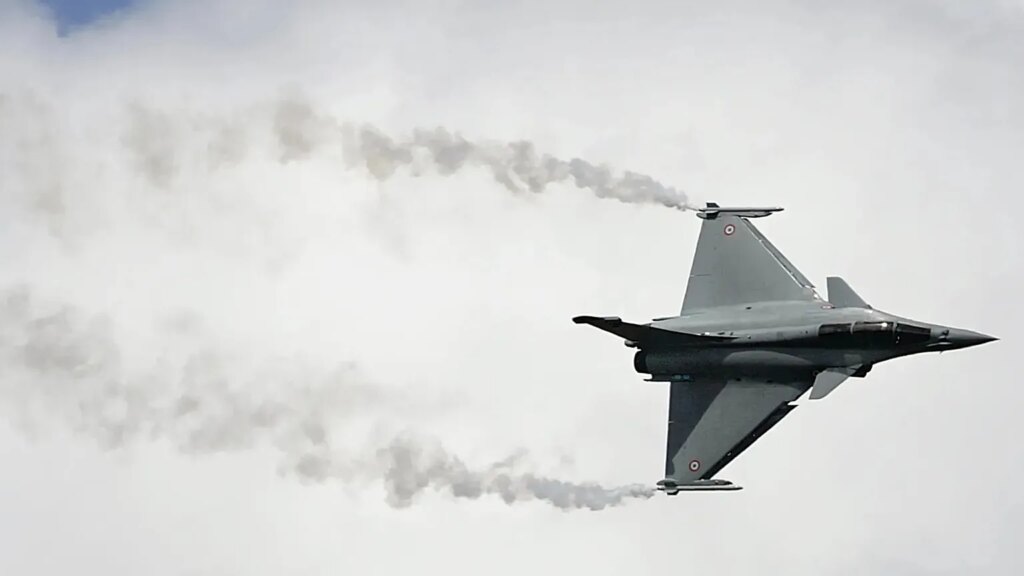
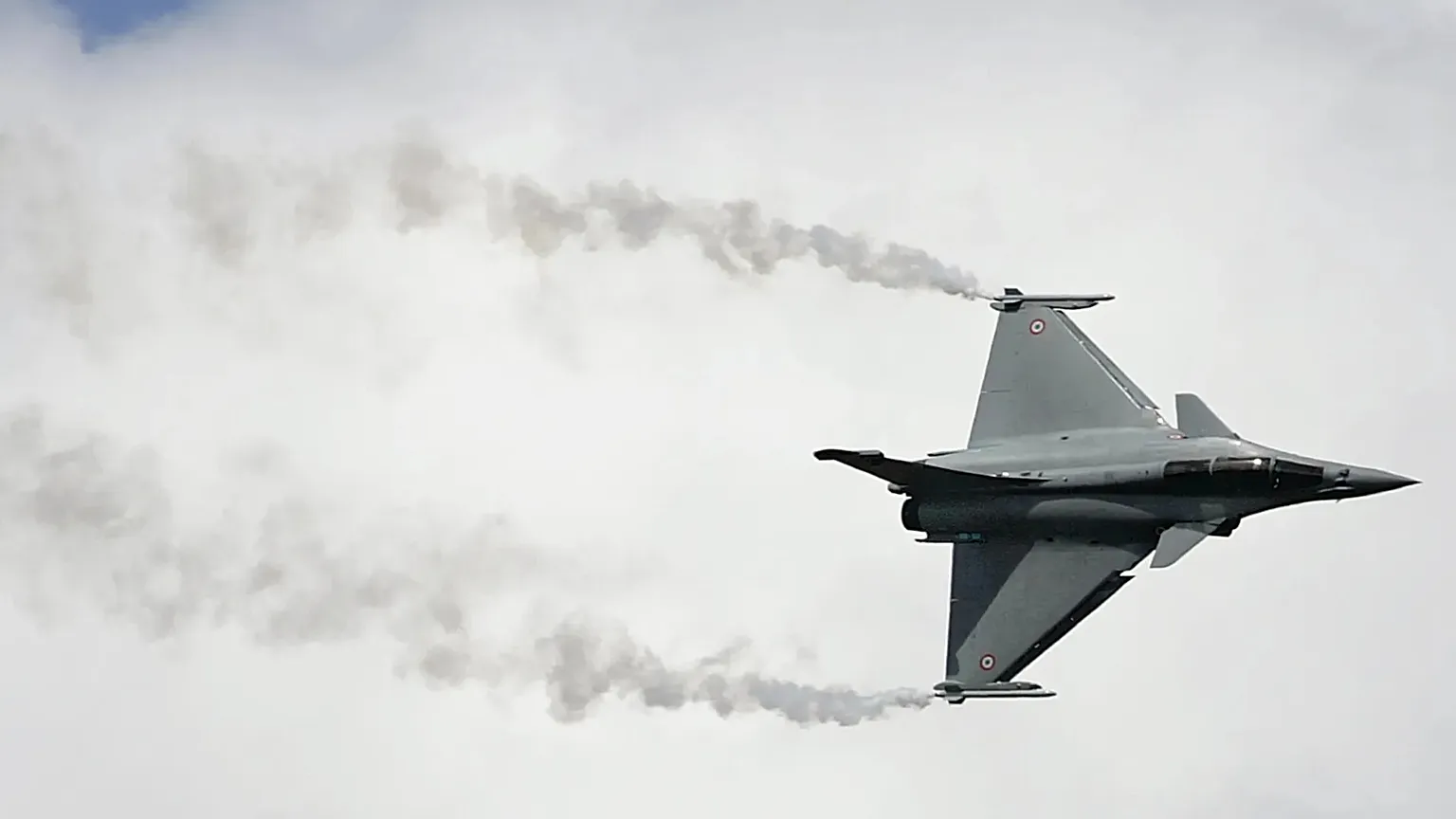
Conceived as Europe’s largest collaborative defence initiative, FCAS has been discontinued following the inability of French and German corporations to resolve prolonged disputes despite ongoing political efforts.
After a series of talks and multiple postponements, Germany and France officially terminated their joint efforts on the Future Combat Air System (FCAS) on Monday.
 ADVERTISEMENT
  ADVERTISEMENT
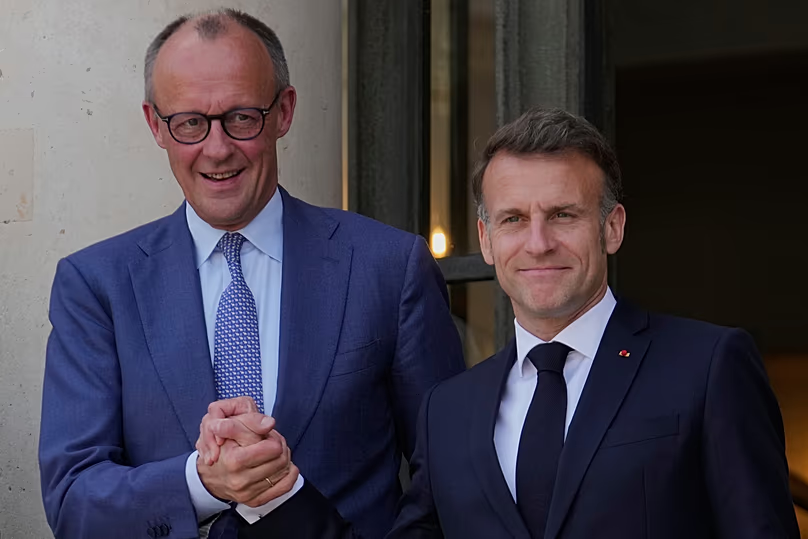
The Élysée Palace stated that «the German authorities concluded it was impossible to exert additional pressure on the involved companies.»
This announcement marks the conclusion of prolonged attempts to create a new generation European fighter jet.
FCAS was regarded as the most extensive defence venture undertaken in Europe to date. Initiated in Paris in 2017 by French President Emmanuel Macron and former German Chancellor Angela Merkel, the project aimed to establish the core of European air superiority for many years ahead.
Central to the program was a fighter aircraft known as the «Next Generation Weapon System» (NGWS), designed to operate in coordination with unmanned drones and linked via a digital combat cloud. This aircraft was expected to integrate stealth features, electronic warfare technologies, and long-range precision strike capabilities.
Differing from current fighter jets like the Eurofighter Typhoon and Dassault Rafale, FCAS was envisioned as a connected system combining aircraft, drones, and sensors into a unified battlefield network. Cost estimates for the program recently ranged between €80 billion and €100 billion.
Reasons behind the FCAS project’s failure
The primary cause for the programme’s dissolution was an intensifying conflict between the defence contractors Airbus and Dassault. As late as March, leaders from Germany and France attempted a final mediation to reconcile the opposing parties.
Initially, Dassault, the French firm responsible for the Mirage and Rafale fighter jets, was slated to lead the development of the aircraft itself. Airbus, the Franco-German aerospace corporation partially owned by France and Germany at around 10% each, was assigned responsibility for the drones. Spain holds a minor stake in Airbus as well.
The distribution of tasks aimed to leverage each company’s specialty. However, soon disputes arose regarding the management of the project, access to confidential technology, and ownership of intellectual property created throughout the development. According to German public broadcaster ZDF, Dassault CEO Éric Trappier showed reluctance to share sensitive data and patents with Airbus.
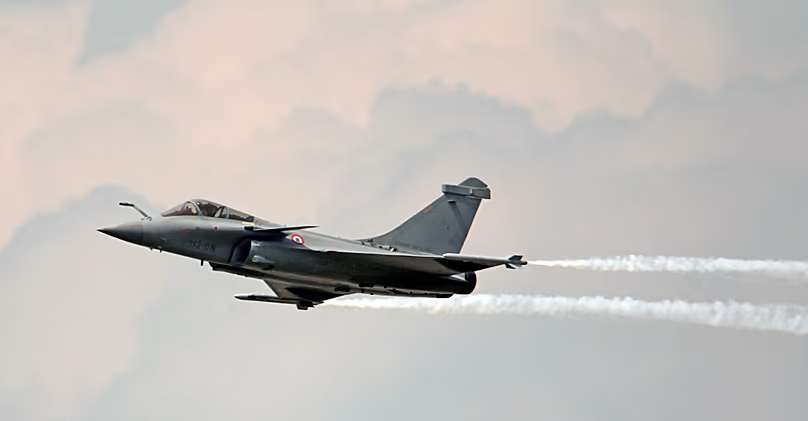
Reports also highlight conflicts over future revenue sharing and programme governance. A highly disputed matter was who would ultimately oversee the initiative. Dassault insisted that, as the lead contractor for the fighter jet, it deserved the leadership role. Airbus, on the other hand, opposed any subordinate position.
Dassault justified its claim by stating it had the full capability to design a combat aircraft “from start to finish.” Airbus argued that given FCAS’s magnitude, a more equitable partnership structure was necessary.
Despite extensive negotiations and frequent political intercessions, compromise remained elusive.
Additionally, divergent military requirements caused further friction. France demanded a fighter jet capable of nuclear armament and carrier-based operations to match its military priorities. Germany, conversely, saw no need for either feature.
The controversy intensified in early 2026 when Airbus CEO Guillaume Faury suggested creating two distinct aircraft variants to meet the varying demands. Rather than easing tensions, this proposal seemed to worsen the divide between the partners.
In early March, Dassault accused Airbus of deliberately weakening the programme. “Airbus no longer wants to collaborate with Dassault,” said Dassault CEO Éric Trappier in an interview with the French newspaper Le Monde that month.
Combat Air Cloud development to continue
Although the fighter jet project will be halted, segments of the broader initiative are expected to proceed. Government sources indicate that work on the combat cloud—a network linking drones, sensors, AI systems, and real-time battlefield data processing—will carry on.
Airbus is anticipated to seek new collaborations. Industry insiders suggest potential partnerships with Sweden’s Saab AB and the multinational British-Japanese-Italian fighter jet development programme. Meanwhile, Dassault is widely believed to pursue the advancement of a Rafale successor independently.
The failure of FCAS highlights the challenges associated with aligning extensive military procurement programmes amid differing national and industrial priorities, despite strong political support from Berlin and Paris.
Focus is expected to shift towards a more limited number of collaborative defence projects. At the upcoming Franco-German ministerial council scheduled in Germany this July, officials plan to establish a joint action plan concentrating on projects deemed achievable and strategically beneficial by both parties.