
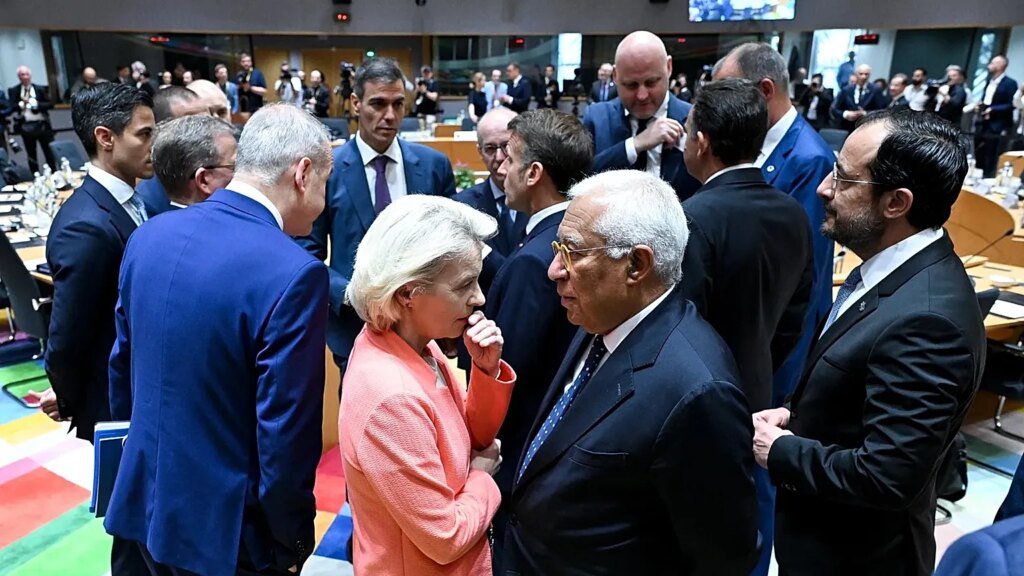
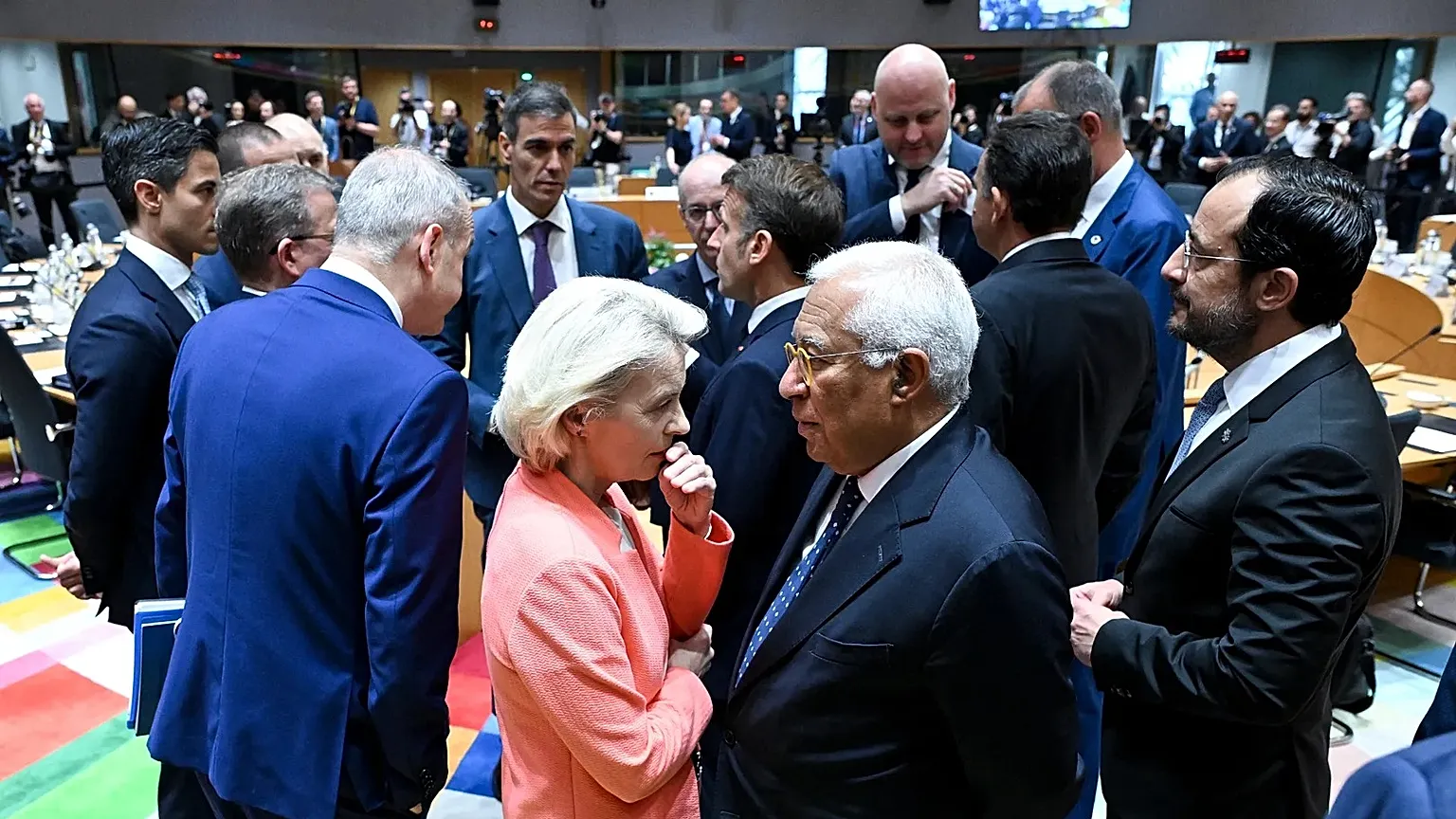
The Commission plans to introduce new trade defence mechanisms, featuring a diversification tool, aimed at addressing the EU’s “unsustainable” trade deficit with China, supported politically by EU leaders.
European Commission President Ursula von der Leyen announced on Friday that the Commission will create fresh instruments to counteract macroeconomic imbalances, particularly the rising and «unsustainable» trade deficit with China, including a diversification tool.
 ADVERTISEMENT
  ADVERTISEMENT
«Europe has equipped itself with a comprehensive set of tools in recent years. The time has come to apply them more assertively and strategically to protect our European interests,» she stated during a press briefing concluding this week’s European Council meeting.
Von der Leyen highlighted that EU leaders demonstrated cohesion and clear endorsement for a European response to the current challenges, while affirming the continued importance of dialogue with China.
At the same event, European Council President António Costa stressed that maintaining the current approach is no longer viable.
«Our approach is straightforward: we pursue de-risking instead of decoupling, even as we continue dialogue,» he explained. «However, the challenges demand attention. A daily trade deficit of €1 billion is unsustainable. It is not acceptable to raise concerns repeatedly without tangible outcomes.»
Von der Leyen explained that the diversification tool would be neutral regarding countries, aiming to assist European firms in certain sectors to accelerate risk mitigation, since supply chain diversification has lagged behind.
Early media reports indicate the plan is to compel companies to source critical components from more than one or two countries, thus preventing critical bottlenecks that could be exploited.
The Commission has yet to announce a timeline for presenting the new trade defence mechanisms, though several EU officials hint that the annual State of the Union address, given by von der Leyen each September, is the probable moment.
It remains uncertain if unanimity will hold when decisions require enforcement.
‘The numbers speak for themselves’
Not all member states support a tougher trade stance towards Beijing, which has already warned of retaliatory action. Germany depends greatly on exports to China, while Spain has established itself as a focal point for Chinese investment in Europe; both countries generally prefer to avoid antagonising Beijing.
Consequently, diplomatic sources emphasise the necessity of maintaining open dialogue with China, as trade relations may become increasingly vital given the unpredictable policies of the US government and its assertive trade agenda.
France, on the other hand, has been at the forefront in demanding stronger instruments to control China’s overcapacity and subsidies that distort the market, asserting the leaders’ summit signals a harder stance from Brussels towards Beijing.
«Our objective is to modernise these trade tools, and the Commission now holds the mandate to react swiftly – to intervene whenever unfair competition is suspected or problematic positions arise, thereby ensuring protection,» French President Emmanuel Macron declared during Friday’s press conference.
Other EU leaders mentioned Europe must bolster its economic competitiveness, notably through reforms of the internal market, and be prepared to face retaliatory measures that would inevitably follow if Brussels enforces stringent countermeasures.
«The pressure is significant. When pressure is this high, instruments will be activated because they are necessary. The numbers clearly illustrate the issue, and we must restore balance,» von der Leyen concluded.