
The updated sanctions package aims to postpone a planned review of the Russian oil price cap, which has increased following the closure of the Strait of Hormuz, in order to prevent Moscow from gaining economic relief.
The European Commission has introduced a new set of sanctions against Russia, focusing on oil sales, the «shadow fleet,» financial institutions, cryptocurrency companies, metal exports, fish products, and soldiers involved in the full-scale invasion of Ukraine.
 ADVERTISEMENT
  ADVERTISEMENT
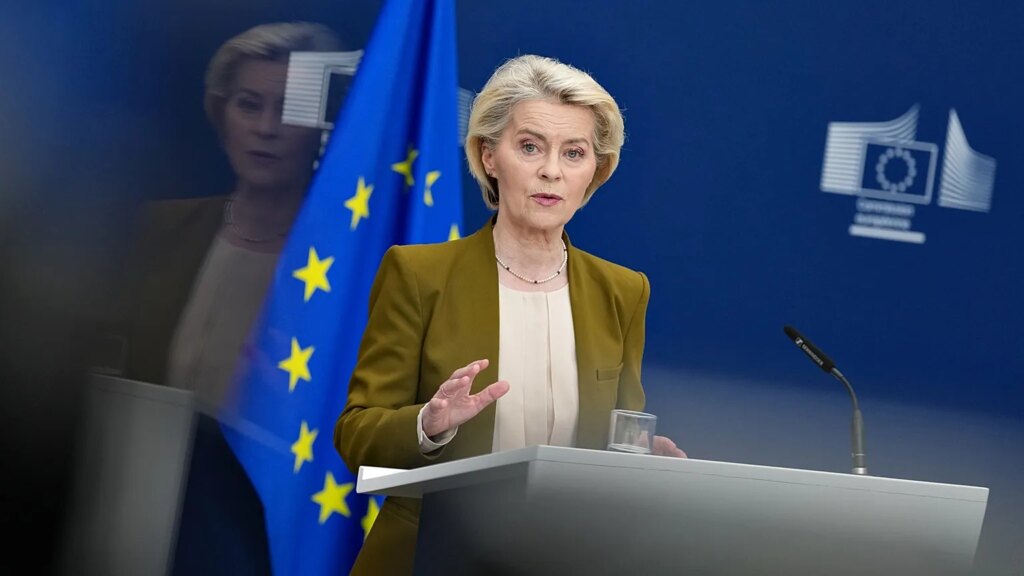
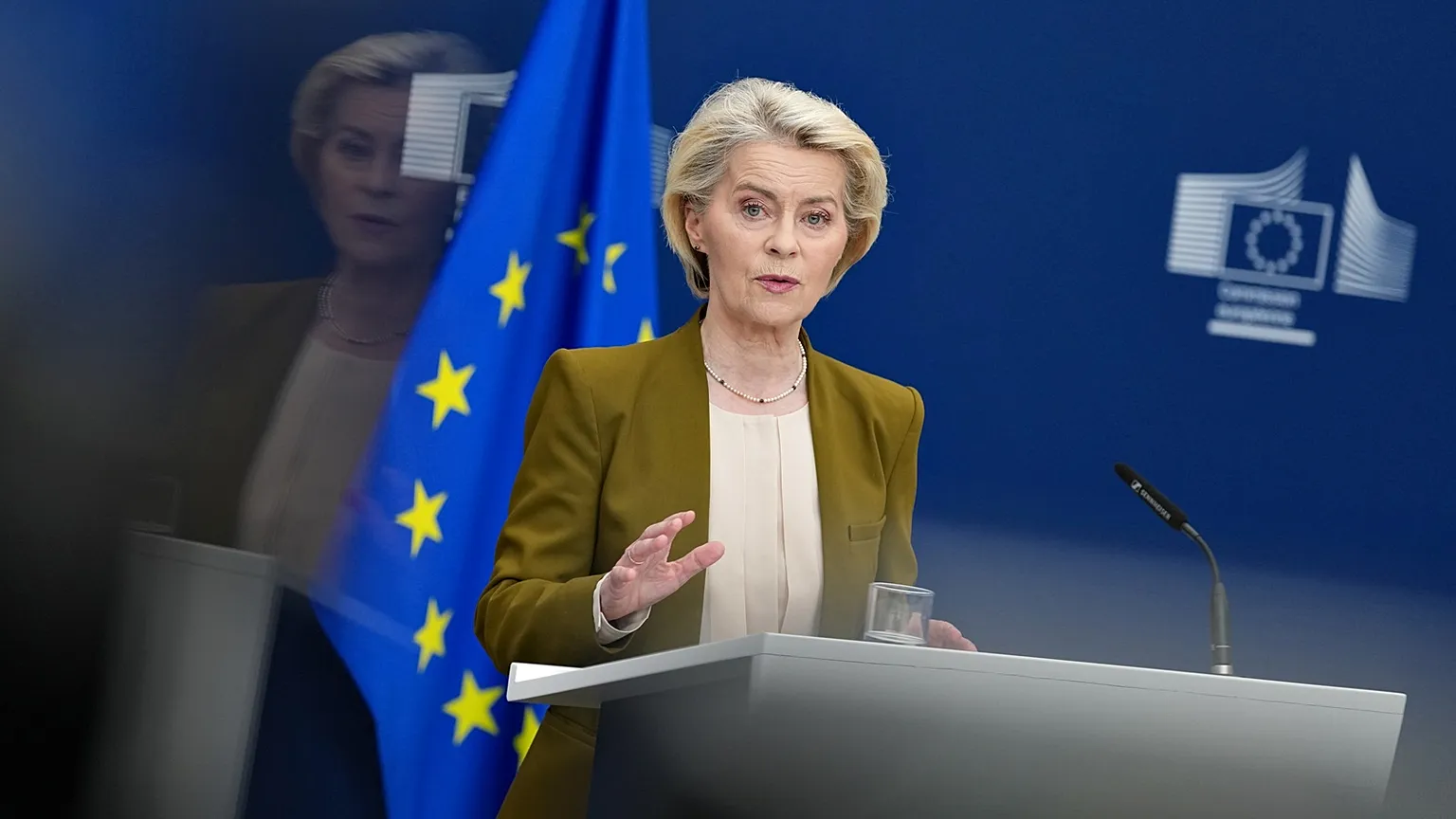
The proposal, revealed Tuesday by Commission President Ursula von der Leyen, arrives as Kyiv’s allies explore new strategies to rekindle the stalled peace talks and compel the Kremlin to accept a ceasefire as a prerequisite for negotiations.
«It is evident that Russia has failed in subjugating Ukraine. The cost Russia bears grows heavier daily, paid mainly by its own people,» von der Leyen noted.
«Therefore, the purpose of our package is unmistakable: to uphold the full rigidity of our sanctions.»
The core component relates to the price cap on Russian oil, which the EU, alongside the G7 and Australia, has enforced since December 2022. Last year, this mechanism was made adaptive, setting the cap at 15% below the average market price.
Nevertheless, the blockage at the Strait of Hormuz has pushed the price of Russian Urals oil to $87 per barrel, compared to $58 per barrel in February.
This implies that, if the EU proceeds with the scheduled review on 15 July, the cap will increase, consequently providing Moscow with the temporary relief it seeks.
To counter this, the Commission suggests postponing the revision until January 2027 and maintaining the price cap at its current value of $44.10 per barrel.
Von der Leyen explained that the adjustment mechanism «was not designed for market disturbances like those caused by the closure of the Strait of Hormuz.»
The delay until January, she added, «will allow oil markets time to stabilise while continuing to pressure Russia’s revenue streams.»
Earlier in the year, von der Leyen proposed a complete ban on all maritime services, including banking, insurance, shipping, and flagging. This ban, supported by Nordic and Baltic countries, lost traction following the Middle East conflict.
Greece and Malta, two maritime member states servicing Russian tankers, opposed the measure, making clear they would not proceed without G7 endorsement. Other G7 partners showed limited interest, and the proposal soon stalled.
By shifting attention to the price cap, the Commission implicitly acknowledges that the maritime ban will not be implemented soon. A G7 summit is planned next week in France, where von der Leyen is expected to discuss these sanctions.
Moreover, the Commission suggests blacklisting 30 vessels belonging to the «shadow fleet» that Moscow employs to circumvent the cap. These oil tankers are dangerously dilapidated and pose both security and environmental hazards to Europe.
Over 600 of these ships have already been refused entry to EU ports and services.
In addition, other vessels and infrastructures, including ports and refineries aiding the «shadow fleet,» will also be blacklisted, von der Leyen added.
The draft sanctions target 31 Russian banks, along with 20 cryptocurrency enterprises, platforms, and oil traders accused of facilitating Moscow’s evasion of restrictions.
It also aims to forbid exports of specific metals, alloys, and components vital to the defense sector, and, for the first time, imports of certain Russian fish products.
European exports of alumina appear excluded from the proposal, despite ongoing controversy over a plant in western Ireland allegedly indirectly supporting Russia’s weapons manufacturing.
A significant aspect of the proposal is a ban on permitting entry into the Schengen area of Russian soldiers involved in the invasion, an initiative introduced by Estonia earlier this year and since endorsed by other countries.
“Europe remains inaccessible to anyone who participated in the invasion of Ukraine, plain and simple,” von der Leyen affirmed.
These sanctions require unanimous approval from the 27 EU member states. If adopted, it will mark the 21st package of restrictions since February 2022.
Officials and diplomats in Brussels hope to secure approval before 15 July to avoid an automatic review of the price cap.
Von der Leyen’s announcement follows an escalation in large-scale, deadly airstrikes by Russia against Ukrainian cities, provoking outrage across Europe. Recent signs of stress in the Russian economy have strengthened support for further sanctions.
“Our sanctions continue to bite hard and inflict serious damage,” von der Leyen stated. “They are undermining the economic basis of Russia’s war effort.”
Ukrainian President Volodymyr Zelenskyy has proposed a direct meeting with Russian President Vladimir Putin to end the conflict. Zelenskyy emphasized that negotiations should be based on the current contact line and contingent upon a ceasefire.
Last Sunday, leaders of France, Germany, and the United Kingdom expressed their backing for Zelenskyy’s plan «with active participation from the US and Europe.»