
Top EU leaders will convene in Tivat, Montenegro, starting this Thursday for the EU-Western Balkans summit. Yet, with the EU already managing 27 member countries, why is Brussels advocating enlargement at this moment?
Albania, Serbia, Montenegro, Bosnia and Herzegovina, North Macedonia, and Kosovo are at different stages in their efforts to join the union. Geographically, this region is almost entirely encircled by the EU. For close to twenty years, a period marked by relative stability kept enlargement on hold. However, Russia’s invasion of Ukraine disrupted that stability, elevating expansion to a vital security concern.
 ADVERTISEMENT
  ADVERTISEMENT
Moreover, financial factors play a significant role. The EU presently stands as the main trading partner and investor in the region, with total trade surpassing €87 billion just last year. This exchange involves large-scale machinery, chemicals, and metals moving both ways across borders. Notably, the EU’s exports surpass imports substantially, generating considerable profit.
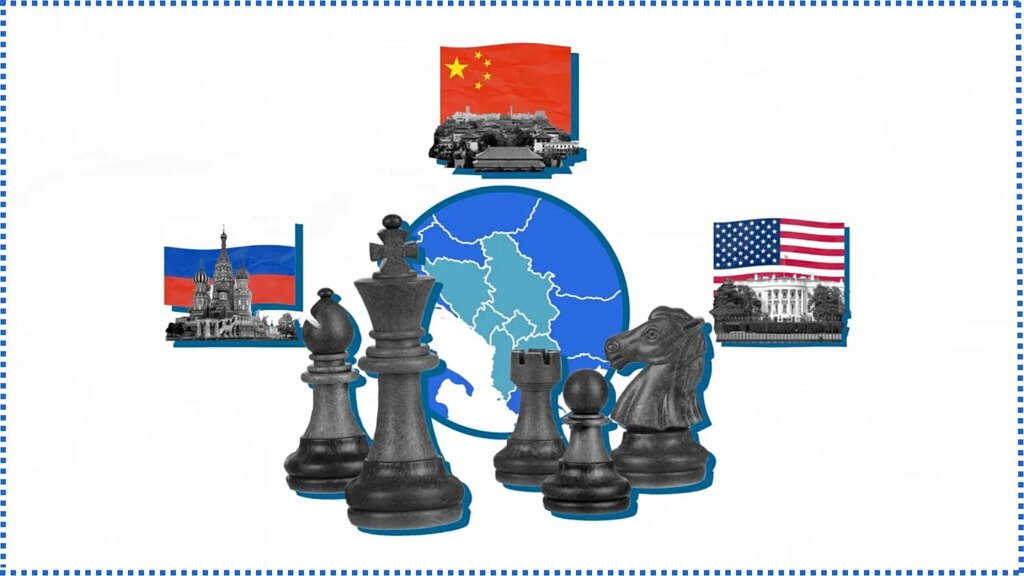
Nonetheless, the EU is not the only major player targeting this area. Brussels faces strong international competition as Moscow, Beijing, and Washington each strive for strategic dominance. Should Europe leave any influence void nearby, others will promptly occupy it.
The region has emerged as a new hotspot of geopolitical friction, particularly evident in Serbia, where the government declines to follow EU sanctions against Moscow.
Finally, EU capitals worry that admitting additional members might hamper decision-making due to current voting procedures. Consequently, Albania and Serbia have suggested a gradual accession, temporarily relinquishing veto powers to facilitate entry.
As European Council head António Costa tours the region, it becomes clear that Brussels is no longer motivated by a hopeful vision of European unity. Instead, it is a pragmatic move to secure borders.
Because if the EU fails to act, the alternative risks turning the region into a political satellite of Russia, an economy reliant on Chinese funding, or potentially the 51st state of the US—as proposed for Greenland, Iceland, or Canada.
Watch the Euronews video in the player above for the full story.