
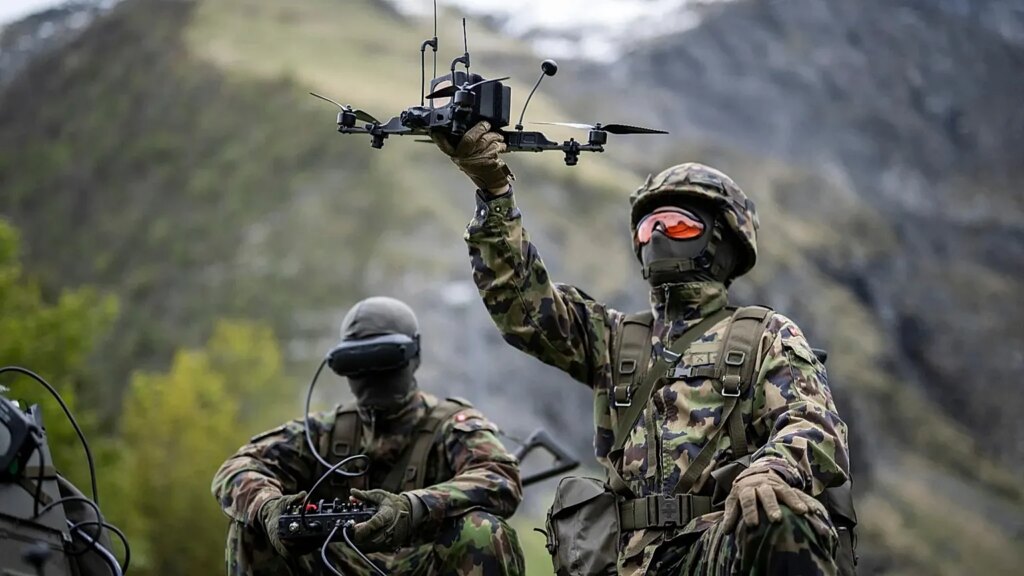
Traditionally neutral Switzerland is increasing its defence budget in response to emerging threats such as drones, missiles, and cyberattacks, prioritising air defence and enhanced collaboration with European allies.
Swiss Defence Minister Martin Pfister stated in Berlin on Monday that «Switzerland intends and is prepared to assume responsibility for its own security while also fulfilling the expectations of other European nations for its contribution to the continent’s safety. The country aims to uphold this duty as a dependable partner.»
 ADVERTISEMENT
  ADVERTISEMENT
He made these remarks at a gathering of the DACH countries – Germany, Austria, and Switzerland – a group connected through strong economic and cultural relations. Countries historically known for limited defence expenditures have adjusted their policies in recent years following Russia’s large-scale invasion of Ukraine. This includes Switzerland, which has traditionally maintained neutrality and is not part of the European Union or NATO.
Currently, Switzerland allocates about 0.7% of its GDP to defence, notably lower than many European NATO countries. Bern intends to incrementally increase that share to 1% by 2032. For reference, Germany’s current defence spending is approximately 2.4% of its GDP.
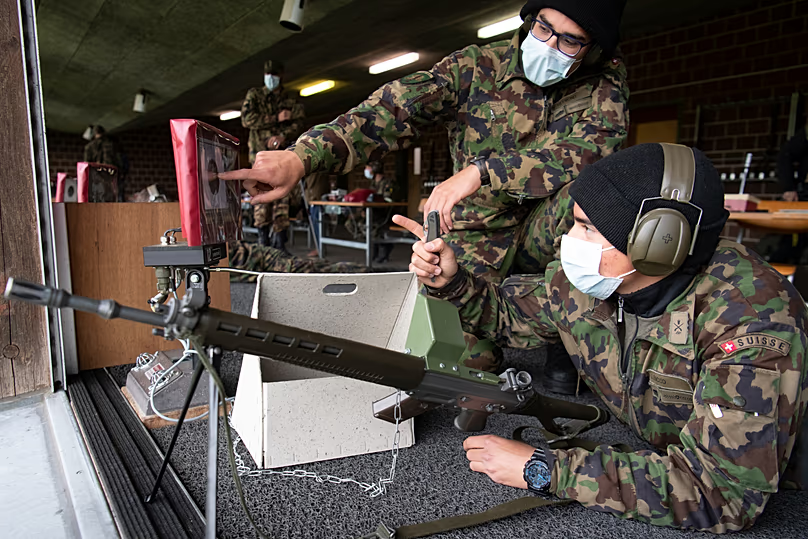
Pfister highlighted that Switzerland «still maintains a robust militia army of roughly 140,000 service members,» characterising it as «a force of respectable size» by European norms. He also noted that existing military hardware «remains functional,» though conceding a need to modernise the armed forces, particularly concerning equipment acquisition and resolving deficiencies in air defence capabilities.
The air defence gap
During the DACH meeting in Berlin, German Defence Minister Boris Pistorius emphasised that Austria and Switzerland are participants in the «European Sky Shield Initiative,» and noted that Berlin and Bern are collaborating to purchase the IRIS-T SLM air defence system.
The European Sky Shield Initiative (ESSI), launched by Germany in 2022, is a multinational project aimed at bolstering Europe’s air and missile defence. Its goals include closing capability gaps, lowering costs via joint acquisitions, and enhancing interoperability within NATO.
Nonetheless, speaking to Euronews, Marcel Berni, a strategic studies lecturer at the Military Academy at ETH Zurich, remarked that relying solely on systems like IRIS-T is insufficient. «IRIS-T SLM plays a key role in countering medium-range threats, such as aircraft, cruise missiles, and larger drones. However, it does not effectively address threats from inexpensive drones. Using costly guided missiles to shoot down drones priced at only a few thousand francs does not make economic sense,» Berni explained. «Therefore, IRIS-T requires supplementary systems. More comprehensive defence mechanisms against aerial attacks are necessary.»
In essence, Switzerland is aligning with a broader European movement, the ETH Zurich lecturer added.
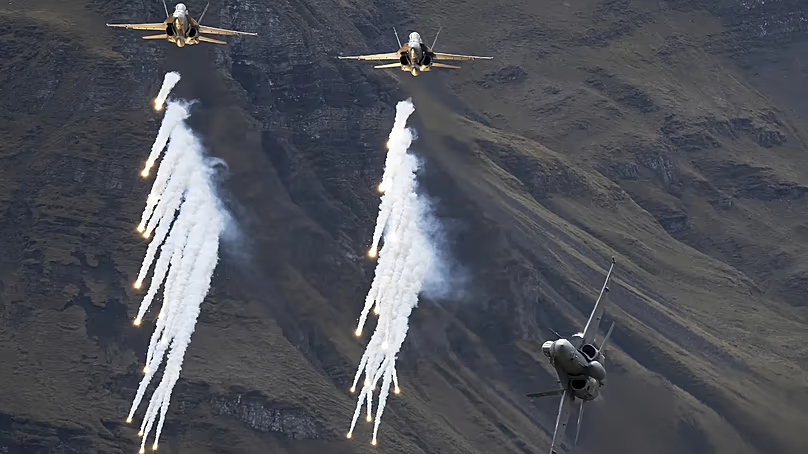
«Notably, there are significant deficiencies in ground-based air defence. In response, Switzerland is investing in upgraded air defence and air combat capabilities through the F-35, Patriot, and IRIS-T SLM systems. This approach is justified given the heightened aerial threats. Conversely, there is a vulnerability regarding low-cost drones deployed en masse and cyberattacks. The current acquisitions primarily target advanced systems.»
Berni emphasised that the key takeaway is the necessity for layered, rapidly deployable air defence. «Ukraine demonstrates how vital drones, electronic warfare, ammunition, secure communications, and rapid adaptability are. The Middle East shows that missile and drone defence operate effectively only when combined with allied partners and sensor networks,» he noted. He further stated, «effective upgrades demand industrial capabilities, faster procurement, personnel, ammunition, and resilience. For Switzerland, this translates to prioritising the enhancement and expansion of civil resilience and wartime cooperation rather than purchasing prestige platforms, at which point neutrality could become irrelevant.»
What is the actual drone threat level to Switzerland?
Switzerland is a landlocked nation entirely surrounded by other countries with no maritime access. Besides Liechtenstein and Austria, it shares borders with three NATO members: Italy, Germany, and France. Despite this, Switzerland still faces potential drone threats.
According to the Swiss news outlet 20 Minuten, the Swiss army is significantly enhancing its drone capabilities and, for the first time, incorporating a «drone flying school» into its summer recruit training. The plan is for every platoon to eventually include several trained drone pilots. Initially, the focus lies on reconnaissance drones, but over time, attack drones are expected to be integrated. Among these are FPV or kamikaze drones, similar to those extensively used in the conflict in Ukraine.
These small, swift drones can carry explosives or be directly controlled to collide with targets. The army no longer regards drones as mere supplements but as essential elements of modern warfare. Switzerland is also exploring drone applications for transport and the clearance of unexploded ordnance. The 2026 armaments budget allocates 70 million francs (€76 million) for drones and counter-drone technologies, doubling the previous year’s planned spending.
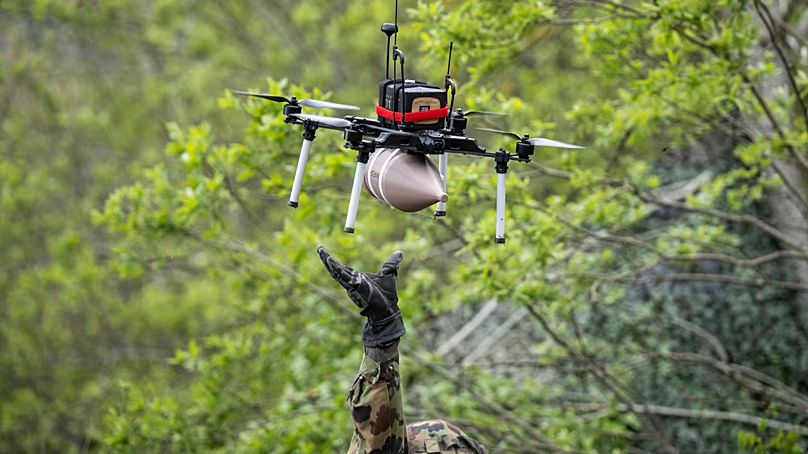
Dr Berni from ETH Zurich considers the mini-drone and drone swarm threat genuine, «particularly because much of Europe’s critical infrastructure is located within Switzerland.»
«In the near term, the concern is less about drone swarms targeting cities and more about strikes on vital infrastructure and logistics. Especially affordable FPV and mini-drones are reshaping the cost balance: an inexpensive offensive weapon compels defenders to invest in costly countermeasures. This is why the Swiss army aims to rapidly enhance defences against mini-drones,» Berni told Euronews.
FPV drones, or ‘first-person-view’ drones, are compact unmanned vehicles operated by a pilot using an onboard camera for navigation.
According to the Swiss Federal Office of Civil Aviation (FOCA), 68 drone overflight incidents had been reported by October of the previous year. About half involved control zones near airports. However, the exact drone types remain unspecified.
Protection of critical infrastructure does not fall under the Swiss army’s jurisdiction, as confirmed by an army representative. Instead, this responsibility lies with the operators or the relevant civilian authorities. Similar to Germany, the Swiss army can assist civil powers during exceptional security scenarios or large-scale events if police and other agencies become overextended. Such support roles may include safeguarding critical infrastructure, air surveillance, or disaster response, but ultimate authority remains with civilian bodies.
Implications of security challenges for neutrality
Switzerland formally established its neutral stance in the 19th century, after European powers acknowledged its neutrality during the 1815 Congress of Vienna. This aimed to create a stable buffer zone in Central Europe and keep Switzerland out of major conflicts.
Swiss neutrality has endured several wars and two world wars since then. «Switzerland maintains neutrality but remains tied to a concept shaped by the 1907 Hague Convention,» explained Dr Berni, adding that this results in treating aggressors and victims equally concerning the Ukraine conflict.
«Despite this, neutrality remains highly valued by the population and is expected to continue. Simultaneously, current security dynamics are pressuring Switzerland to deepen cooperation with European partners, including in areas such as air defence, armaments, and joint exercises. Paradoxically, a popular initiative currently seeks to enshrine stricter neutrality in the Swiss constitution,» Berni told Euronews.