
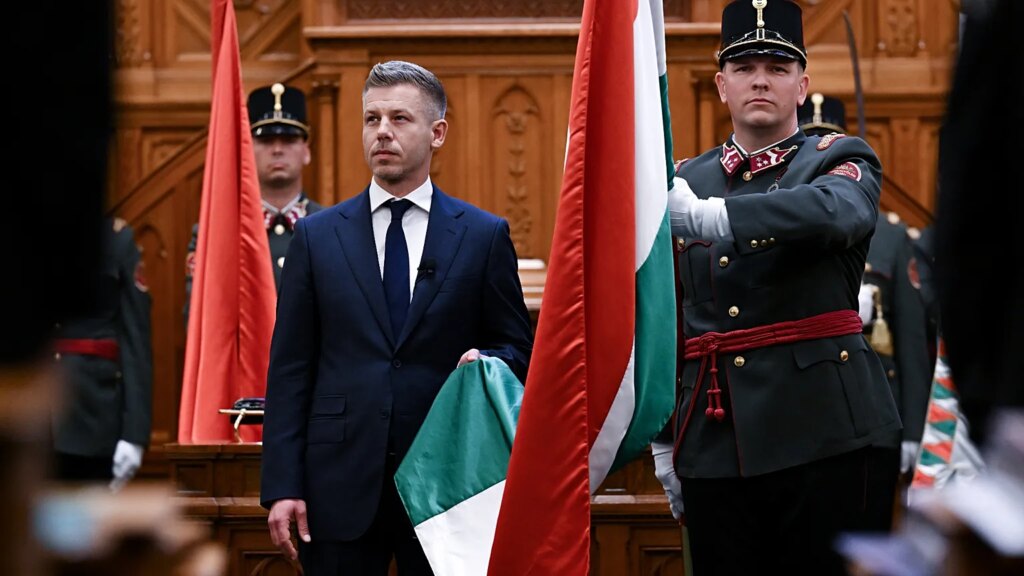
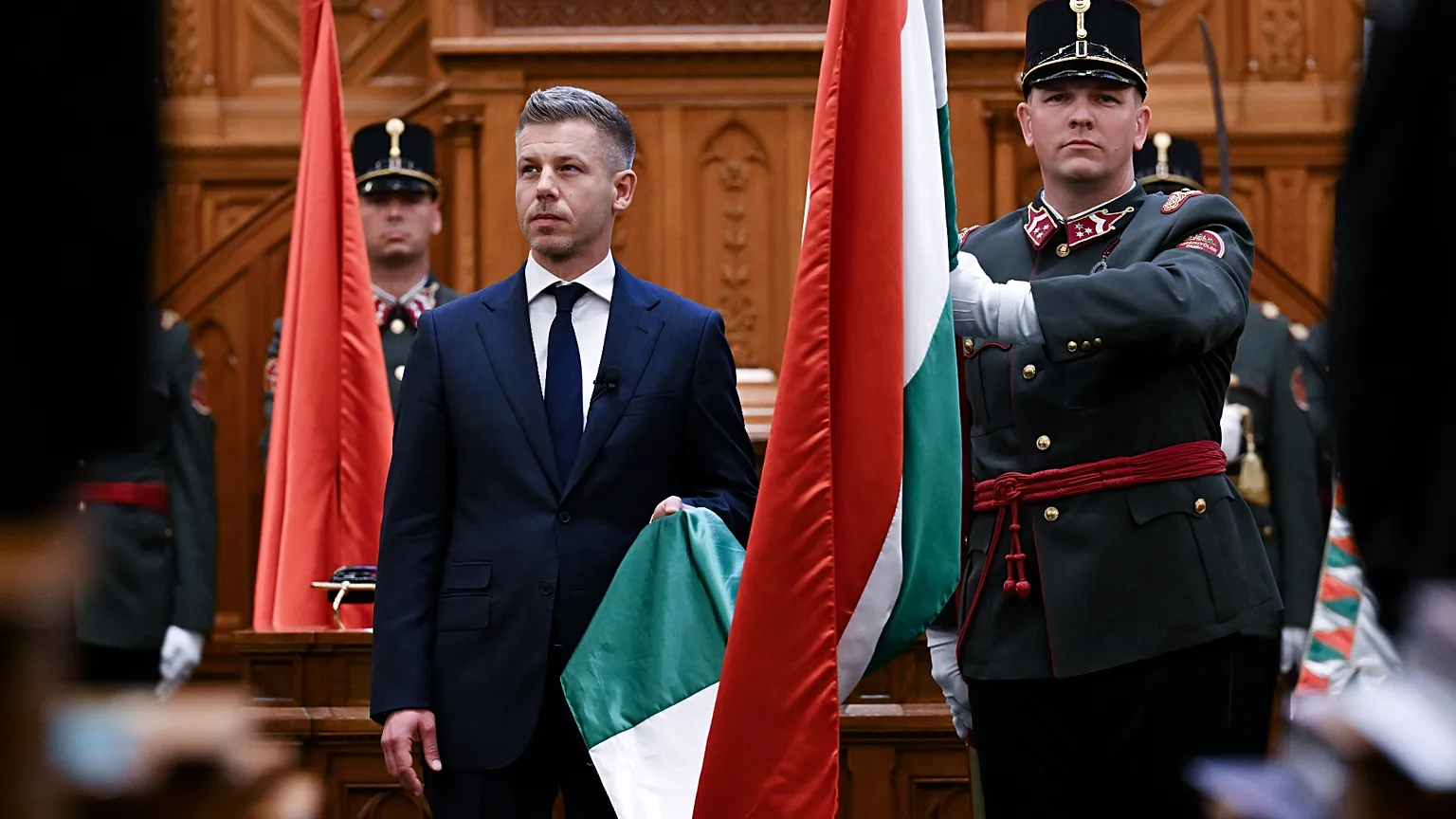
Péter Magyar urged officials associated with the previous Orbán administration to relinquish their positions by 31 May, explicitly including the nation’s President Tamás Sulyok in this directive.
After taking his oath in parliament on Saturday morning, Péter Magyar assumed the role of Hungary’s new prime minister, ending Viktor Orbán’s 16-year tenure and solidifying a decisive victory from April’s elections.
 ADVERTISEMENT
  ADVERTISEMENT
The Tisza party, led by Magyar, earned 141 of the 199 seats in the National Assembly, securing a clear majority. The outgoing Fidesz holds 44 seats, the KDNP—formerly allied with Orbán—has 8, and Mi Hazánk controls 6.
On Saturday, during the National Assembly’s inaugural session, Magyar’s appointment as prime minister was approved with 140 votes in favor, 54 opposed, and one abstention.
Following his oath, Péter Magyar emphasized that voters entrusted the Tisza party with the mission to initiate a new era in Hungary’s history, aiming not only to replace the government but to reform the entire system.
“I will not govern Hungary; I am here to serve my country,” he stated firmly. He further added, “A new beginning requires reconciliation, and reconciliation demands justice.”
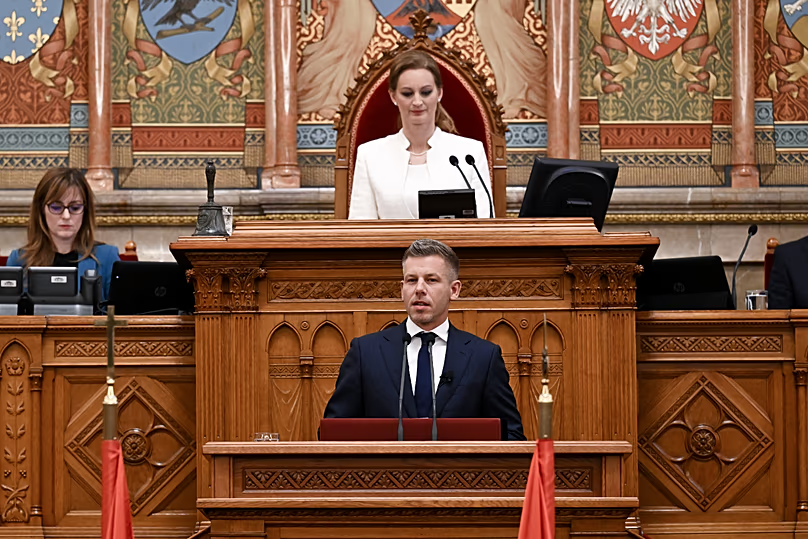
“In the Hungarian democratic institution, I urge current high-ranking officials linked to the previous regime to resign immediately, or by the latest on May 31,” declared the new prime minister, specifying that “President Tamás Sulyok ought to lead by example.”
Breaking a long-standing 36-year tradition surrounding government transitions, former Prime Minister Viktor Orbán neither spoke nor attended the inaugural session of the parliament.
Ágnes Forsthoffer, Vice President of the Tisza Party, was chosen as the new Speaker of Parliament, promptly announcing plans to restore the EU flag on the Hungarian parliament building—a symbol absent for nearly 12 years.
The Tisza Party is hosting a full-day event titled “system-changing people’s festival” to commemorate this momentous occasion. By early afternoon, Kossuth Square in front of the parliament was already crowded with attendees.
“By electing Péter Magyar as prime minister during the inaugural meeting itself, the new National Assembly has deviated from past practices, where days usually separated these events. This adjustment reduces transition time and facilitates a faster government formation. Additionally, linking the inaugural session with a public celebration has transformed a formal procedure into a communal experience,” commented Rita Kónya, Euronews’ correspondent in Budapest.