
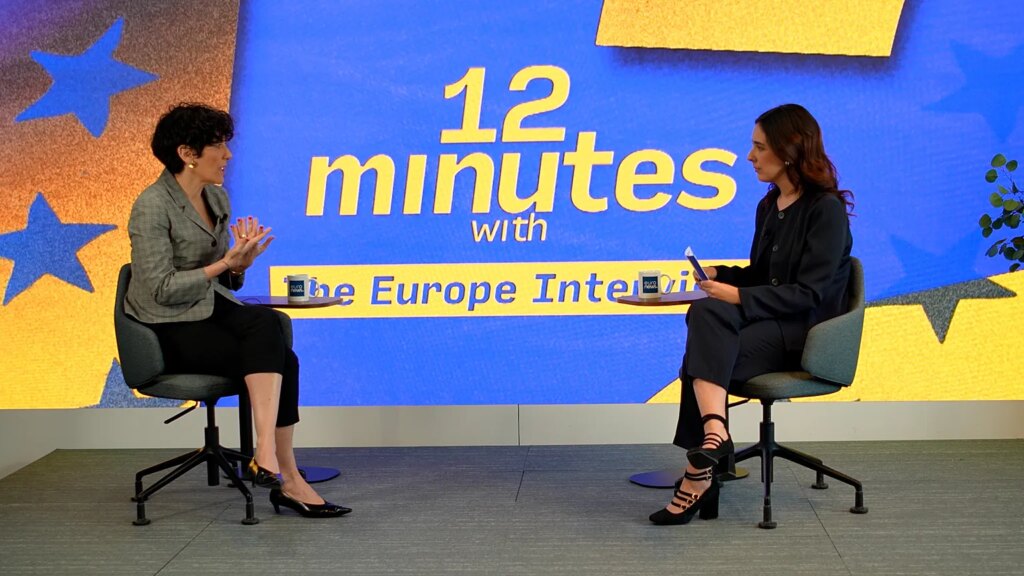
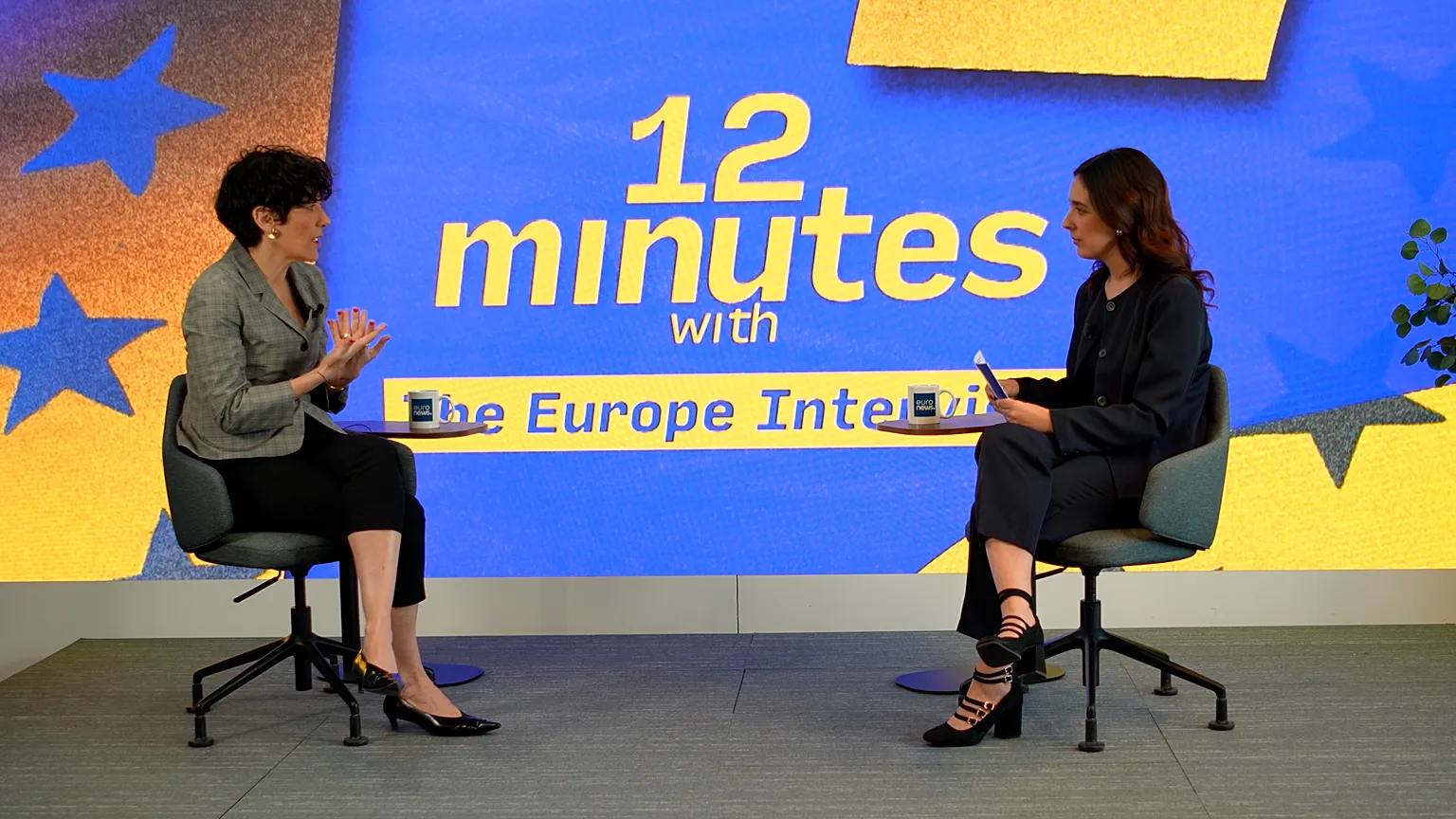
Spain’s Migration Minister defended the nation’s migration strategy in an interview with Euronews amidst criticism from EU leaders regarding plans to regularise about 500,000 undocumented migrants.
Spain’s migration approach is «virtually a state policy,» centred on integration, coexistence, and acknowledging the positive impacts of migrants, stated migration minister Elma Saiz in an interview with Euronews.
 ADVERTISEMENT
  ADVERTISEMENT
While many European countries are adopting stricter migration policies, Spain, led by Prime Minister Pedro Sánchez, pursues a contrasting strategy.
«Spain was previously a country of emigrants. Now, it represents a land of opportunities,» Saiz remarked on Euronews’ 12 Minutes With programme, highlighting migration as a vital element in the nation’s economic and social progress.
At the heart of its current migration strategy lies a regularisation initiative that aims to legalise over 500,000 people presently residing in Spain, a policy endorsed earlier this year.
«These individuals are already living within our communities. The issue is they currently lack both rights and obligations,» she explained. To qualify, undocumented individuals must have been in Spain for at least five months or have filed for asylum before the end of 2025.
In addressing concerns from some public sectors regarding the capacity of public services to manage the influx without overburdening the system, she stressed the «critical need to reinforce public services in alignment with the population they serve.»
Saiz noted that the plan allowing hundreds of thousands of immigrants who live and work without authorization in Spain to obtain legal status has widespread public backing.
The proposal originated from a citizen-driven legislative initiative, backed by over 700,000 signatures and endorsed by numerous civil society groups, employers’ organizations, and official institutions.
Impact on relations?
The European Commission and several member states have voiced reservations about the plan, particularly concerning its potential implications for the Schengen area. A key worry is that some individuals might attempt to settle in other EU countries without authorization.
However, Saiz asserted that the policy fully complies with European Union regulations, including Schengen framework rules.
She clarified that regularisation falls under national sovereignty as it pertains to people already living and working in Spain’s economy.
«This is precisely within the sovereign decision-making power of our country, as European officials have correctly indicated, because it is here where they will live and work,» the minister stated.
Spain’s plan does not grant newly regularised individuals the right to migrate freely within the EU on a one-year work permit; their rights to reside and work apply exclusively within Spain.
An alternative European approach
The choice to implement this mass regularisation proceeded without consulting European partners, drawing criticism towards Sánchez. Many officials in Brussels fear it may contradict the EU’s current stance on tightening migration controls.
Saiz maintained that Spain offers a differing model emphasizing «orderly, regulated, and safe» migration flows.
She described Spain’s policy as a benchmark globally, noting a substantial reduction of irregular entries in recent years, especially via routes like the Canary Islands.
According to the minister, this indicates that humanitarian perspectives can be successfully integrated with effective migration governance.
Saiz also argued that migration policies should be shaped by data and long-term strategy rather than immediate political pressures, portraying Spain’s approach as both pragmatic and principled within the evolving European context.
“It is noteworthy that over 40% of jobs created since the labour reform have been occupied by foreign workers, who increasingly engage in more skilled sectors,” the minister commented.
Simultaneously, she pointed out advancements at the EU level, including the Migration and Asylum pact reached during Spain’s EU Council presidency, which reflects a collective commitment to coordinated solutions.
Spain’s wider international position
Beyond migration, Saiz situated Spain’s stance within a broader effort to enhance its international role, promoting multilateralism and adherence to international law.
«Spain’s position fundamentally aligns with values that required significant effort to establish and which form the foundation of the European Union,» she remarked.
This stance has occasionally caused friction with leaders like US President Donald Trump, especially on global policy matters.
Spain has refused demands from certain NATO allies to raise military spending to 5% of GDP, asserting that its current defence commitments are suitable and consistent with the alliance’s agreed collective targets.
President Trump sharply criticised Spain’s approach, labeling its efforts insufficient, and Washington also condemned Madrid’s criticism of US strikes on Iran.
These disputes prompted threats from the Trump administration to sever trade relations with Spain and suspend its NATO membership.
Nevertheless, the minister emphasised that Spain continues to be a «dependable partner» maintaining robust ties with the US.