
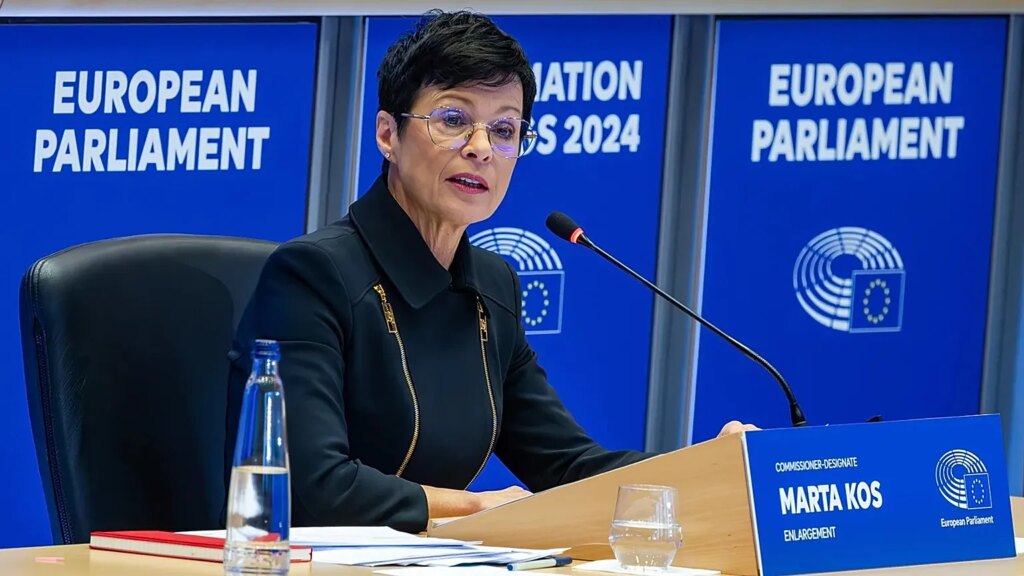
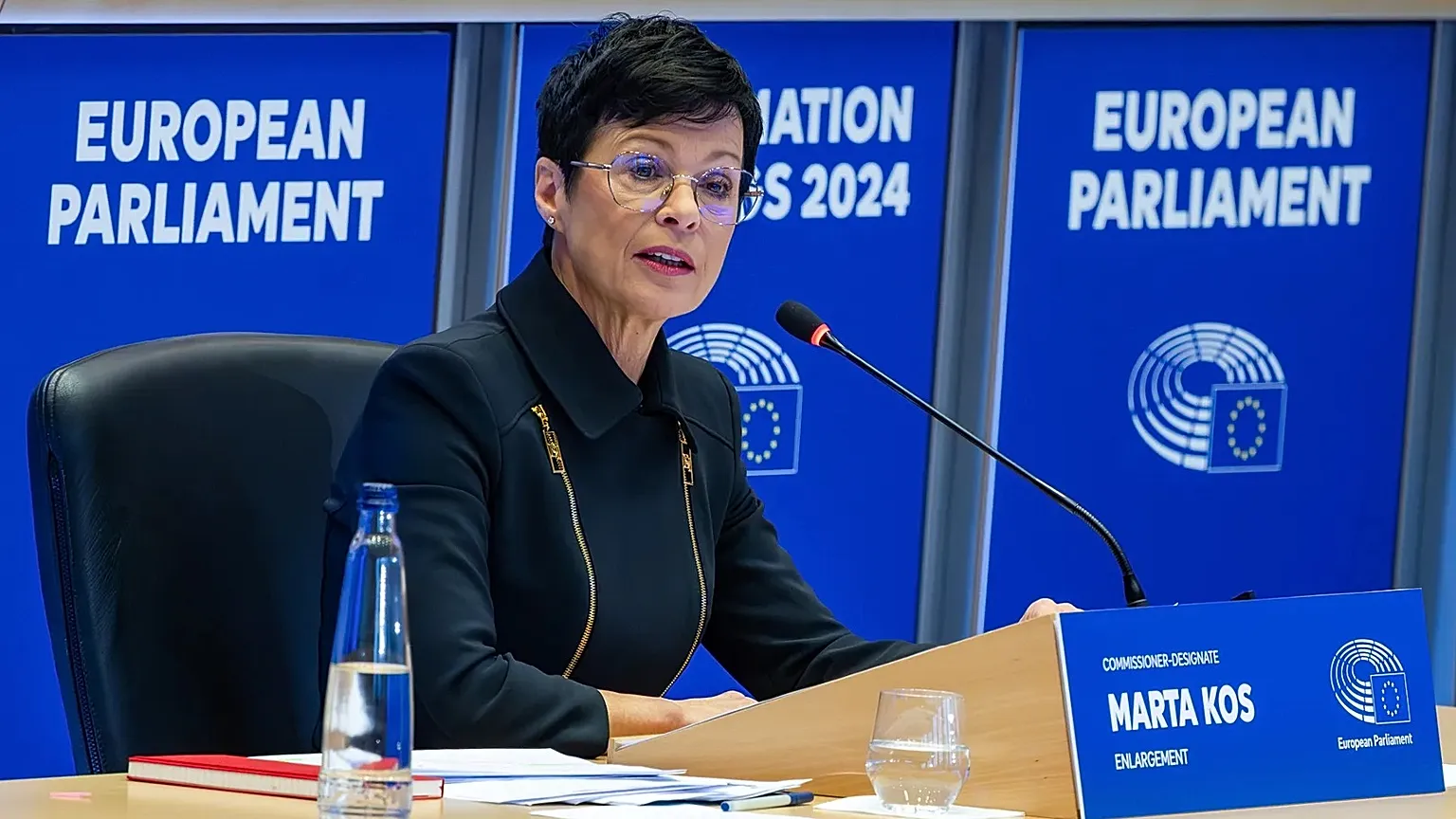
Enlargement Commissioner Marta Kos alerted MEPs about issues including pressure on the judicial system, limitations on media freedom, and repression of protests in Serbia, alongside wider political strains tied to its growing connections with Russia.
The European Commission is currently reviewing whether to halt €1.5 billion in EU financial aid to Serbia, citing concerns related to the rule of law and judicial reforms enacted by Belgrade in January, Enlargement Commissioner Marta Kos informed EU lawmakers on Monday.
 ADVERTISEMENT
  ADVERTISEMENT
Kos expressed particular concern over legal modifications that bring significant alterations, establishing a flawed form of autonomy for Serbia’s anti-corruption prosecution and undermining judicial independence.
«There is growing alarm regarding the developments in Serbia. From legislation that jeopardizes judicial independence to the suppression of protestors and persistent interference in independent media,» she stated to MEPs.
Since 2012, Serbia has been a candidate country for EU membership and qualifies for EU funds aimed at supporting its internal reforms.
Nonetheless, Serbia’s progress toward EU accession has decelerated due to its close relations with Russia and President Aleksandar Vučić’s repression of anti-government and anti-corruption demonstrations that erupted in December 2024 following the collapse of a concrete awning at a Novi Sad train station, which resulted in 16 fatalities.
Strains with the EU have intensified because of Serbia’s position on Russia’s invasion of Ukraine.
In May 2025, the European Parliament passed a resolution condemning Serbia for not aligning with EU foreign policy. While Serbia has denounced the war of aggression, it continues to decline imposing sanctions on Moscow.
The European Commission is awaiting the evaluation from the Council of Europe regarding the judicial law approved in January. The Venice Commission, a Council of Europe advisory body, conducted a visit to Belgrade on 16–17 March to prepare its opinion.
«Support for Serbia’s EU path will persist, but there is an expectation that authorities fully align judicial legislation with the Venice Commission’s recommendations and reinstate media independence,» Kos stated on Monday.
«The Venice Commission is expected to deliver its urgent opinion within the coming weeks,» the Council of Europe announced in a press release in mid-March.