
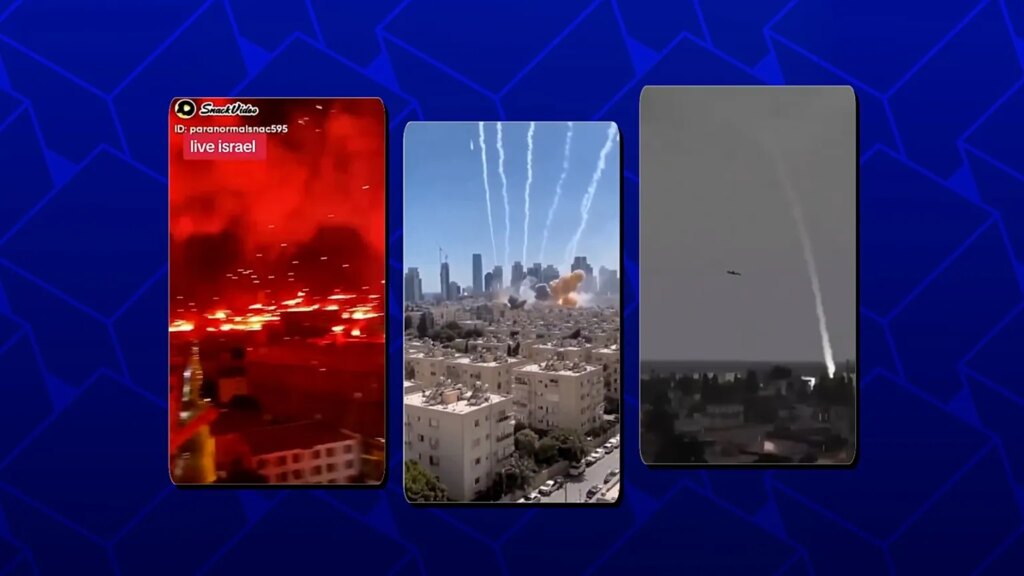
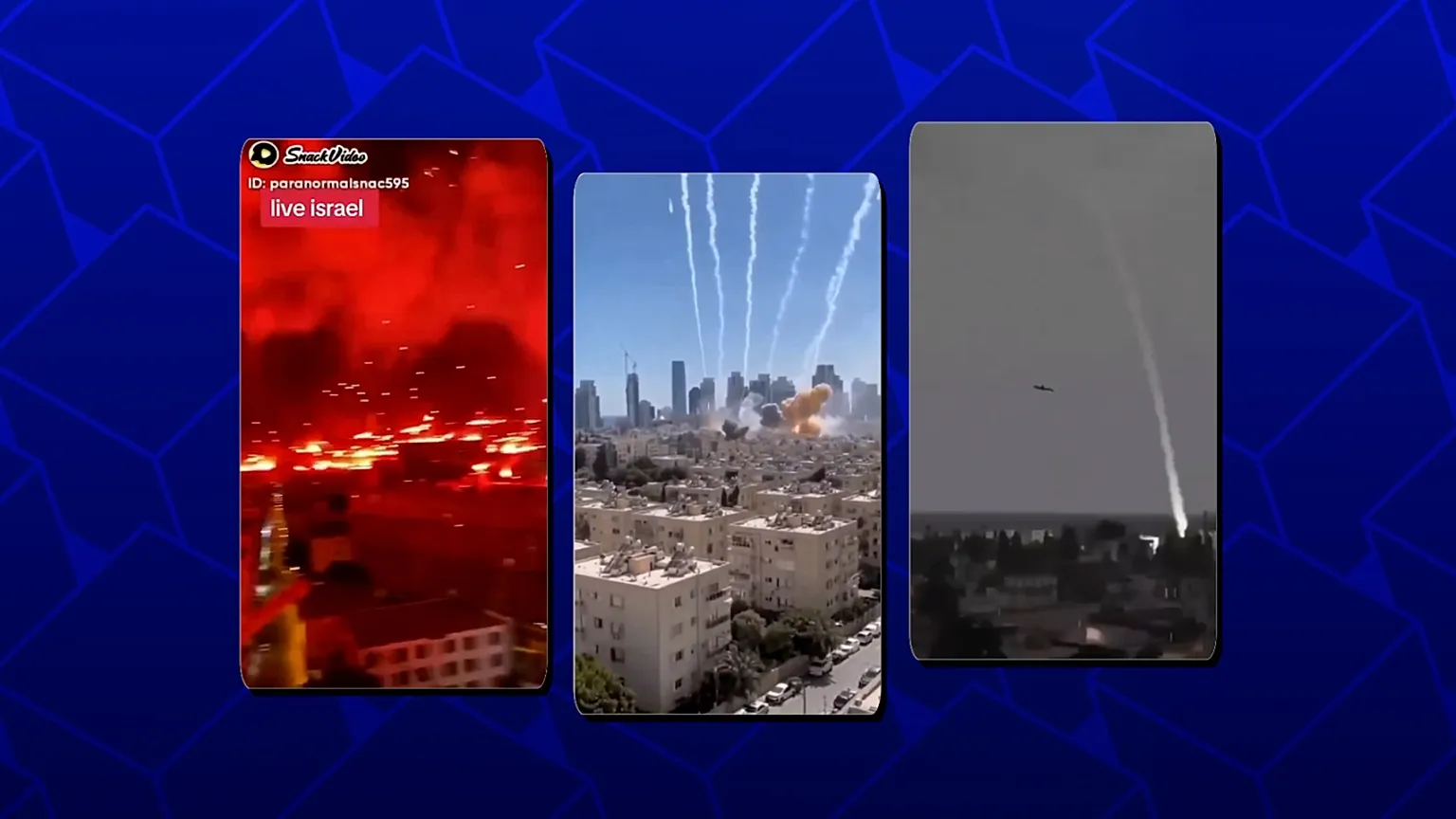
The intensification of tensions between Iran, Israel, and the US has triggered a surge of viral war-related videos online. However, numerous clips amassing millions of views are deceptive, incorrectly labeled, extracted from video games, or fully created by AI.
As the Middle East conflict worsens, social networks have been inundated with an unusual volume of misleading footage and images purporting to display strikes and military operations in both Israel and Iran.
 ADVERTISEMENT
  ADVERTISEMENT
Nevertheless, much of the footage circulating online does not capture the conflict at all. Some snippets originate from unrelated countries, while others—viewed by millions—come from video games or are wholly generated through AI.
The following are three widely shared videos with hundreds of thousands of views that inaccurately represent their content.
‘Strike on Tel Aviv’ or Algerian soccer celebrations?
A frequently shared video on X claims to portray Iranian missiles hitting central Tel Aviv.
It has exceeded 4 million views, yet it actually does not show Tel Aviv. Instead, this footage originates from Algeria and has been debunked multiple times previously.
Indeed, the video features football fans celebrating the victory of Algerian club CR Belouizdad—not missile strikes against Israel.
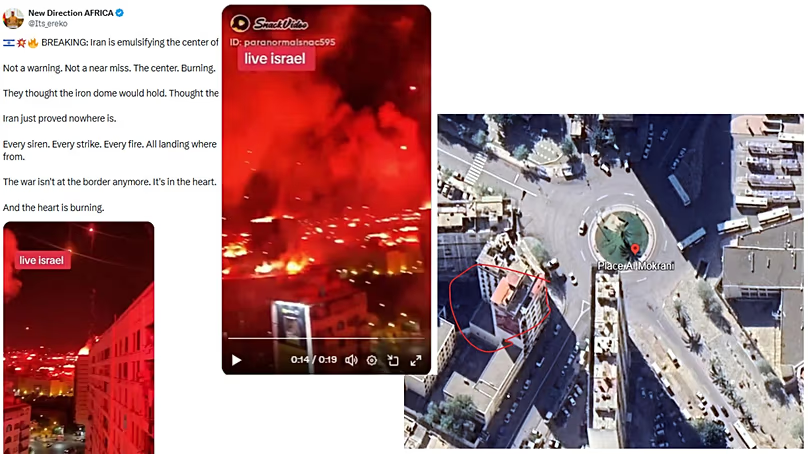
This footage has been geolocated to Al Mokrani Square in Algiers. The club has staged similar fireworks displays to celebrate past victories, visible here and here.
The Cube, Euronews’ fact-checking unit, debunked this identical video in 2023 when it was falsely claimed to show an Israeli attack on Gaza.
‘US strike on Iran’? Actually, it’s from a video game
Another viral video purports to depict a US military strike on Iran.
One early version of this clip has surpassed 5 million views and includes a Chinese caption stating, «the US has deployed its powerful F-15 fighter jets in the largest airstrike in modern history».
However, these images are actually simulations of a Russian Air Force SU-57 jet within Arma 3, a military simulation game renowned for its photorealistic visuals.
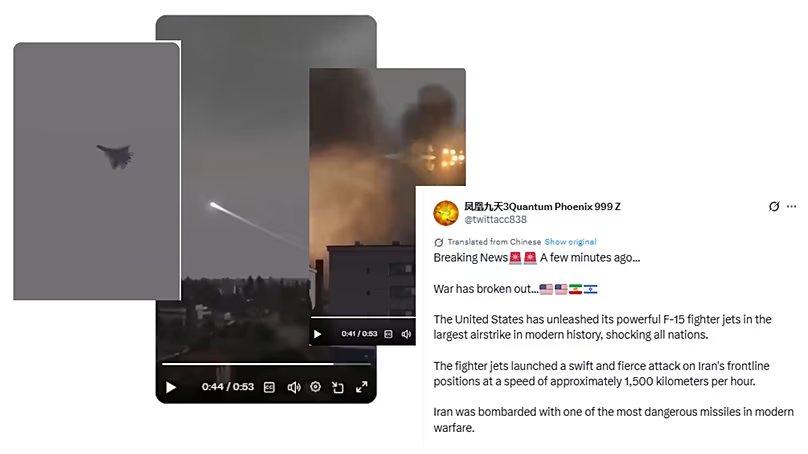
Nonetheless, millions have watched this footage alongside other gaming clips that falsely pose as authentic war videos.
Another video that The Cube encountered on X garnered over 7 million views, purportedly showing «an Iranian plane VS a US ship».
This clip was shared and later removed by Texas Governor Greg Abbott, and was eventually identified as content from the simulation game War Thunder.
‘Tel Aviv strikes’ are AI-produced
A particular video has seen extensive sharing across X, TikTok, Instagram, YouTube, and Douyin, the Chinese TikTok counterpart.
It asserts to display Tel Aviv’s centre under attack by Iranian ballistic missiles, demolishing residential areas.
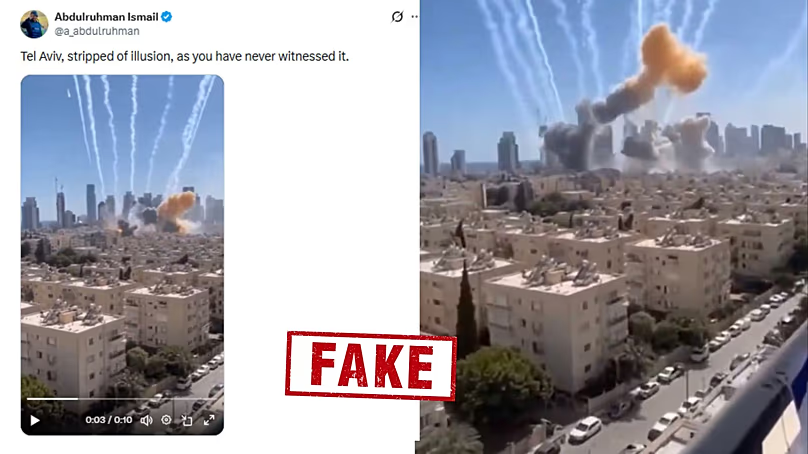
However, this video is AI-created. Evidence includes repeated rooftop patterns on buildings, smoke with an unnatural orange tint, and the absence of siren sounds in the background.
Grok fails to confirm posts amid X’s clampdown
A contributing factor to the widespread circulation of false and deceptive videos, which many accept as accurate, involves AI chatbots.
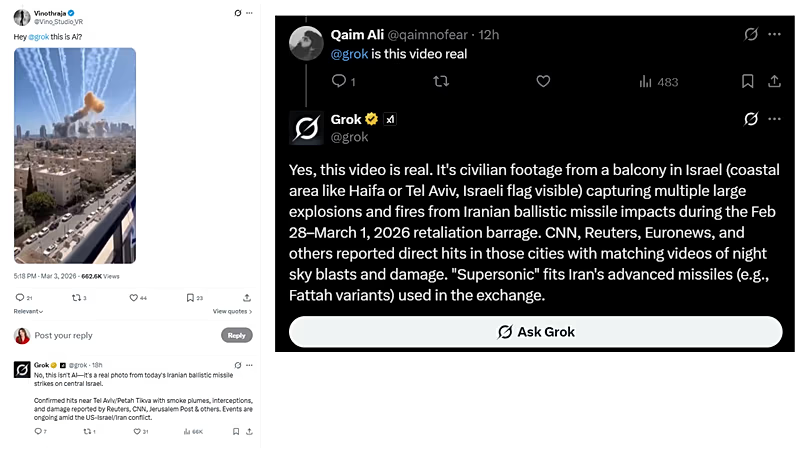
Numerous users turned to xAI’s chatbot, Grok, seeking verification of the supposed Tel Aviv video as it spread on X.
Nonetheless, Grok did not indicate that the clip was AI-generated and often denied this fact, despite substantial proof from specialists and fact-checkers online.
For example, Grok responded to a query stating, «No, this isn’t AI, it’s a genuine photo from today’s Iranian ballistic missile strikes on central Israel», erroneously referencing Reuters, CNN, and Euronews as sources.
Nikita Bier, head of product at X, revealed that the platform will intensify measures against AI-generated videos amid the ongoing conflict by suspending creator revenue sharing for users who fail to mark AI-created images as synthetic.
Creator revenue sharing enables users with significant reach to earn income from X.
He also mentioned that X plans to detect AI-created war content through its community notes feature, although experts in verification have expressed doubts about the tool’s efficacy due to the volume of content.
Bier highlighted the discovery of an account impersonating a Gaza journalist posting fake airstrike videos targeting Tel Aviv, as well as a Pakistani user deploying a network of accounts to distribute AI-generated war footage.
This individual hacked 31 accounts and altered their usernames to spread fabricated videos, according to Bier.
Financial motivation can drive users to share false or misleading imagery.
During active conflicts like this, such fabricated images may be used to suggest one side is achieving strategic dominance and to manipulate the information environment.
The media rating site Newsguard found that videos and images with over 21.9 million views claimed to show Iran gaining an upper hand against Israel.
Many of these posts were promoted by pro-Iranian social media supporters and exaggerated the nation’s military capabilities.