
Also in this newsletter: Trilateral Ukraine peace negotiations resume; the Indian ambassador to the EU urges a prompt implementation of the EU-India trade agreement; top EU military official states the bloc’s mutual defence should address situations “below Article 5.”
Good morning. I’m Mared Gwyn bringing you this Tuesday morning briefing.
 ADVERTISEMENT
  ADVERTISEMENT
The European Commission plans to send a delegate to the inaugural meeting of Trump’s Board of Peace in Washington on Thursday, yet will refrain from official membership due to ongoing reservations around the Board’s remit, governance, and potential conflict with United Nations mandates.
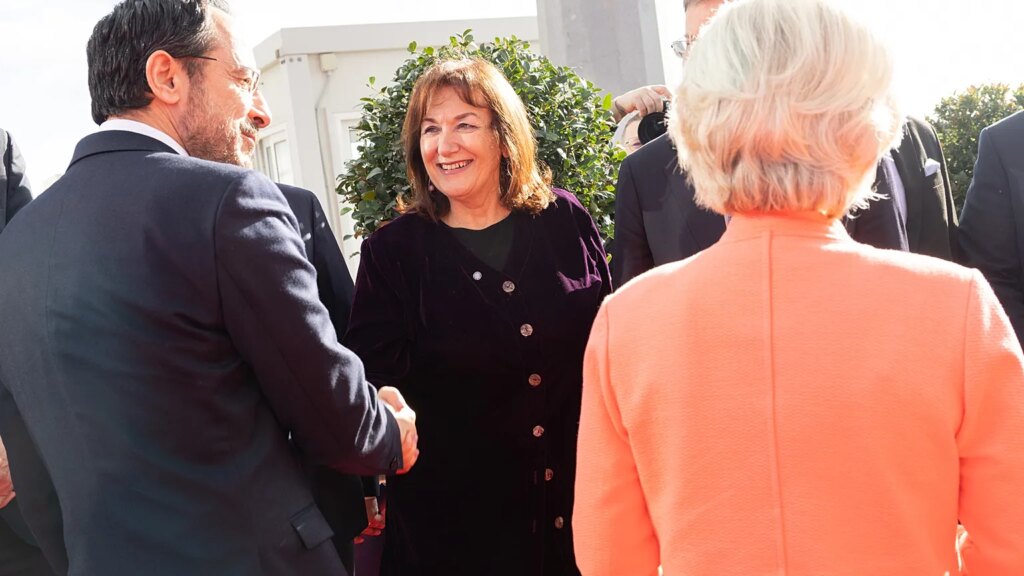
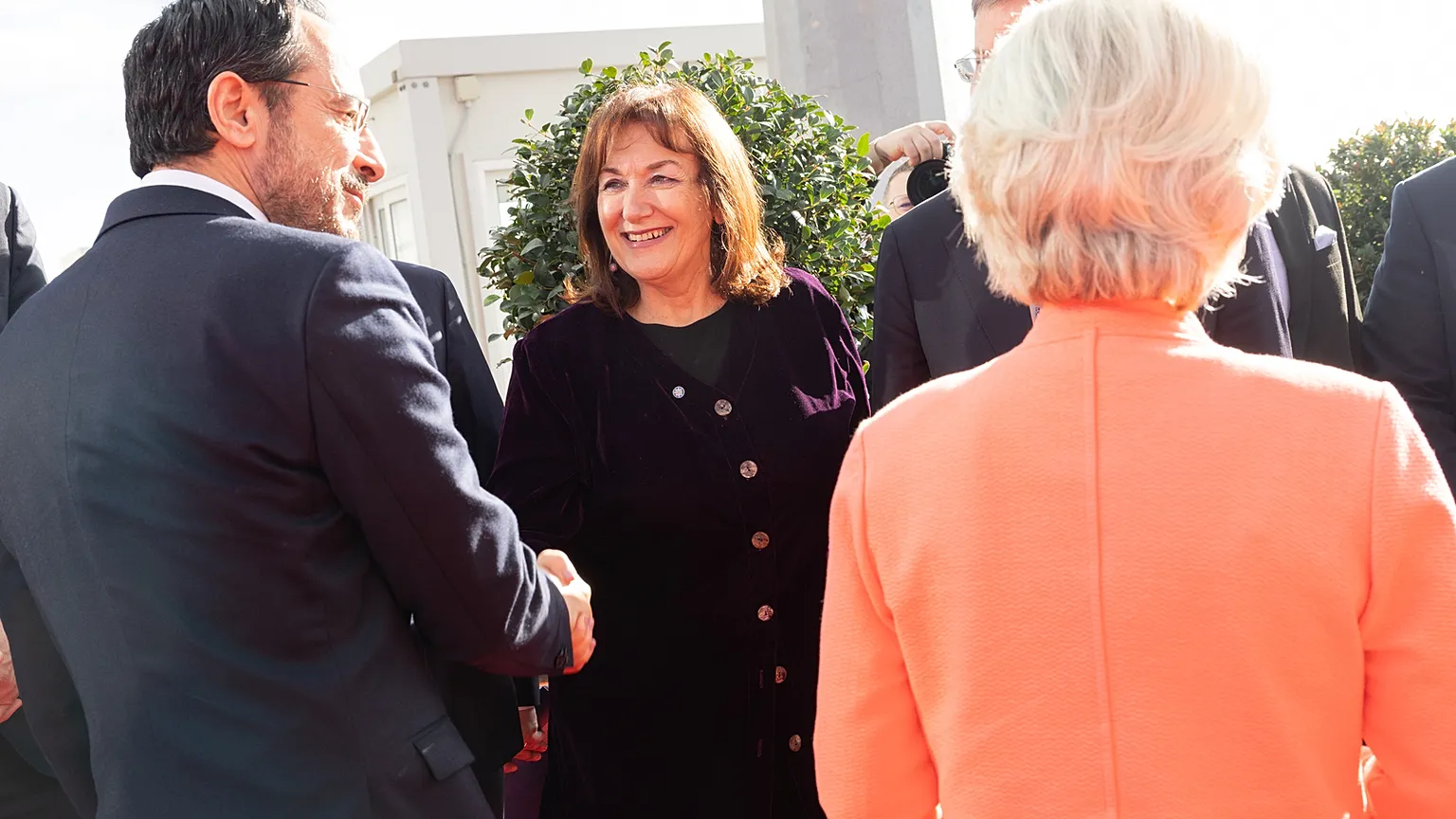
As covered on Monday, the European Commissioner for the Mediterranean, Dubravka Šuica, will participate solely in the segment addressing Gaza, as the EU aims to avoid exclusion from the implementation of the US-proposed 20-point peace initiative while steering clear of controversies linked to the Board.
Reminder: The Board of Peace was originally established to solidify the ceasefire in Gaza and enjoys backing through a United Nations Security Council resolution. Nonetheless, a majority of European leaders have expressed apprehension that Trump has since broadened its objectives to form a parallel United Nations entity, which he would chair indefinitely, extending beyond his term in office.
Among EU member states, only Hungary and Bulgaria hold full membership. However, Cyprus, Greece, Italy, and Romania have since accepted observer status—which EU officials prefer not to be closely associated with.
A spokesperson confirmed on Monday that EU foreign policy chief Kaja Kallas is consulting with governments on the matter, and that the Board of Peace will be on the agenda for next week’s EU foreign ministers’ meeting in Brussels.
Joining them will be Bulgarian diplomat Nickolay Mladenov, appointed as Trump’s High Representative for Gaza, tasked with coordinating the Board of Peace and a technocratic Palestinian committee charged with managing its daily operations.
Elsewhere, colleague Jorge Liboreiro details ongoing efforts in Brussels to finalise a new sanctions package targeting Russia before the fourth anniversary of the Ukraine conflict next week. Ambassadors received briefings from David O’Sullivan, the special envoy on sanctions, regarding the latest measures to counter circumvention yesterday.
The timing could not be more critical: the proposal includes the debut activation of the Anti-Circumvention Tool to ban sales of computers and radios to countries “where there is a significant risk of these goods being re-exported to Russia.”
Kyrgyzstan is the primary focus—a mountainous nation of 7 million within a customs union with Russia. Since the full-scale invasion began, EU-Kyrgyzstan trade has surged, raising Brussels officials’ concerns that the country acts as a conduit for Kremlin acquisition of blacklisted items. To illustrate: in 2021, EU exports to Kyrgyzstan were approximately €263 million, whereas in 2024 they reached €2.5 billion.
The most pivotal aspect of the plan remains a total prohibition of maritime services to Russian oil tankers, which, if approved, would effectively end the current price cap on Russian oil. The European Commission aims to secure backing from fellow G7 nations before advancing. Greece, which boasts a strong maritime sector, has voiced worries this ban could intensify competition from India and China, reinforce Russia’s “shadow fleet,” and accelerate the practice of deregistering vessels from their national flags, known as “deflagging.”
Trade correspondent Peggy Corlin reports this morning that efforts to block Russian steel imports are intensifying, now four years since the onset of the conflict. Negotiations between EU legislators and member states will start next week on the possibility of a full ban. What began as a sanctions matter has evolved into a high-stakes political confrontation.
Swedish lawmaker Karin Karlsbro is set to challenge Belgium, Italy, the Czech Republic, and Denmark, countries asserting the necessity of importing semi-finished steel for their industrial sectors.
“It is a major provocation that all possible measures have not been utilized to limit Putin’s war financing,” Karlsbro told Euronews, adding, “given that the Russian steel industry forms the backbone of the Russian war effort, it directly supports Russia’s military operations.”
Meanwhile, the EU’s economic elite group known as “the E6”—comprising Germany, France, Italy, Spain, the Netherlands, and Poland—convened again yesterday to discuss accelerating integration plans for the bloc’s capital markets.
The Eurogroup President, Greece’s Kyriakos Pierrakakis, stated he did not view the E6 as a threat to the Eurogroup itself, representing all eurozone countries. “We remain optimistic that any initiative fostering convergence backed by transparency can be a constructive force,” Pierrakakis remarked.
However, smaller member states express caution, concerned about marginalisation by larger powers. Ireland’s finance minister Simon Harris, from one of the EU’s wealthiest countries per capita, told reporters after the meeting: “I would prefer a framework where nations collaborate on shared interests rather than one defined solely by size.”
Trilateral Ukraine peace discussions advance to third round
As Ukraine, the US, and Russia prepare for another Geneva meeting, President Volodymyr Zelenskyy warns Moscow is planning a significant new strike, while the Kremlin confirms territorial matters will feature on the agenda, reports our Ukraine correspondent Sasha Vakulina.
This meeting comes just days before the fourth anniversary of Russia’s large-scale invasion. The delegations convene amid ongoing clashes extending over a roughly 1,250-kilometre front line and relentless Russian bombardment of civilian and energy infrastructure, which plunged millions of Ukrainians into freezing conditions without electricity, water, or heating.
On Monday, as Ukraine’s delegation departed from Kyiv, Zelenskyy cautioned that Russia is preparing another “massive strike.” He stated he directed Ukraine’s air force chief, defence minister, and the head of the state electricity firm Ukrenergo to “implement additional protective measures” continually in anticipation of the potential attack.
Sasha provides further details.
EU mutual defence should address ‘below Article 5’ scenarios, senior official says
Efforts to activate the EU’s mutual defence clause should focus on incidents that are «below the threshold» defined under NATO’s Article 5, the bloc’s leading military official told Euronews’ Alice Tidey.
General Seán Clancy, Chair of the EU Military Committee, said over the weekend that his forces “stand ready” to assist in revising the concept of European mutual defence.
During a speech at the Munich Security Conference on Saturday, European Commission President Ursula von der Leyen called for greater EU defence autonomy, emphasizing the need to bring the bloc’s mutual defence clause «to life» as part of this pursuit. She noted the clause—Article 42.7 of the Treaties—“only holds weight if grounded in trust and capability.”
The clause stipulates that «if an EU member experiences armed aggression on its territory, other EU members are obliged to assist by all means in their power.»
When asked why further operationalising the mutual defence clause is necessary if 23 member states also affiliated with NATO trust Washington’s long-term security commitment, General Clancy explained that the roles of the two entities are distinctly separated.
Alice covers the full report.
Irish data regulator probes X’s Grok over sexually explicit AI-generated images
Ireland’s Data Protection Commission (DPC) is investigating Elon Musk’s AI chatbot Grok following its recent generation of sexual AI images, to determine potential breaches of the EU’s GDPR rules. The Commission announced on Tuesday that the “wide-ranging inquiry” will examine «alleged creation and dissemination on X of potentially harmful, non-consensual intimate or sexualized images involving Europeans, including minors,” generated by Grok.
As X’s European headquarters are located in Dublin, the Irish Commission holds jurisdiction over such investigations. It informed X about the inquiry on Monday.
If violations of EU regulations are confirmed, the platform could face significant penalties.
Separately, the European Commission launched a probe in January to assess whether Grok complies with risk management requirements related to the emergence of non-consensual sexual deepfake images.
Additional updates from our news teams
German vice-chancellor warns delays in digital euro harm Europe. Vice-Chancellor Lars Klingbeil stated that those opposing progress on the digital euro are damaging Europe itself, amid European Parliament delays in passing relevant legislation. Eleonora Vasques reports the details.
The silent erosion of wealth among European savers: Is capital at risk? The Director General of the European Fund and Asset Management Association explains to Euronews how European savers miss significant wealth-building opportunities. Read more.
Alexei Navalny’s dart frog toxin poisoning: Facts revealed. Epibatidine, sourced from the Ecuadoran dart frog, leads to muscle paralysis and eventual suffocation. Experts note that this toxin can also be synthetically produced instead of derived directly from the frog. Emma De Ruiter and Aleksandar Brezar explain.
Other ongoing developments
- EU economy and finance ministers convene in Brussels
That concludes today’s briefing. Contributions from Jorge Liboreiro, Eleonora Vasques, Peggy Corlin, Sasha Vakulina, Alice Tidey, and Maria Tadeo.