
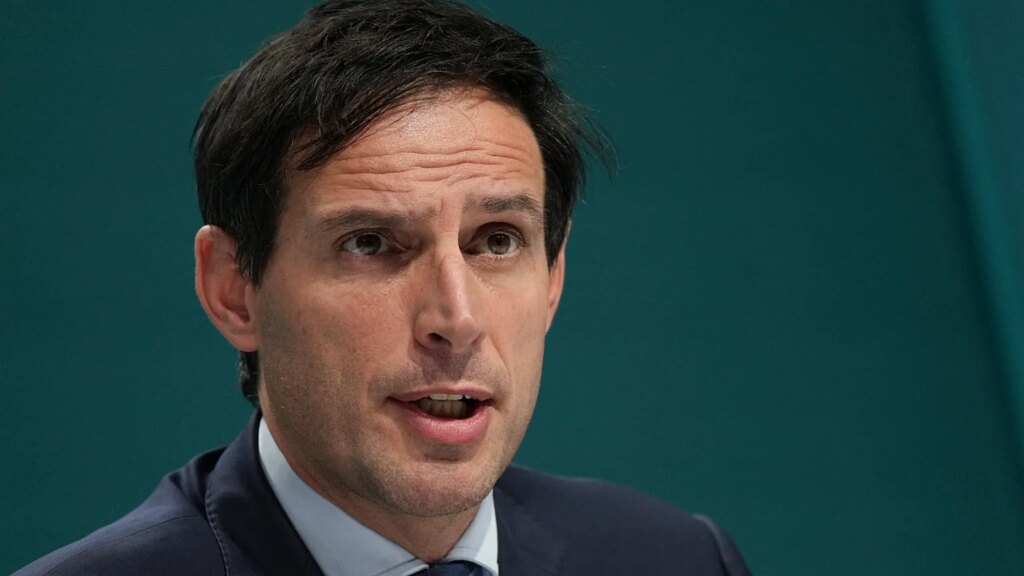
In an exclusive conversation, European Climate Commissioner Wopke Hoekstra emphasized that finalizing the Mercosur trade pact is vital. Nonetheless, Rome and Paris aim to postpone a critical vote that could determine the deal’s fate.
EU Climate Commissioner Wopke Hoekstra told Euronews that approving the Mercosur trade agreement between the European Union and Latin American nations is “essential,” while political disagreements among member countries threaten to block an important vote this week.
The agreement, under negotiation for over two decades, enters a pivotal phase that may lead to its ratification or suspension. Supporters, including the European Commission, Germany, and Spain, warn that failing to approve the deal would hinder efforts by the bloc to expand export markets. Meanwhile, France heads an opposition group pushing to delay the vote, potentially shelving the agreement entirely.
“I trust this agreement benefits Europeans, European member states, and European industries, as well as our Latin American partners,” Hoekstra told Euronews. “Thus, there is a strong necessity to move forward with this deal, ratify it, and then reap its advantages.”
European Commission President Ursula von der Leyen is set to visit Latin America on 20 December to sign the pact finalized earlier this year with Argentina, Paraguay, Uruguay, and Brazil, the region’s economic leader. However, this depends on backers securing a qualified majority—a challenge that remains difficult. According to a diplomat quoted by Euronews, the Mercosur agreement’s fate remains uncertain and will be decided at the last moment.
On Thursday, European leaders will converge in Brussels for the year’s final European Council session. Due to the political sensitivity and conflicting interests surrounding the deal, it might be addressed informally at the highest political level, involving direct leader engagement.
France, a persistent critic, is advocating for postponing the EU Council vote—a necessary step before signing. Adding to the setbacks, Italian Prime Minister Giorgia Meloni requested on Wednesday morning in the Senate that the vote be deferred.
Paris’s longstanding argument asserts that the agreement inadequately shields farmers from unfair competition posed by Mercosur imports and insists on a reciprocity clause that enforces EU standards on Mercosur nations. Although the Commission has proposed additional safeguards, the French government seeks further protections.
Meloni, who has remained cautious throughout the negotiations but holds significant sway for both sides, told Italian legislators that “signing the agreement in the coming days, as suggested, would be premature.”
When questioned whether delaying the vote could cause the Mercosur pact to collapse entirely, Commissioner Hoekstra refrained from speculating on the agreement’s future.
“Let’s not engage in hypotheticals at this stage,” he stated, noting that both he and the European Commission view the Mercosur agreement as having a beneficial impact.