
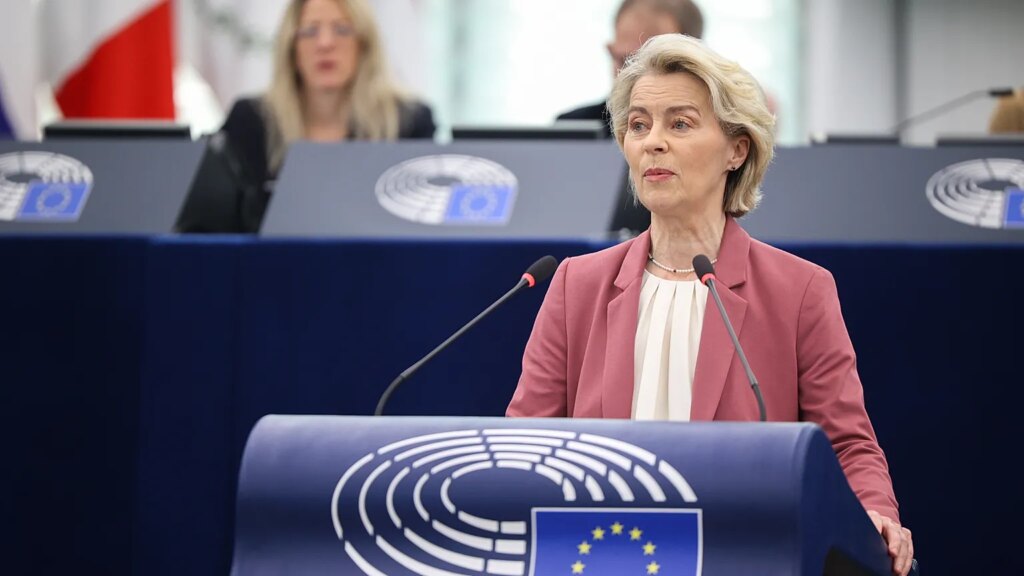
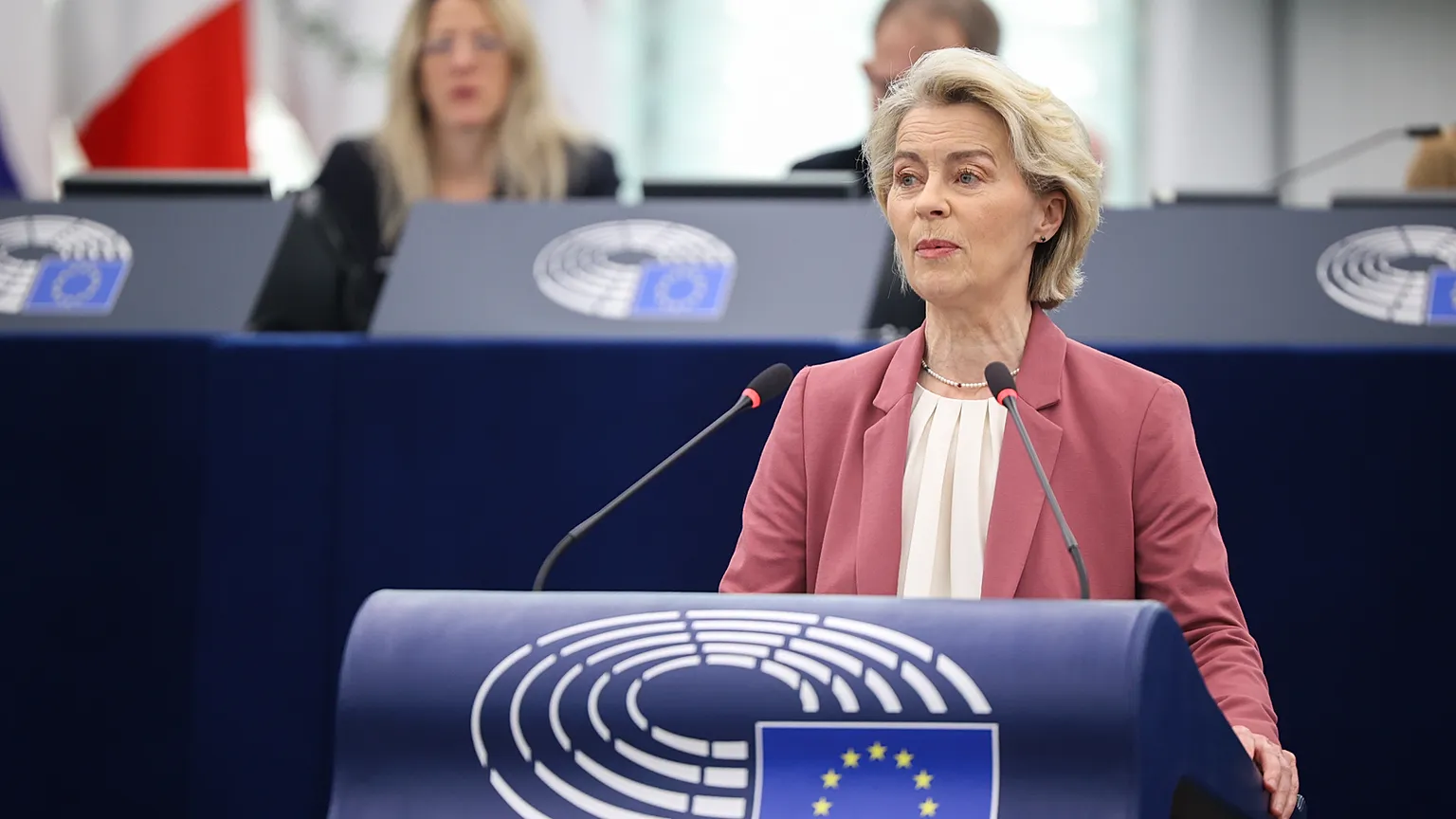
The head of the European Commission highlighted the high stakes of the decisions confronting EU leaders, mentioning a world of “predators” and alerting to a new international order following a significant shift in Washington’s stance towards Europe.
President of the European Commission Ursula von der Leyen intensified the importance of the upcoming meeting of the European Union’s 27 leaders in Brussels, scheduled for Thursday, portraying the discussions as critical for Europe’s security and sovereignty.
“The peace of yesterday no longer exists. There is no room for nostalgia. What truly matters is how we face current realities,” von der Leyen stated in the Strasbourg hemicycle on Wednesday morning.
“The urgency is clear. It is intense. We all perceive it, we all witness it.”
The EU now approaches a turning point regarding two vital matters that could shape its international reputation and geopolitical influence.
Firstly, it must determine how to maintain Ukraine’s economic stability and ensure the country’s resilience against Russian military pressure.
Secondly, it faces a decision on whether to ratify a free trade agreement with the South American Mercosur bloc, aiming to revive confidence in trade frameworks based on established rules, confidence that has diminished notably since the onset of Donald Trump’s second administration.
Regarding Ukraine, von der Leyen supports an unprecedented proposal to utilize frozen Russian state assets to finance a reparations loan. Yet, this plan has split EU leaders, and Belgium, which retains much of these assets, remains skeptical that its conditions for equal risk-sharing among EU nations are being fulfilled.
In addition, leaders are confronted with another significant choice: whether to approve a long-negotiated free trade agreement with the South American Mercosur bloc, after 25 years of discussions.
The arrangement requires endorsement by a so-called qualified majority of member states—15 countries representing at least 65% of the EU’s population.
Several prominent nations, including France, oppose the deal as their domestic agricultural sectors campaign vigorously against it. Italy has taken on the role of kingmaker, with French support pivotal to establishing a blocking minority to halt the agreement. However, Italian Prime Minister Giorgia Meloni remains noncommittal, leaving doubts about the future of the deal.
France is also pushing to delay the vote until next year, an action supporters warn may effectively terminate the deal and significantly damage the EU’s influence in South America and globally.
The EU’s credibility as a force in shaping its foreign policy and trade agenda is at stake, especially as it contends with a more confrontational Trump administration advocating an “America first” trade and foreign policy.
During her address, von der Leyen confronted the US’s recent realignment on Europe directly, stating: “Europeans cannot allow others’ perceptions to define who we are.”
“None of us should be surprised by external views about Europe. Yet, let me emphasize, it would not be the first time assumptions about Europe have proven outdated. Nor would it be the first time to recognize that the postwar world order is undergoing fundamental transformation,” the Commission President remarked.
This comes after a critical US national security strategy labeled Europe’s future as facing “civilisational decline.” Shortly after, President Trump described Europe as a collection of “declining nations” governed by “weak” leaders.
On Tuesday, Trump’s Trade Representative Jamieson Greer renewed attacks on EU digital policies, accusing the bloc and its member countries of enforcing “discriminatory and harassing lawsuits, taxes, fines, and directives against US service providers.”
An EU spokesperson replied, emphasizing that “as repeatedly stated, our regulations apply fairly and equally to all companies operating within the EU.”
“These regulations maintain a safe, equitable, and level competitive environment in the EU, aligned with the expectations of our citizens,” the spokesperson added.