
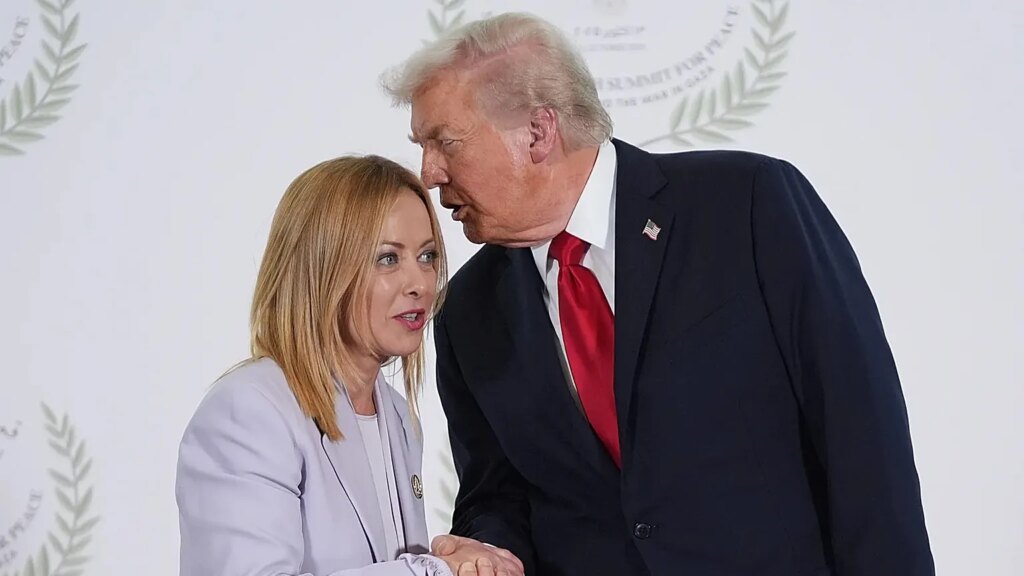
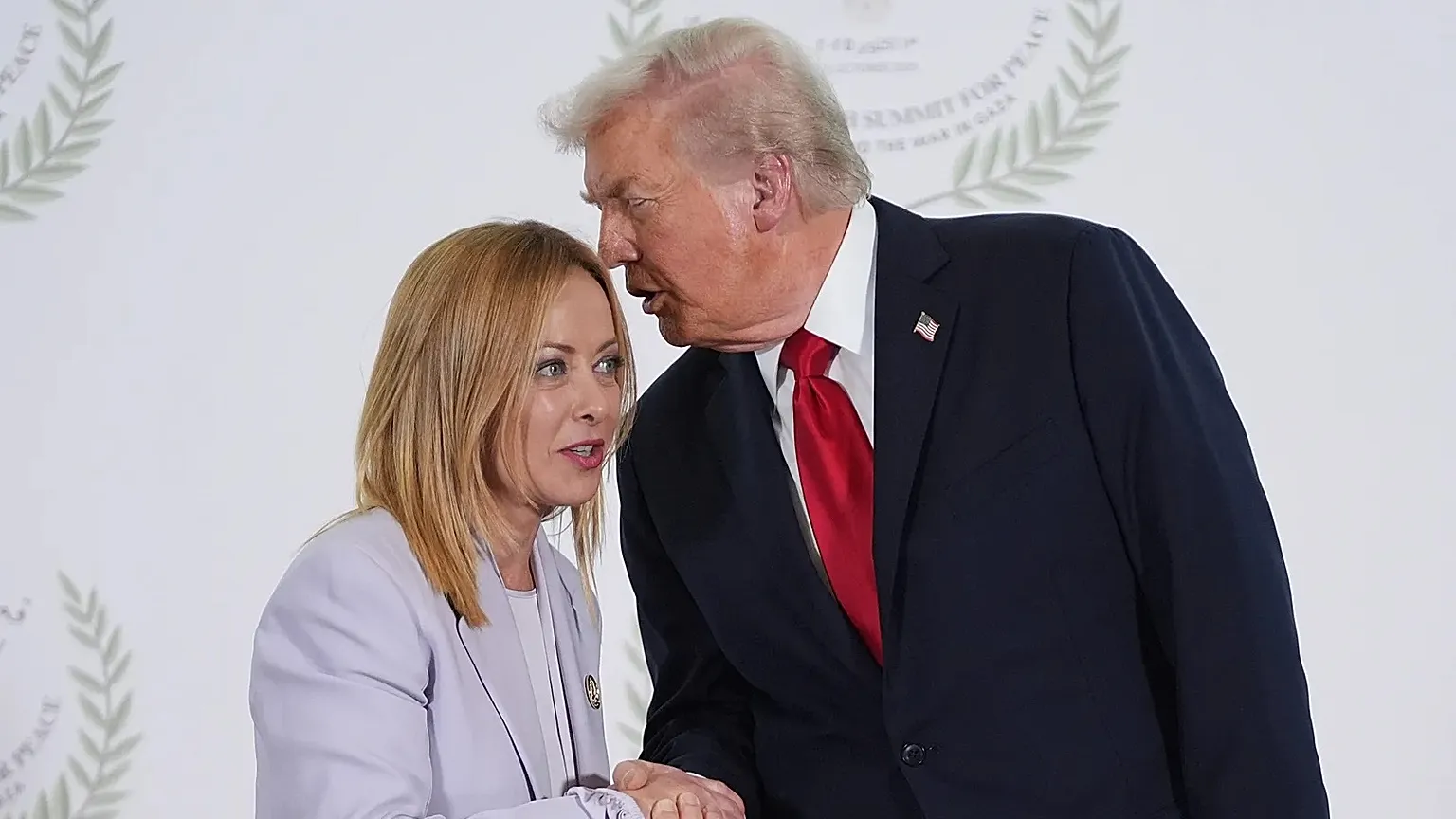
The tensions between Meloni and Trump appear unlikely to disrupt the strong alliance between Rome and Washington, maintained by US military bases in Italy alongside Italian contracts.
Following the United States’ announcement to withdraw 5,000 troops from Germany and similar warnings directed at Italy and Spain last week, questions arose regarding the future of the roughly 12,000 US troops stationed on Italian territory. In response, Giorgia Meloni arranged a meeting for Friday with Marco Rubio, following the US Secretary of State’s visit to Pope Leo XIV in the Vatican on Thursday.
 ADVERTISEMENT
  ADVERTISEMENT
The previously strong relationship between the Italian prime minister and the US president, since his return to the White House, sharply deteriorated last month after Meloni condemned Donald Trump’s charges of “weakness” aimed at the Pontiff. In retaliation, Trump accused her of lacking courage for not supporting his ally in the conflict with Iran.
“Italy has consistently fulfilled its obligations within NATO,” the prime minister emphasized on Monday during the European Political Community summit in Armenia, “and we could not support a reduction of the US military presence on our soil,” just as we did not endorse going to war in the Middle East.
Trump’s frustration over Italy’s refusal to expand the US base at Sigonella for offensive operations against Iran has caused irritation, though multiple factors indicate that this dispute will not cause a fracture between these two NATO partners. Italy is expected to maintain its role as a key interlocutor for the White House in Europe.
Reasons why a US troop withdrawal from Italy is improbable
According to Gregory Alegi, professor of History and Politics of the United States at Luiss University in Rome, Trump’s provocative remarks are superficial and unlikely to harm US-Italy relations, which are supported by deep historical, strategic, and economic foundations.
“For 80 years, Italy and the United States have shared a robust partnership that benefits both. No Italian government has ever been openly anti-American,” Alegi told Euronews. “Consider the consequences if Sigonella were closed: to compensate, two or three aircraft carriers would be needed in the Mediterranean. The US has a vested strategic interest in preserving its Italian bases.”
He further notes that since the Soviet Union’s collapse eliminated the primary adversary, there has been ongoing discourse on shifting strategic focus toward Asia.
Donald Trump’s impulsive, transactional approach reflects his background as a businessman accustomed to deal-making, but it does not signal a strategic shift.
“The United States’ priority in Europe remains the quality of its presence, bolstered by technological assets only it controls, including space, command centers, and cyber capabilities,” Alegi clarifies, “and this focus is unaffected by the reduction of 5,000 troops.”
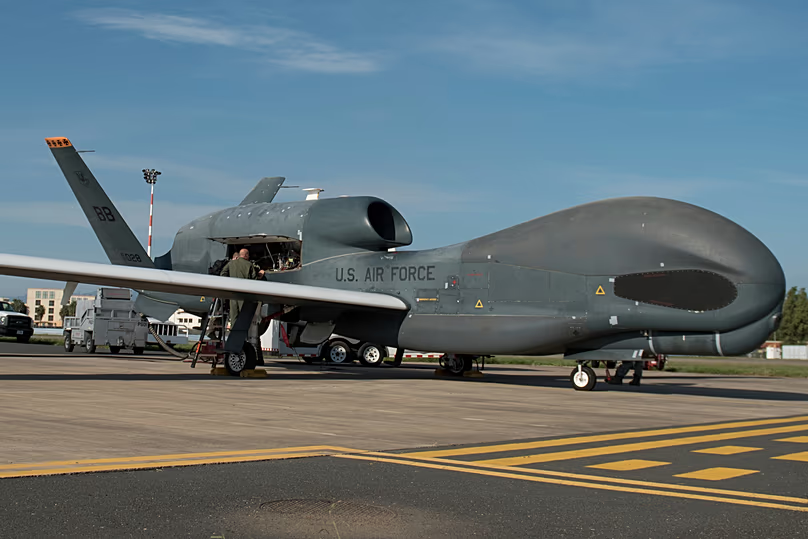
He highlights NATO’s Alliance Ground Surveillance (AGS) program—dedicated to aerial reconnaissance utilizing aircraft and radar installations supported by US bases in Sicily—as a prime example of this technological edge.
“The AGS system at Sigonella is irreplaceable, and Italy has successfully established regulations enabling the cohabitation of UAVs used in these missions alongside traditional aviation.”
Impact of defense contracts and Crosetto’s upcoming Washington visit
Historically, “Italy has tended to allocate its budget mainly to social welfare and relied on other countries for defense,” Alegi states, “yet the current geopolitical climate with conflicts in Ukraine and the Middle East demands a shift, pushing Europe towards rearmament.” He recently edited the volume (source in Italian) What Defence for Europe, published by Rubbettino.
“A transformative change in mindset is required to help citizens see defense and security expenditures not as wasteful, but as essential services and sectors generating significant added value,” he adds.
Evidence of this shift includes contracts from the US Navy to Fincantieri and Leonardo’s investments in the US, reflecting closer military-industrial ties. Such interdependence may deepen soon.
Defence Minister Guido Crosetto is preparing a visit to Washington, where discussions are expected to cover several existing and prospective defense agreements.
“One example is the M-346 trainer aircraft, which the US Navy might purchase. Approval of this deal would signal quality and enable the US to market it in otherwise hard-to-penetrate regions,” Alegi explains, citing Australia’s acquisition of the C-27 as precedent.
The M-346, a two-seat trainer, prepares pilots for next-generation fighters and is operated by nations such as Italy, Poland, Greece, Israel, Qatar, and Singapore. Meanwhile, the Leonardo-produced C-27J Spartan tactical transport aircraft is active in multiple countries, including the US.
“Consider also the F-35 assembly line in Cameri, which plays a crucial role in these fighters’ production and maintenance,” the professor points out, mentioning the Italian Air Force base in Novara province that hosts one of only two assembly and testing lines for the F-35 outside the US (the other is in Nagoya, Japan).
Rubio’s Vatican visit
For Alegi, the meetings held by the Secretary of State on Thursday and Friday are unlikely to yield substantial effects for Italy. They rather address dissatisfaction within the Catholic electorate toward the Trump administration ahead of November’s mid-term elections, considering Pope Leo’s stance aligns more with Francis’ positions than those of Benedict XVI, contrary to American conservatives’ expectations.
However, Trump’s recent attack on the Pope could complicate Rubio’s efforts within the Catholic community. In response to Trump’s previous criticism, Prevost stated he was “not afraid” of the US administration and intended to “continue speaking out strongly against the war,” emphasizing he was “not a politician.”
During his meeting with the Pope, Rubio is expected to engage in a “candid discussion” about the Trump administration’s policies, confirmed US ambassador to the Holy See Brian Burch on Wednesday.
This marks Rubio’s third trip to Italy and second to the Vatican with Leo in the past year. In addition to the Holy See, he will meet with Foreign Minister Antonio Tajani and Defence Minister Crosetto, as well as the Vatican Secretary of State, Pietro Parolin.