
The royal endorsement, combined with widespread recruitment efforts across various media, has achieved such success that the military is currently intensifying efforts to equip, train, and house the surge of new enlistees.
Authorities in the Netherlands report a notable increase in army reservist recruitment, especially following the recent enlistment of the nation’s queen and her eldest daughter, prompting officials to expedite arming and preparing the new recruits.
 ADVERTISEMENT
  ADVERTISEMENT
In February, images depicting Queen Maxima undergoing training and aiming a pistol at a shooting range circulated worldwide.
This royal endorsement, alongside media-wide recruitment campaigns, has been so effective that the armed forces are now working overtime to arm, instruct, and accommodate the rising number of recruits.
Within the Defence Ministry, this phenomenon is dubbed «the Amalia effect,» referencing the heir apparent, Princess Catharina-Amalia.
«We are receiving more applications than our current capacity allows,» notes State Secretary for Defence Derk Boswijk.
«There is a shortage of training facilities and housing; all recruits require uniforms, weapons, and training spaces. These are the current challenges, but I regard this as a favorable dilemma. We are actively addressing these issues,» he added.
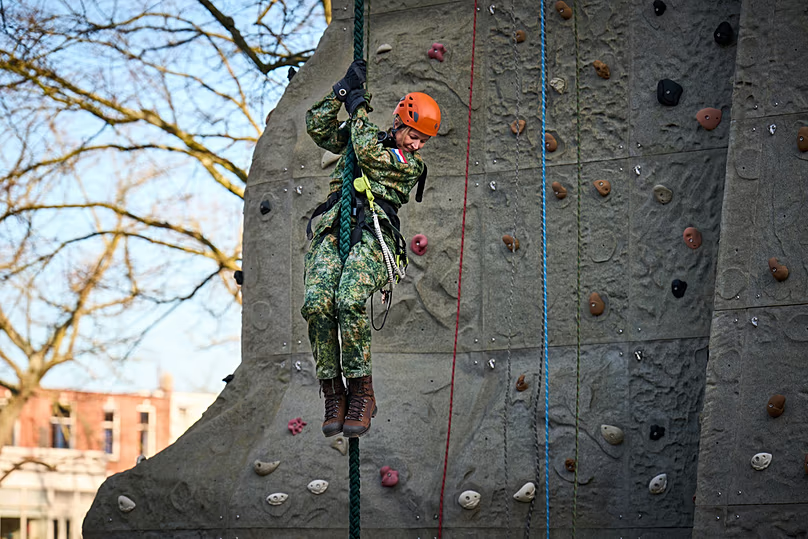
Derk Boswijk mentions there are approximately 9,000 reservists in the Netherlands, with recruitment targets set at a minimum of 20,000 by the year 2030.
This initiative is part of the Dutch government’s broader plan to grow its military personnel from the current 80,000 to 120,000 by 2035—a strategy enjoying wide political backing.
A step toward modernizing Europe’s armed forces
This recruitment campaign aligns with broader European efforts to enlarge and update military capabilities as leaders carefully observe the ongoing conflict initiated by Russia against Ukraine and recent critiques voiced by US President Donald Trump regarding the NATO alliance.
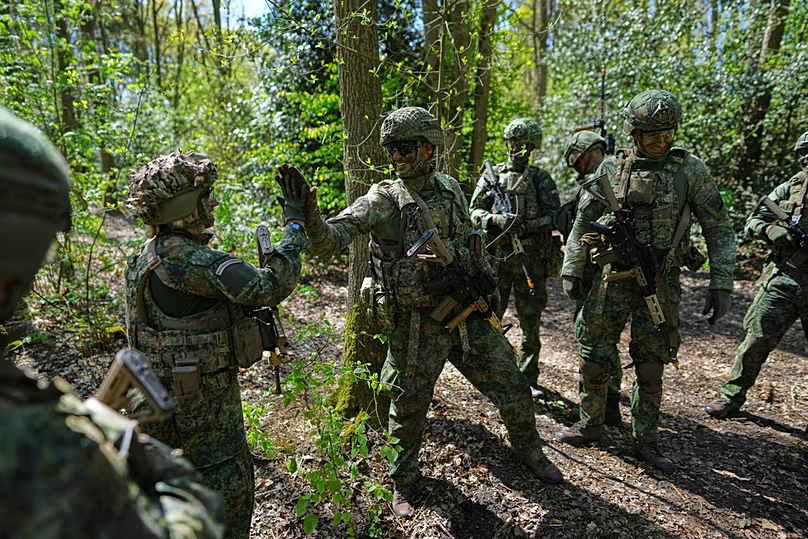
A corporal serving in the reserve unit of the 10th Infantry Battalion Guard Security Corps National Reserve shared that priorities have shifted due to increased volatility and unpredictability in global security.
«When I initially enlisted, threats were minimal or nearly nonexistent, but the situation is changing, making us more alert,» she explained.
Consequently, focus has shifted toward «what we refer to as green skills, infantry-related tasks.»
She added, «Our role is to defend our country and work to minimize threats.»
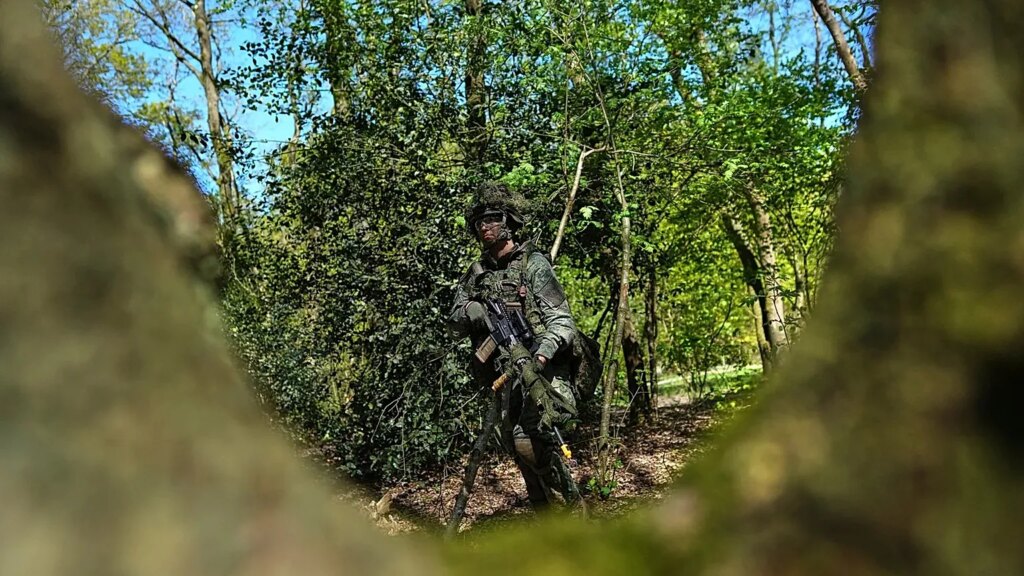
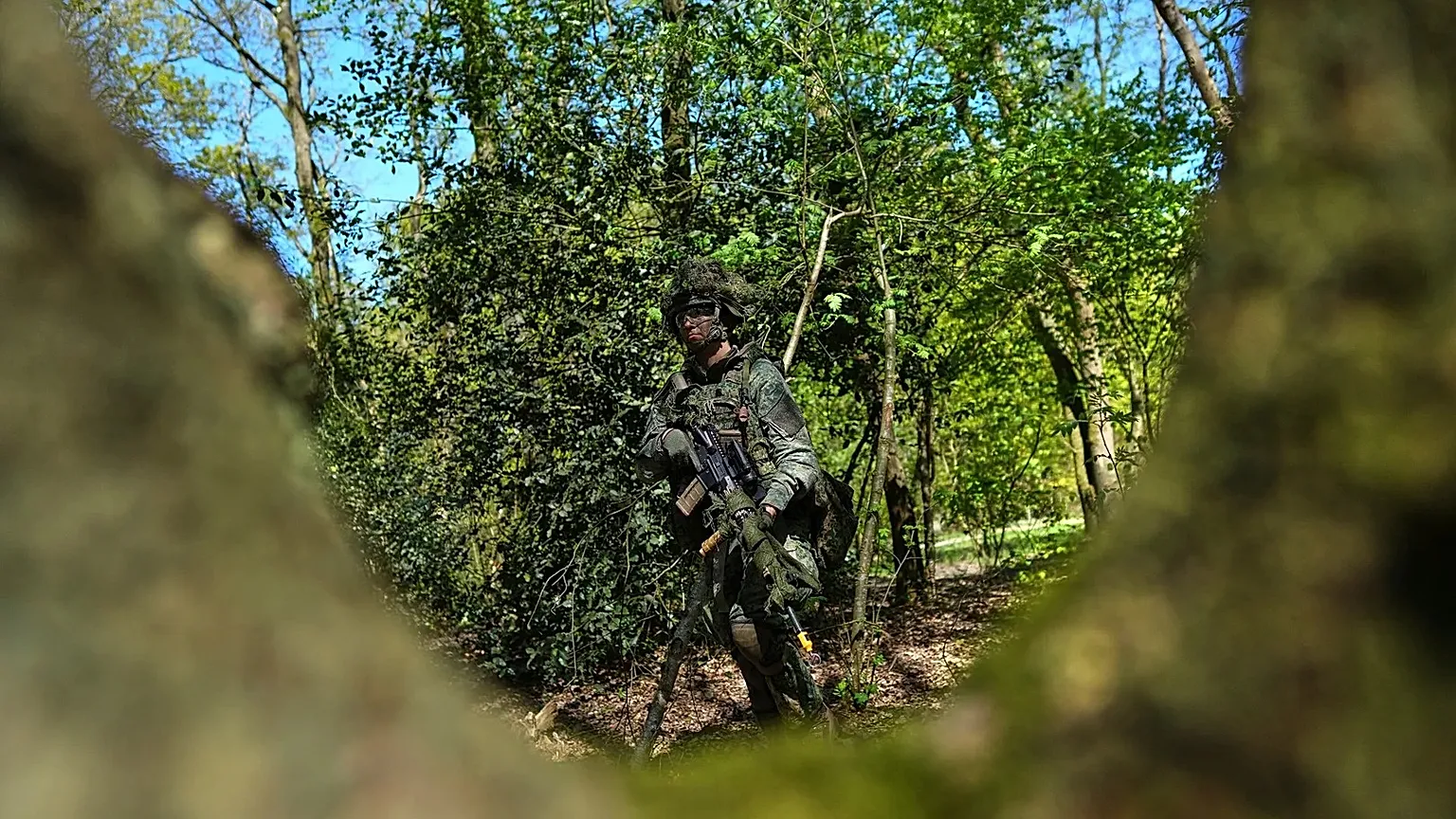
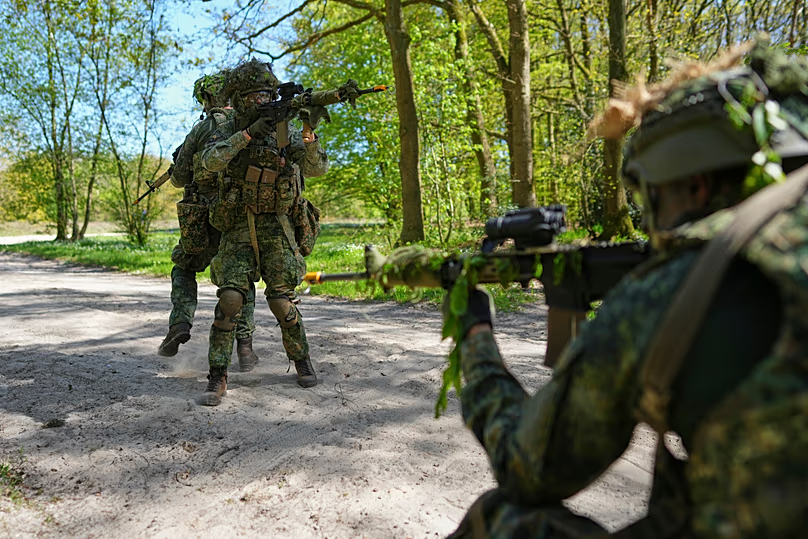
The soldiers, with faces camouflaged, silently emerge from a wooded area carrying Colt C7 rifles across their chests, attentively surveying for possible threats—a concern emphasized by European Union and NATO officials as credible today.
Given that the conflict in Ukraine is the deadliest in Europe since World War II, NATO now focuses on deterrence strategies that compel member states to prepare forces for large-scale engagements, prioritizing mobile units capable of rapid deployment.
Although the Netherlands has never fully ended conscription, the draft call-ups have been on hold since 1997, with no current plans for reinstatement.
Dutch reservists commit to 300 hours of service annually, including regular weekend training sessions.
Traditionally assigned to protect domestic installations and not deployed on overseas combat missions, reservists may also assist during national crises, such as reinforcing flood defenses by stacking sandbags.
Other nations intensify recruitment efforts
German policymakers are considering a proposal aimed at improving compensation and working conditions for short-term enlistees, alongside enhanced training and more adaptable service duration requirements.
This approach intends to attract adequate recruits without reinstating mandatory military service, which was paused for men in 2011. However, the plan maintains the possibility of limited conscription if volunteer numbers fall short.
Similarly to the Netherlands, France focuses on voluntary enlistment to strengthen its forces. A program launching in September plans to recruit 3,000 individuals aged 18-25.
These volunteers will serve in uniform for 10 months within mainland France and its overseas territories. By 2035, the goal is to attract up to 50,000 volunteers annually.
In Northern and Eastern Europe, where the Russian threat is acutely felt, some countries retain forms of conscription.
Finland maintains compulsory service for all males and voluntary enlistment for females. Sweden reinstated a gender-neutral partial conscription system in 2017, complemented by a lottery if volunteer numbers are insufficient.
Denmark employs a similar system, and Latvia reinstated its draft in 2023 as a response to Russia’s large-scale invasion of Ukraine.
Additional sources • AP