
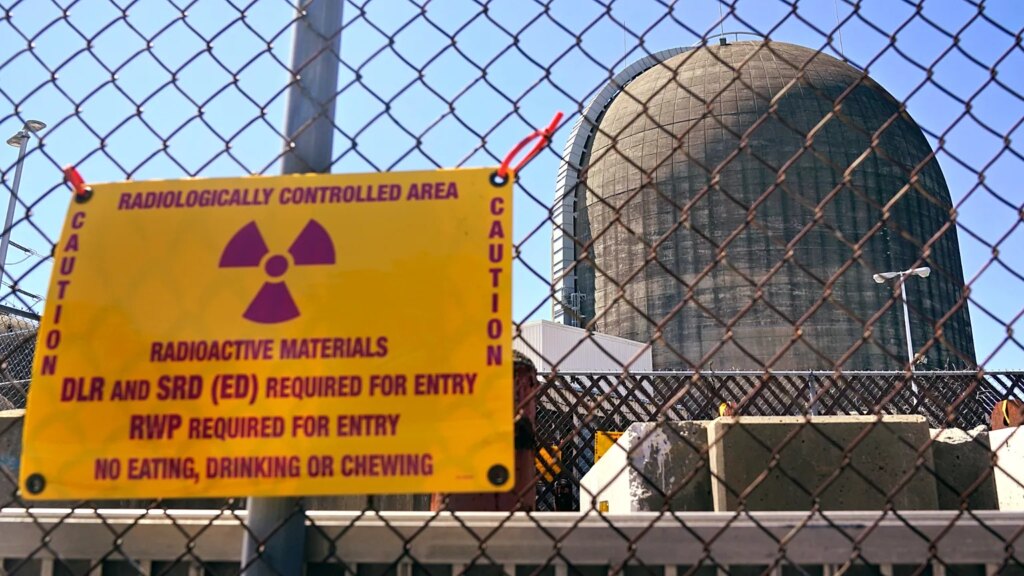
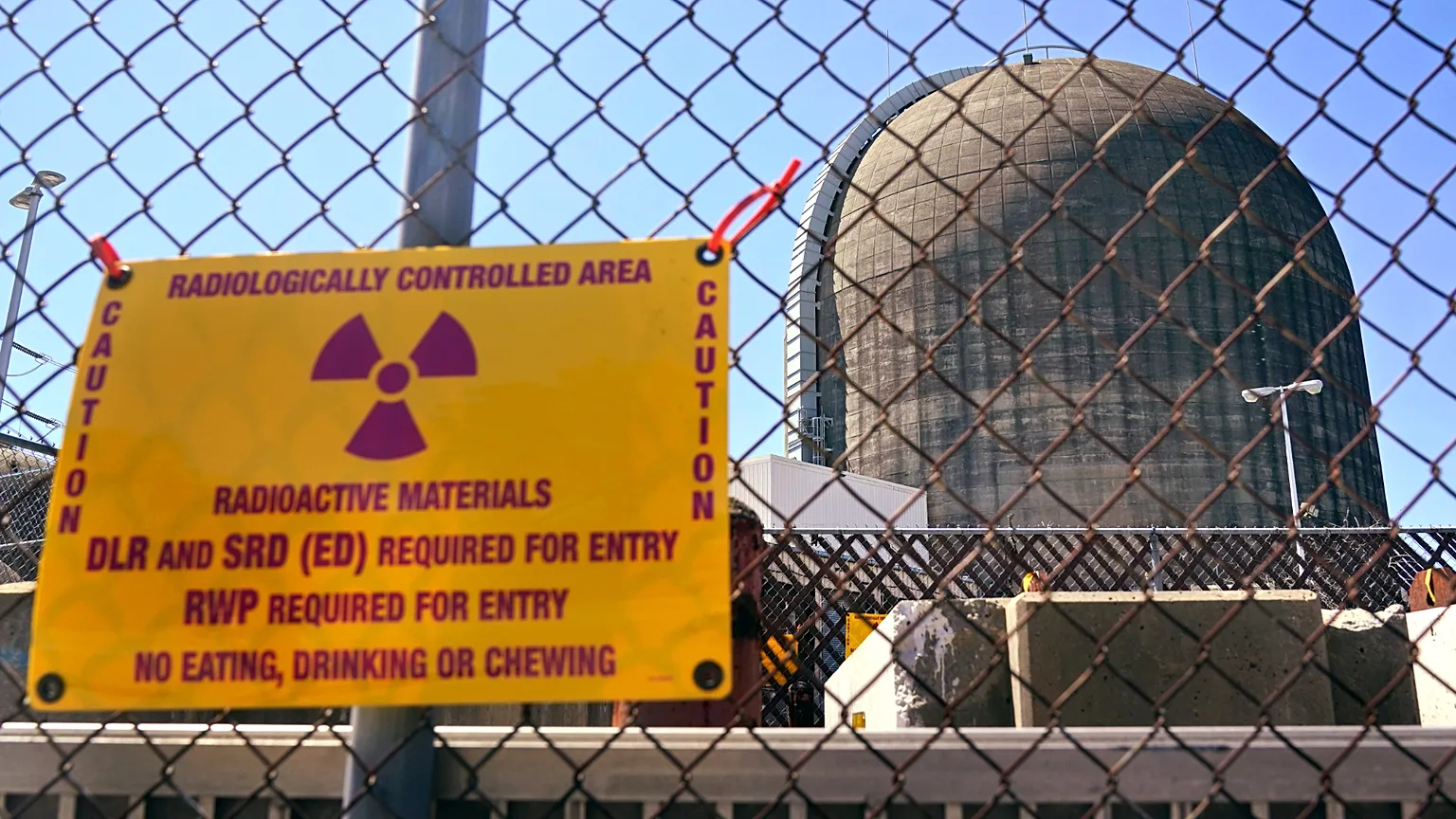
The EU is reverting to nuclear power after years of hesitation, motivated by the twin shocks of the energy crisis and the understanding that renewables alone cannot sustain a heavy industrial economy.
The crisis primarily stems from unprecedented disruptions to the global energy supply, triggered by the closure of the Strait of Hormuz. The International Energy Agency (IEA) reported an estimated daily loss of around 13 million barrels. Within the initial 17 days of the Iran conflict, the EU had to allocate an extra €6 billion on fossil fuel imports due to soaring market prices.
 ADVERTISEMENT
  ADVERTISEMENT
To secure energy autonomy and maintain affordable costs, Brussels has redirected its focus to the nuclear sector, addressing a grid that renewables alone cannot fully stabilize. This shift represents a move toward a strategic “energy mix,” in which the dependable output of nuclear baseload energy complements the variable supply from wind and solar sources.
During a speech in March 2026, European Commission President Ursula von der Leyen stated: “I consider it a strategic error for Europe to have rejected a reliable, cost-effective source of low-emission electricity.”
AccelerateEU: Europe’s response to the energy crisis
Diversification of energy sources and increased renewable usage led to an 11.1% decline in the EU’s energy imports in 2025 compared to 2024. Eurostat data shows energy imports cost Europe €336.7 billion in 2025, down 51.4% from €693.4 billion in 2022.
The ongoing US-Iran conflict highlights the EU’s significant reliance on imported fossil fuels, a dependency that intensified following the search for alternatives to Russian gas post-2022. The invasion of Ukraine by Russia caused the EU to replace much of its Russian supply with liquefied natural gas (LNG), 58% of which came from the US in 2025.
Rosita Zilli, Policy Director at the European Energy Research Alliance, remarked, “We are witnessing the initial phase of a possible domino effect. Due to inherent delays in energy systems, supply disruptions tend to manifest progressively.”
On 22 April, the European Commission reported that escalating US-Iran tensions added €24 billion to the EU’s energy import costs, despite steady supply. In response, Brussels unveiled AccelerateEU, a five-pillar initiative aimed at boosting energy security and diminishing external energy dependency.
Under the 2025 Energy Union Task Force, the initiative coordinates member states’ gas storage capabilities while relaxing state aid rules. A Fuel Observatory will monitor the production, import, and export of transport fuels, alerting to potential shortages.
Other measures involve supporting governments in protecting consumers and businesses by implementing income support programs and energy vouchers to reduce electricity taxes for vulnerable households.
Efforts to increase domestic green energy production include the Electrification Action Plan, which simplifies electrification processes across industry, transport, and buildings to make electricity the primary energy source. The Grids Plan focuses on fully modernizing the EU’s energy infrastructure.
The roadmap also encourages private investments through high-profile events such as the Clean Energy Transition Investment Forum in May 2026 and the Clean Energy Investment Summit later this year.
Zilli noted that the Commission’s actions are largely shaped by ongoing geopolitical tensions, suggesting that “the EU has yet to fully adopt a comprehensive, forward-looking strategy.”
Nonetheless, she welcomes Europe’s push toward energy diversification, including its nuclear power plans. “Nuclear provides a low-carbon, dispatchable energy source,” she pointed out, emphasizing that it offers a viable path away from fossil fuels alongside renewables.
The logistics of nuclear production
Nuclear power stands out as a favorable option. It is generated by splitting atomic nuclei in a controlled chain reaction, producing heat and steam that drive turbine-generators.
To sustain this at scale, the EU must maintain comprehensive fuel cycles and industrial infrastructure, covering uranium supply, conversion, enrichment, fuel fabrication, and a fleet primarily composed of pressurized water reactors. These components ensure low-carbon electricity production and grid stability.
France leads the production sector, supplying 58% of the EU’s nuclear electricity and relying heavily on it. Spain, Sweden, Finland, and Belgium follow, collectively contributing about 26% of the output. Smaller fleets exist in Slovakia, Hungary, Belgium, Bulgaria, Czechia, and Finland, despite these countries having the highest nuclear dependency within their energy mixes.
Overall, the EU relies considerably on nuclear energy, which accounted for 24% of electricity generated in 2026. The bloc operates 98 reactors across 12 countries, with a combined capacity of approximately 96.2 GW. This system is well-developed but faces capacity constraints.
Its effective operation depends on synchronized supply chains, stringent regulatory supervision, skilled workforce training, waste management, and stable long-term financing for construction, operation, and decommissioning. To expand capacity, life extensions for current plants, investment in new reactors and supply chains, as well as enhancements in financing, workforce skills, and fuel security are essential.
Nuclear as a “sustainable” option
The renewed interest in nuclear energy from Brussels, while strong, is not new. It began with the 1957 Euratom Treaty, followed by significant expansion from the 1970s through the 1990s—the era when most existing reactors were built.
Some countries subsequently moved away from nuclear power, such as Italy following the 1987 referendum, and Germany, which finalized its nuclear phase-out in 2023 after safety regulations tightened post-Fukushima (2011).
The momentum returned in 2023 when the EU officially recognized nuclear power within the EU Taxonomy to attract private investments by classifying it as “economically sustainable.” In 2024, Brussels introduced the Net-Zero Industry Act, granting nuclear projects strategic status and an 18-month permitting process.
In March 2026, the Commission adopted the SMR Strategy, rolling out a €200 million investment guarantee to accelerate the deployment of Small Modular Reactors. Current policy, guided by the 2025 Nuclear Illustrative Programme, outlines a €241 billion investment target to sustain and grow the reactor fleet.
A France-led coalition of EU states, the 12-nation Nuclear Alliance, consisting of Bulgaria, Croatia, Czech Republic, Finland, Hungary, Estonia, the Netherlands, Poland, Romania, Slovakia, Slovenia, Sweden, Belgium, and Italy, pushes this expansion. They aim to reach 150 GW nuclear power capacity by 2050 through accelerated SMR deployment and securing financial resources for nuclear initiatives.
This coalition faces opposition from the «Friends of Renewables,» a group led by Germany that opposes categorizing nuclear on the same level as wind or solar power. Criticisms include nuclear power’s high costs, lengthy construction timelines, unresolved radioactive waste management, and public safety concerns.
Renewables remain essential
The Commission’s post-2030 energy framework, scheduled for adoption by year-end, targets a reliable, affordable, and domestic energy supply with a goal of reducing emissions by 90% by 2040.
Renewable energy sources are crucial, providing electricity, heating, and transport solutions that reduce fossil fuel dependency.
“Though nuclear offers dispatchable energy, new projects demand significant capital and take time to implement, which is why renewables continue to drive much of the near-term energy transition,” Zilli told Euronews.
In 2024, renewables accounted for 25.2% of the EU’s energy mix, increasing from 24.4% in 2023. Sweden led with a gross clean energy consumption of 62.5%, while Belgium (14.3%) and Luxemburg (14.7%) lagged behind.
In 2025, the EU invested approximately €333.4 billion in expanding clean energy, according to IEA data.
Europe has set even more ambitious goals.
The updated Renewable Energy Directive (EU/2023/2413) intends to raise the share of green energy to at least 42.5%, aiming for 45% by 2030. This builds on the €300 billion REPowerEU initiative, which increased renewables to 45.3% of EU electricity in 2023—a 4.1 percentage point rise and the largest growth in a decade.
The European Environment Agency states the EU must accelerate renewable deployment beyond current rates. In 2025, Eurostat data showed electricity generation comprised 37.5% wind, 27.5% solar, 25.9% hydro, and 8.5% combustible renewables.
AccelerateEU is poised to drive this growth. By summer 2026, the Commission will introduce an Electrification Action Plan outlining targets to overcome barriers in industry, transport, and buildings.
Speeding up the roll-out of green aviation fuel via the Sustainable Transport Investment Plan is also a priority.
The push for renewables, however, depends heavily on a modern grid system spanning 11 million kilometres.
“Grid infrastructure remains one of the primary chokepoints in the energy transition. Much of Europe’s grid is outdated—typically 40 to 50 years old—and was not designed for a highly electrified, decentralized energy landscape,” Zilli cautioned.
The Commission aims to approve the Grids Package by summer 2026 to address slow permitting processes and connectivity issues. This package emphasizes upgrading renewable energy infrastructure by repowering large wind farms, offshore wind, hydroelectric plants, and other renewable facilities to accelerate clean energy deployment.
LNG and Green Hydrogen: emerging energy options
In addition to nuclear and renewables, the EU incorporates Natural Gas/LNG and Green Hydrogen as crucial supplementary options. The EU Energy Hub manages both to aggregate demand and prevent member states from competing against one another in global markets.
Although the EU is transitioning away from fossil fuels, LNG remains the main tool to replace lost Russian gas supplies. This effort is bolstered by the REPowerEU framework, which funds the expansion of floating regasification terminals and interconnector networks.
Green hydrogen offers a clean alternative for heavy industries such as steel and chemicals, which cannot fully rely on electricity.
Produced by splitting water molecules through renewable energy, green hydrogen generates a zero-carbon fuel. To scale production, the EU operates the European Hydrogen Bank, a subsidy scheme that covers the “green premium” — the cost difference between hydrogen and cheaper fossil fuels — making clean fuel economically viable for private sectors.
Europe requires a blend of solutions
Although the EU is moving in the right direction, political instability creates the impression that progress is reactive rather than part of a long-term plan, according to Zilli.
She emphasizes that neither renewables nor nuclear alone can guarantee Europe’s energy security. Energy sufficiency must be integrated as a fundamental element of the bloc’s energy policy.
“The goal is not to reduce economic activity, but to improve energy efficiency within the system’s flexibility, without compromising value,” Zilli explained.
She also warned that while the EU’s 45.5% renewable energy target for 2030 is a vital milestone, it is both ambitious and difficult to achieve. Europe’s aging grid infrastructure poses a serious risk to these renewable goals; without substantial upgrades, integrating and distributing new electricity sources will remain a major challenge.