
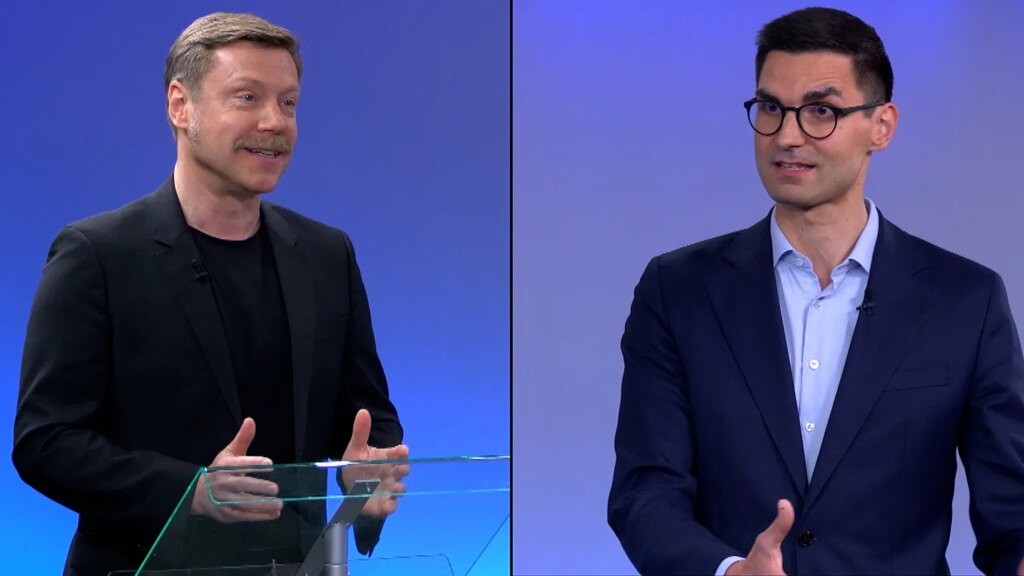
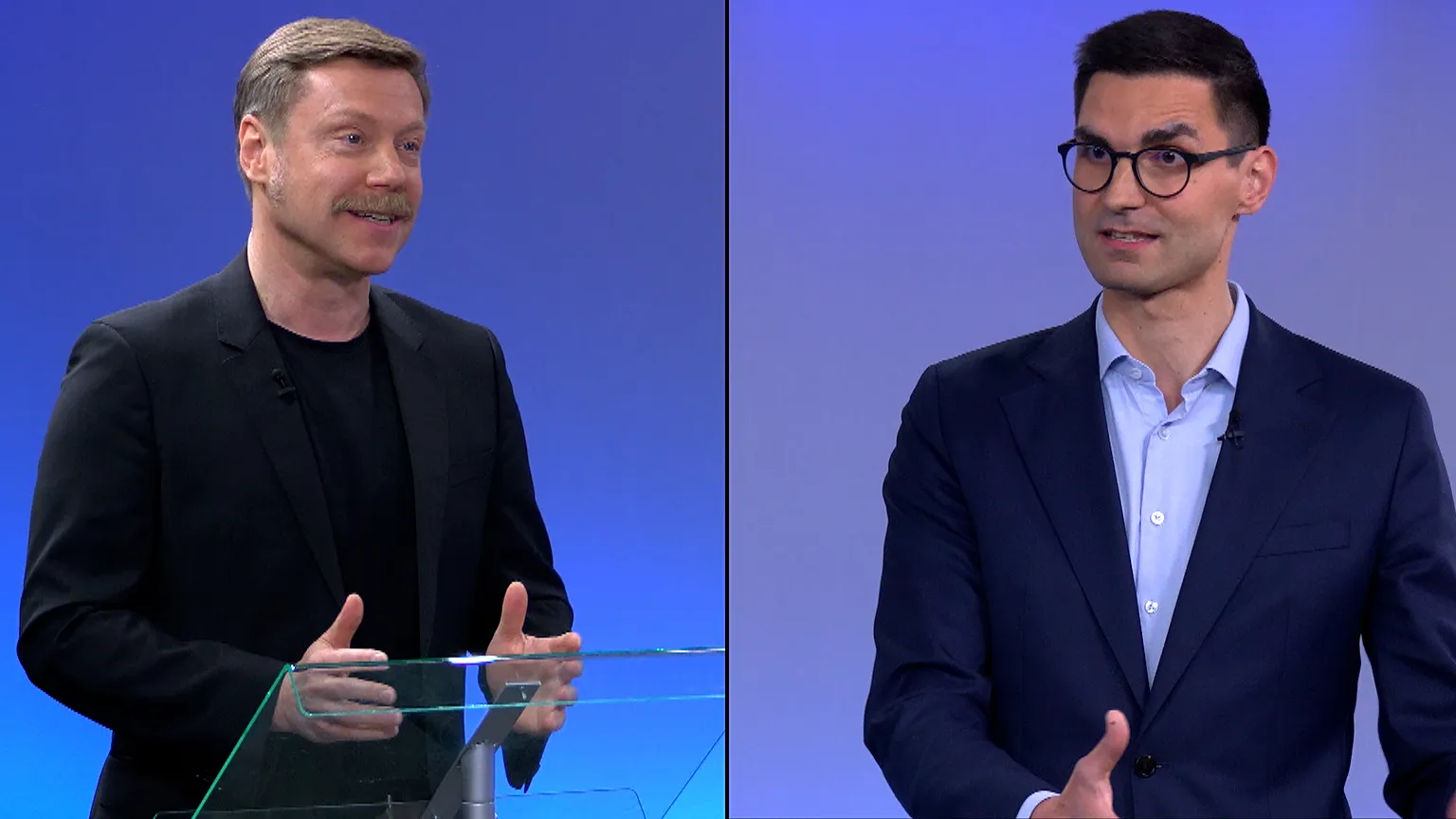
In this installment of Ring, recorded in Berlin, the Bundestag and European Parliament confront each other: Christian Democrat Sepp Müller and Left representative Martin Schirdewan debate the backlog of reforms in Germany’s largest economy within the EU.
Is Germany, once more, experiencing a period of decline within Europe? The evidence suggests so, considering mounting issues: persistently low growth rates, a significant drop in exports to China, challenges faced by industries like mechanical engineering and automotive sectors, continuing deindustrialization, alongside demographic strains and a shortage of skilled labor.
 ADVERTISEMENT
  ADVERTISEMENT
Productivity growth has stagnated for an extended period.
Many of these problems have been apparent for years, yet effective action remains minimal.
What hinders Germany’s capacity to implement reforms and modernize? Moreover, what are the implications of Germany’s weakening for the broader European landscape?
Opposing viewpoints come from two German politicians representing distinct political factions and legislative bodies: Sepp Müller, deputy chairman of Chancellor Friedrich Merz’s Christian Democrats in the Bundestag, and Martin Schirdewan, co-leader of the Left faction in the European Parliament.
The core topic of their discussion was identifying strategies Germany could employ to overcome the crisis—a situation rooted in delayed modernization, inadequate investment in forward-looking sectors, and predominantly, a persistent reliance on Germany’s export-driven economic structure.
«Wages remain insufficient. For years, a policy favoring cheap exports has been pursued at workers’ expense, coupled with a serious lack of investment in both public and private arenas. These critical issues must be urgently addressed,» Schirdewan stated.
Müller stressed the importance of boosting Germany’s competitiveness, highlighting that 25% of manufacturing jobs directly rely on exports. Despite several initiatives already in place, he noted that complications arise due to the intricate geopolitical climate.
«We confront significant challenges from the Trump administration’s policies. The political dynamics with China also complicate matters. Additionally, other global and regional actors, such as Russia, engage in disruptive tactics that negatively impact the German population, particularly those with lower and middle incomes,» Müller explained.
The debate on economic measures to invigorate growth revealed fundamental disagreements over free trade agreements.
According to Müller, these agreements are vital for safeguarding markets, economic prosperity, and employment, whereas Schirdewan argued that workers tend to bear the brunt of a system that intensifies social and economic disparities.
Divergent perspectives also surfaced in discussions concerning taxation and housing policies.
This episode of The Ring is hosted by Stefan Grobe, produced by Luis Albertos and Amaia Echevarria, and edited by Vassilis Glynos.
View The Ring on Euronews TV or via the player above and share your opinions by contacting [email protected].