
Also in today’s newsletter: Luxembourg’s Foreign Minister Xavier Bettel and former Finnish Prime Minister Sanna Marin joined our discussions.
Good morning, this is Eleonora Vasques and Jorge Liboreiro reporting from Brussels,
 ADVERTISEMENT
  ADVERTISEMENT
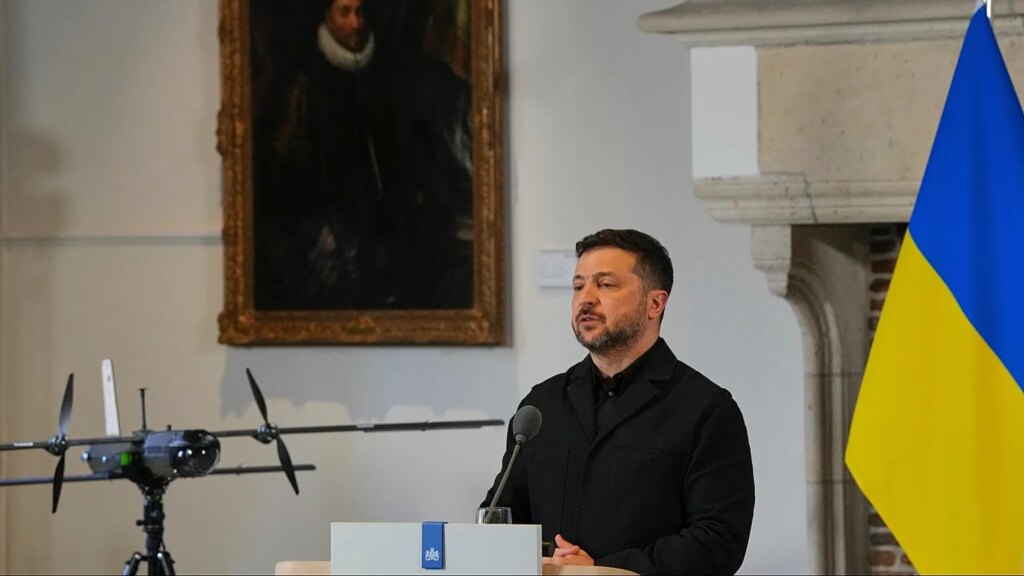
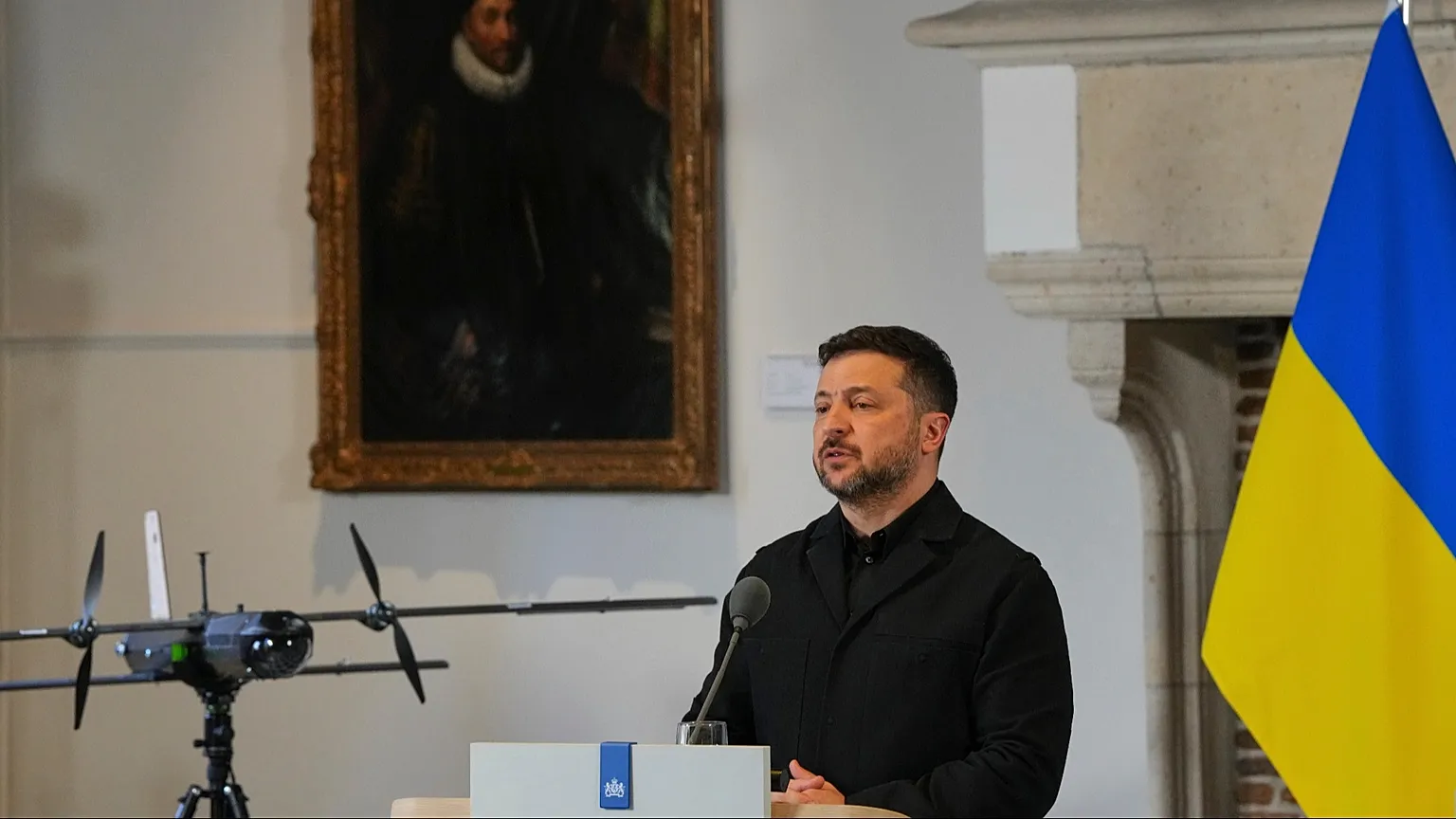
Today marks the moment when the 27 ambassadors prepare to finalize their approval of the €90 billion loan package for Ukraine. This long-awaited progress was unlocked after Ukrainian President Volodymyr Zelenskyy announced on Tuesday the Druzhba pipeline — which supplies affordable Russian oil to Hungary and Slovakia — had been repaired and could resume operation, as reported by Sasha Vakulina, Sandor Zsiros, and Jorge Liboreiro.
Zelenskyy affirmed this development removes any justification for Hungary to maintain its controversial veto.
“The EU requested Ukraine to restore the Druzhba oil pipeline after damage caused by Russia. It has been fixed. We expect the EU to reciprocate on agreed commitments,” Zelenskyy stated during his evening address.
Other member states concur with this view and are urging Hungary to end the political deadlock that has significantly weakened the EU’s unified decision-making. Unless a last-minute change occurs, the formal written procedure is anticipated to begin this morning.
“I won’t jinx it. I hope this proceeds smoothly, given the twists in this dossier,” said EU’s top diplomat Kaja Kallas on Tuesday. “Ukraine pledged to restart the flows, so as far as obstacles go, hopefully, they are now cleared.”
The pipeline’s restoration might also enable the approval of a new sanctions package against Russia, which has been pending since early February. Yet, this could face delays due to unresolved issues around the proposed embargo on maritime services for Russian tankers. Malta and Greece, both with significant stakes in the maritime sector, prefer to proceed with a full ban only if a G7 consensus is reached. However, such an agreement may be unlikely as the US is expected to veto this decision.
European Commissioner for Economy Valdis Dombrovskis told Euronews that the EU should prepare to act independently. “We must not be reliant on this. If there is no G7 agreement, we should still be capable of acting ourselves,” he said. “The EU must maintain and even intensify its sanctions pressure on Russia.”
More insights can be found in today’s report with Brussels-based Hungarian journalist Sandor Zsiros.
Meanwhile, as Sandor reported, the European Court of Justice declared Hungary’s 2021 Child Protection Law unlawfully discriminates against the LGBTQ+ community. This marks the first occasion a member state has been found to contravene the EU fundamental values charter.
Discussing Orbán’s stance on LGBTQ+ rights, Luxembourg’s Foreign Minister Xavier Bettel told Euronews’ Shona Murray, “Being gay is not a choice, but being homophobic is. Politicizing by blaming groups reminds one—seriously—of how persecutions began with Jewish people, Roma, and others.” The interview is available in today’s broadcast.
Turning to the Berlaymont, Energy Commissioner Dan Jørgensen and Vice-President for Clean, Just, and Competitive Transition Teresa Ribera will unveil today a comprehensive set of social measures. These initiatives aim to shield households, businesses, and industry from the impact of soaring energy prices triggered by turmoil in global energy markets linked to the conflict with Iran, Marta Pacheco reports.
The Commission plans to propose targeted financial aid such as energy vouchers, income support, and social tariffs for vulnerable groups, alongside temporary prohibitions on disconnections, according to a draft obtained by Euronews. It will also suggest tax cuts on electricity and clean technologies, while encouraging consumers to reduce expenses over time via subsidies for heat pumps, solar panels, and home insulation.
Looking eastwards, the situation in the Middle East remains unsettled. US President Donald Trump extended the ceasefire with Iran indefinitely while the second round of negotiations remains on hold. Both countries warned that without a deal, conflict could resume.
US Vice President JD Vance, who was expected to lead the US negotiation team, cancelled a planned trip to Pakistan. Iranian Foreign Ministry spokesperson Esmail Baghaei said on state TV that no final decision has been made on continuing talks due to “unacceptable actions” by Trump, likely referring to US restrictions blocking Iranian ports.
Trump asserted that Europeans have done little regarding Iran and described NATO as a “paper tiger.”
EU news head Maria Tadeo asked former Finnish Prime Minister Sanna Marin if she still believes joining NATO was the right decision.
“I remain very pleased and supportive of our decision to join NATO,” Marin told Euronews.
“However, we must recognize that NATO today differs from when Finland and Sweden joined,” she noted, referring to evolving EU-US relations amid Trump’s administration.
“We need to concentrate on our own capabilities. We cannot depend solely on US presence and resources; we must develop our own,” Marin added.
The interview is featured in today’s program.
TOP STORY | ISRAEL
EU ministers dismiss calls to suspend Israeli trade agreement over alleged ‘war crimes’
EU foreign ministers rejected proposals to terminate preferential trade ties with Israel amid accusations of war crimes, revealing ongoing divisions within the bloc over Middle East policy.
Nonetheless, EU foreign policy chief Kaja Kallas indicated that further discussions will continue, including consideration of a proposal from France and Sweden to apply tariffs on goods produced in Israeli settlements in the occupied Palestinian territories. “We cannot overlook Gaza and the West Bank,” Kallas said at a press event. Prior to Tuesday’s meeting in Luxembourg, Spain, Ireland, and Slovenia urged the EU to “stand by its moral and political responsibility and defend the core values that have upheld the European project since its inception.”
Shona Murray provides more details.
TOP STORY | ENERGY
EU considers increasing jet fuel imports from the United States amid fears of shortages
European transport ministers are investigating options to boost jet fuel imports from alternative sources like the United States due to prospective shortages across Europe. Ongoing disruptions in the Middle East combined with production cuts in various oil-producing countries have tightened the market, Transport Commissioner Apostolos Tzitzikostas told reporters Tuesday.
This announcement follows the International Energy Agency head Fatih Birol’s warning that Europe faces a jet fuel shortage, supported by warnings from several European airlines that cancellations may occur. The European Commission, however, downplayed these concerns, attributing cancellations chiefly to airline profitability issues rather than fuel scarcity.
EU refineries typically produce about 70% of the bloc’s jet fuel, with the rest sourced mainly from the Middle East. The effective closure of the Strait of Hormuz—a strategic route responsible for roughly 20% of global oil and gas transport—following US and Israeli strikes on Iran on 28 February has disrupted fuel shipments to Europe, prompting EU countries to act to guarantee supply continuity.
Marta Pacheco reports further.
MORE FROM OUR NEWSROOMS
Scroll, like, repeat: How the EU plans to strengthen children’s online protection. The Commission unveiled its strategy to safeguard minors online alongside introducing a new age-verification system. Member states are pushing legislation to restrict children’s access to social media, while the European Parliament advocates for a stringent 16-year age limit. Elisabeth Heinz and Leticia Batista Cabanas provide the details.
Slovakia prepares July referendum on ending lifetime pensions for politicians. Slovakia will hold a referendum this summer to determine whether to abolish lifelong payments for Prime Minister Robert Fico and other leaders after their official terms end, the country’s president announced Monday. Gavin Blackburn covers this story.
We continue monitoring:
- The European Commission is set to issue a communication on affordable and secure energy
- Negotiators from Parliament and the Council aim to finalize an agreement on revising the social security coordination regulation, targeting fairer and clearer rules on social benefits for mobile EU workers
That concludes today’s newsletter. Contributions were made by Maria Tadeo, Jorge Liboreiro, Shona Murray, Marta Pacheco, Sandor Zsiros, and Sasha Vakulina.
Stay informed with Euronews TV & Euronews.com.