
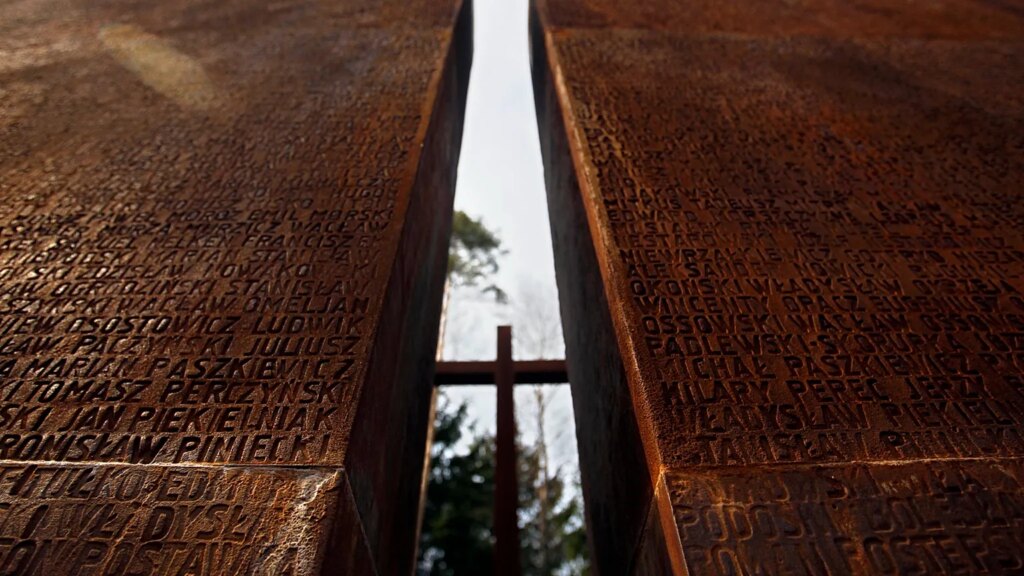
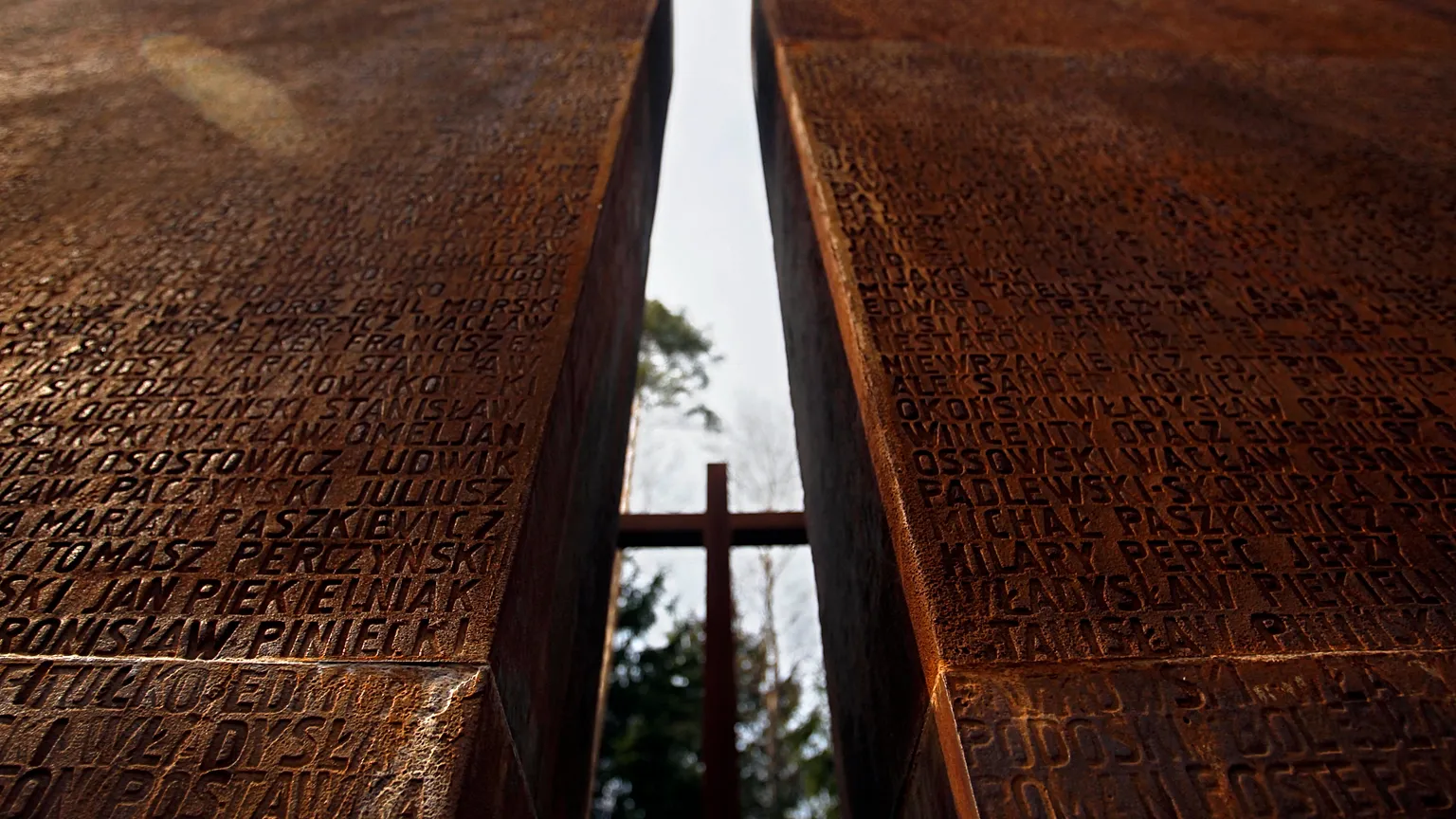
The exhibit organised by the Russian Military-Historical Society, led by Putin’s adviser, was displayed at the site where the Soviet secret police executed about 22,000 Polish officers, police, and intellectuals in spring 1940 under Stalin’s directives, provoking widespread denunciation.
On 10 April, Russia inaugurated an exhibition titled «10 Centuries of Polish Russophobia» at the Katyn memorial complex, eliciting sharp criticism from Polish authorities and relatives of victims, who described the timing and venue as «offensive malice».
 ADVERTISEMENT
  ADVERTISEMENT
The exhibition opened on the 16th anniversary of the Smolensk air tragedy that claimed 96 lives, including Polish President Lech Kaczyński and his spouse Maria, on 10 April 2010, just three days prior to Poland’s Day of Remembrance for the Victims of the Katyn Massacre on 13 April.
The Russian Military-Historical Society, under the leadership of Vladimir Medinsky, an adviser to President Vladimir Putin, arranged the exhibition at the location where approximately 22,000 Polish officers, police, and intellectuals were killed in spring 1940 by Soviet secret police acting on Stalin’s orders.
The organisation’s official site details that the exhibition illustrates the «hatred of the Polish elite towards Russia and the Russian people» expressed through political and military events spanning centuries. It particularly emphasizes the 20th century and World War II, dedicating «special focus» to alleged modern Polish Russophobia.
The display alleges an «aggressive anti-Russian policy» from Warsaw, highlighting the dismantling of Soviet soldier monuments along with Poland’s military aid to Ukraine.
Dr Rafał Kościński, spokesperson for Poland’s Institute of National Remembrance, declared that the exhibition signals a revival of Soviet-era propaganda falsely attributing the Katyn massacre to the Germans.
«For years, a shift has been noted in the Russian Federation’s historical stance, reverting to the narrative that Germany bore responsibility for the Katyn Massacre,» Kościński told Euronews.
«This mirrors the 1943 period when, following the Third Reich’s announcement of the Polish officers’ graves in the Katyn forest, the Soviets endeavored to shift blame to the German occupiers for the deaths.»
He added that the exhibition forms part of wider Russian efforts to implicate Poland in the outbreak of World War II and to reinterpret the Molotov-Ribbentrop Pact.
The setting and timing deliberate
Izabella Saryusz-Skąpska, president of the Federation of Katyn Families, condemned both the location and timing of the exhibition.
«Selecting this place and moment for the exhibition is a calculated act of malice, intended to wound us — the Katyn Families, who endured profound suffering from Russia,» she told Euronews.
She noted that Polish historians dismiss the exhibition’s title, emphasizing that Moscow in its current form did not exist a millennium ago.
Saryusz-Skąpska remarked that victims’ families invested years into establishing war cemeteries at Katyn, Mednoye, and Kharkiv as symbols of reconciliation. «Were it not for Russia’s invasion of Ukraine and the full-scale war, Katyn Families would be visiting the necropolises in Kyiv, Kharkiv, Mednoye, and Kyiv-Bykivnia at this time,» she said.
The Katyn massacre was executed by the NKVD in April and May 1940 following orders from Stalin and the Soviet Politburo. The victims comprised officers captured during the 1939 Soviet invasion of Poland, along with police and members of the intelligentsia.
For decades, Moscow denied culpability, blaming Nazi Germany. The Soviet Union officially acknowledged NKVD responsibility in 1990, describing it as «one of Stalinism’s grave crimes». In 2010, Russia’s State Duma confirmed the massacre was carried out «directly under orders from Stalin and other Soviet officials».
Part of a wider tactic
The 2010 Smolensk tragedy happened when a Polish Air Force Tupolev Tu-154 crashed amid thick fog near Smolensk while en route to the 70th anniversary ceremony of the Katyn massacre.
Russian opposition figure Nikolai Rybakov from the Yabloko party demanded the exhibition’s removal on 17 April, arguing that it breaches Russia’s international commitments under the 1994 treaty with Poland and the 1992 Treaty on Friendly Cooperation, both of which mandate respectful upkeep of memorial sites.
In recent years, Russia took various measures at Katyn-related locations. In June 2022, Smolensk’s mayor, Andrei Borisov, ordered the removal of Polish flags from the Katyn memorial complex, citing «explicitly anti-Russian remarks by Polish politicians».
During spring 2025, bas-reliefs portraying Polish military awards were removed from the Mednoye memorial complex following a prosecutor’s office request. In 2023, busts of Stalin, Lenin, Felix Dzerzhinsky, and Yakov Sverdlov were installed at Mednoye, with officials stating they represented «the era» of mass repression.
The exhibition was first launched in Moscow in October 2025 before being transferred to Katyn in April 2026.