
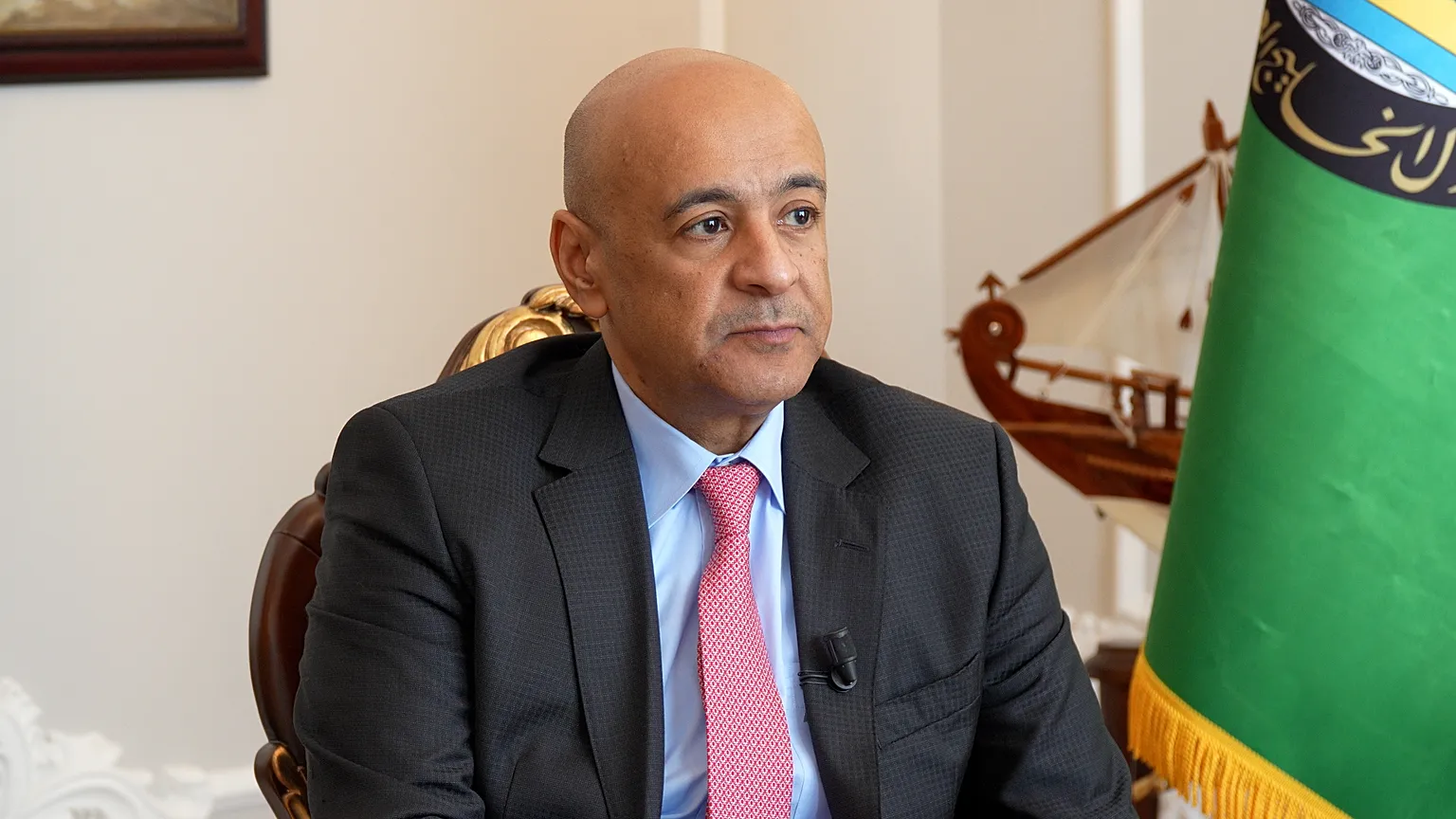
Secretary-General of the Gulf Cooperation Council urges enhancement of the partnership between the Gulf and the European Union following the Iran conflict, in an interview with Euronews.
The conflict engulfing the Middle East, involving attacks by Iran on Gulf states, has resulted in the Gulf Cooperation Council (GCC) and the EU forging a “closer connection”, GCC Secretary-General Jasem Mohamed Albudaiwi told Euronews.

 ADVERTISEMENT
The ongoing conflict has also encouraged Gulf nations to “enhance” their alliances with numerous “reliable and genuine partners, including the EU,” the Secretary-General remarked, indicating a desire to deepen collaboration with the bloc.
“There is a necessity to expand and fortify our ties with several of our dependable allies, like the EU. How can these bonds be strengthened? What sectors should receive priority? Are new cooperative mechanisms required? Should additional communication routes be established?” Albudaiwi questioned during the interview.
Since the conflict between the US, Israel, and Iran erupted in late February, the six GCC member countries have endured drone and missile strikes launched by Iran.
This situation has triggered a thorough reevaluation of Gulf nations’ defence and security strategies.
In March, three Gulf countries entered 10-year defence pacts with Ukraine, focusing on areas such as maritime drones, electronic warfare, and interceptor technology, aiming to leverage Kyiv’s insights on countering Russian drone and missile assaults.
Albudaiwi highlighted that regional stability represents “a fundamental foundation for global peace and security.”
He further noted that the conflict has highlighted the urgency for increased integration within the GCC, especially regarding military, security, and economic cooperation.
This week, António Costa visited the Gulf area, followed by the EU’s High Representative for Foreign Affairs, Kaja Kallas, who traveled there last week.
Costa reaffirmed the EU’s strategic relations with the Gulf states and emphasized the necessity to reopen the Strait of Hormuz, warning of “severe repercussions” should interruption persist.
The GCC and the EU initially signed a Cooperation Agreement in 1989. Efforts to strengthen collaboration in fields such as economic policy and climate action intensified in 2022, marked by the inaugural appointment of an EU Special Envoy dedicated to the Gulf region.
An extended version of this interview will be aired on «12 minutes with…» on Thursday, 16 April, at 13.15 CET