
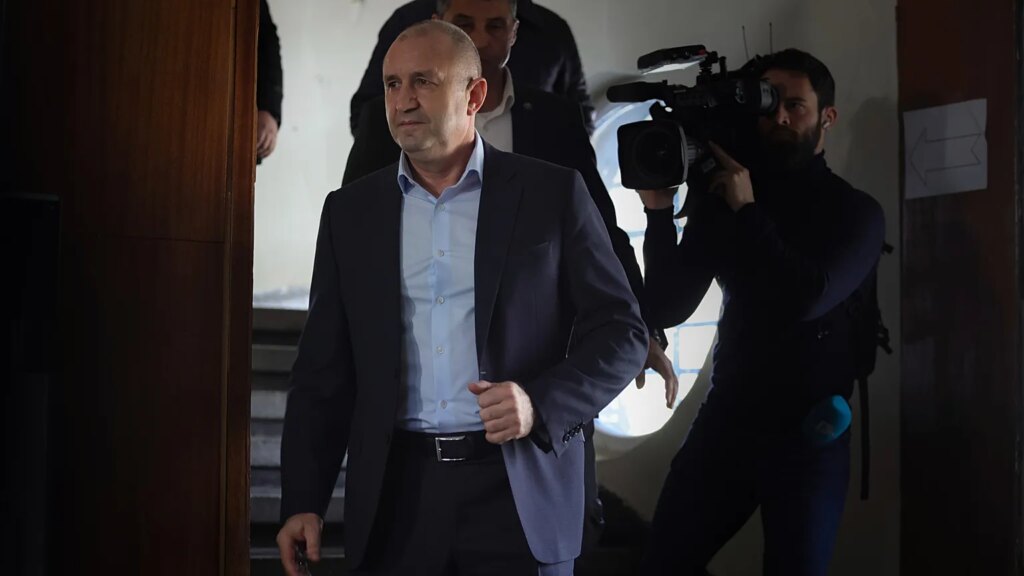
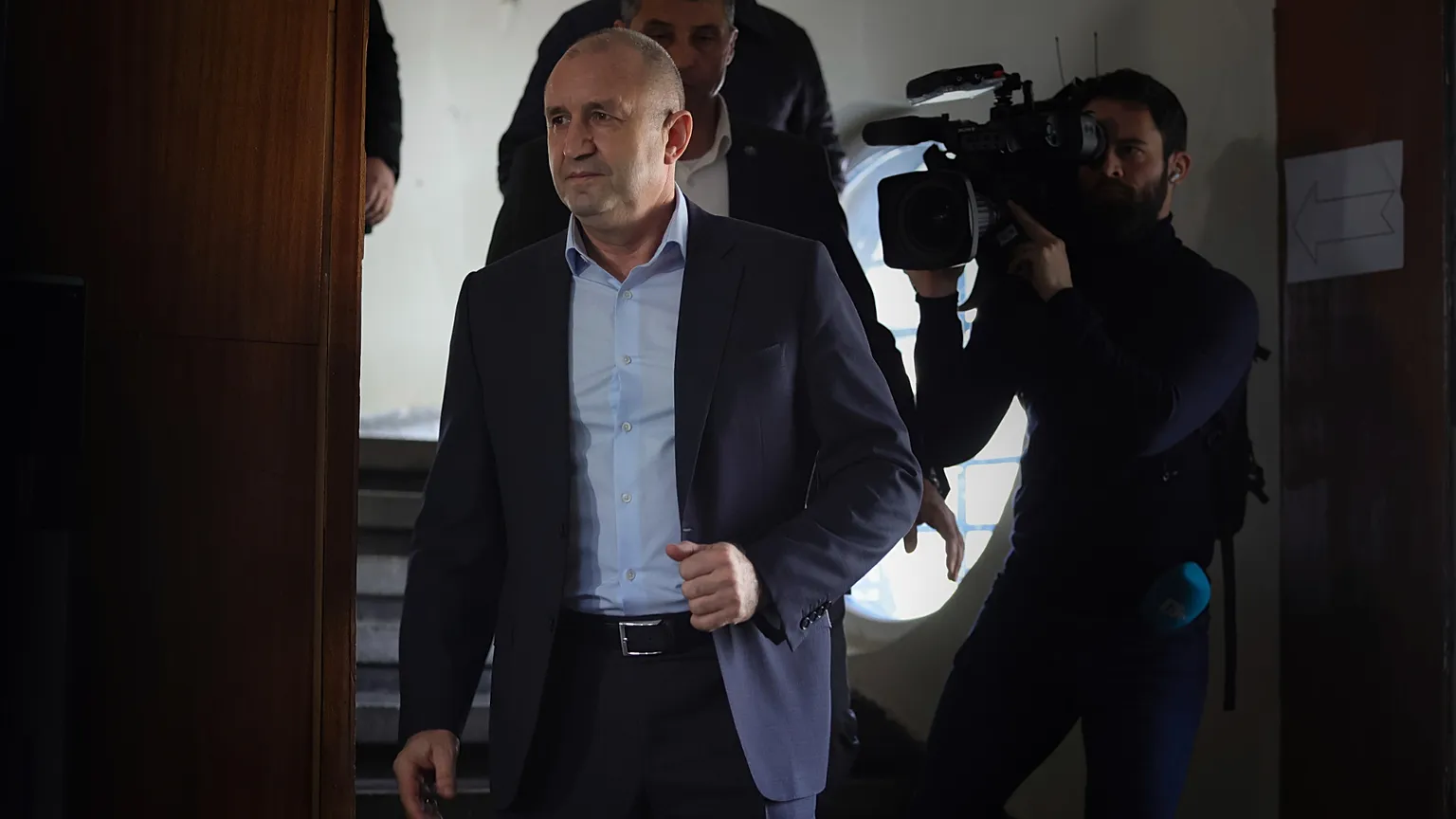
According to polls, former President Rumen Radev’s newly established Progressive Bulgaria coalition might clinch first place. His ascent has sparked comparisons with Hungary and Prime Minister Viktor Orbán, though this analogy has nuances.
On Sunday, Bulgaria is set to hold its eighth parliamentary election within five years, with Rumen Radev’s new party leading the polls in what many regard as an opportunity to halt persistent political instability.
 ADVERTISEMENT
  ADVERTISEMENT
Radev, an ex-air force general who stepped down as president in January, launched his Progressive Bulgaria alliance following the government’s resignation in December.
According to recent surveys, his party commands 33% support, making him a pivotal player in what is anticipated to be another fragmented parliament.
This election comes on the heels of five years marked by near-constant turmoil, during which no government has completed a full term.
Instead, the nation has endured a succession of caretaker administrations, delicate coalitions, and brief alliances, frequently ending amid scandals.
Public confidence has nearly vanished. Voter turnout, traditionally an indicator of democratic participation, has steadily diminished.
This extended period of instability occurs amid growing internal divisions and increasing external pressures.
Russia’s full-scale invasion of Ukraine has revealed a pronounced divide within both society and the political elite, a rift that continues to shape national discourse.
Paradoxically, during this same period, Bulgaria has made significant progress in European integration—joining Schengen and adopting the euro—even in the absence of a functioning government or an approved state budget.
However, delays in implementing reforms have hindered access to EU recovery funds, putting billions of euros at risk.
A fresh actor at a crucial moment?
The most recent government collapse followed massive protests at the end of 2025—the largest in decades—initially triggered by a contested draft budget but rapidly evolving into a wider rebellion against the political establishment.
At the heart of public discontent were two prominent figures: GERB leader and former Prime Minister Boyko Borissov, and Delyan Peevski, a controversial political figure sanctioned under the US Magnitsky Act. They are accused by critics of working in tandem to consolidate state control and centralize power, primarily with Peevski, despite his unofficial status within the ruling coalition.
The protests gained momentum partly due to the opposition alliance We Continue the Change-Democratic Bulgaria (PP-DB), which sought to reinvent itself after losing credibility because of its prior governance alongside those it now opposes.
Their renewed pledge—“never again”—resonated deeply, mobilizing thousands and ultimately compelling the government’s resignation.
Just as that momentum reached its peak, a new contender emerged.
Radev resigned prematurely and unveiled his political project, positioning himself as the figure capable of “breaking the oligarchy.” Within weeks, he surged to the forefront of the polls.
Pro-European stance or Orbán-like approach?
Polling data indicates that Progressive Bulgaria, Radev’s new coalition, could secure over 33% of votes, potentially placing it first.
While this majority is unlikely to translate into outright governance, it establishes him as a critical decision-maker in what is expected to be another fragmented parliament.
His rise has prompted comparisons, particularly to Hungary’s Prime Minister Viktor Orbán, though these parallels are complex.
On one side, Hungary’s record voter turnout in recent elections—which ended Orbán’s 16-year rule and demonstrated that change is achievable anywhere in Europe—has inspired hopes in Bulgaria that similar mobilization could break the cycle of political disengagement and instability.
Conversely, critics highlight a different similarity. Shortly before Radev founded Progressive Bulgaria, one of his close allies and current candidate, Slavi Vassilev, stated in a Nova TV interview: “If Radev were to lead a party, he would be pro-European, but within a Europe that prioritizes its own worldview,” criticism aimed at the current European leadership.
“In my view, he will align more closely with Orbán’s policies,” Vassilev added, while denying that either Orbán or Radev adopt pro-Russian positions.
Radev’s recent record offers a contrasting perspective. Throughout his presidency, he adopted stances on Russia’s war in Ukraine differing from all Bulgarian governments during his term.
He opposed military aid to Kyiv, warned such support risks entangling Bulgaria in conflict, and continuously advocated for dialogue with Moscow.
Controversy deepened following his past statements—such as describing Crimea as legally “Russian”—and a public confrontation with Ukrainian President Volodymyr Zelenskyy during a 2023 Sofia visit.
In recent speeches, Radev has increasingly criticized Brussels, accusing the EU of favoring ideology over economic pragmatism and becoming “a hostage to its ambition for moral leadership.”
He asserts that economic decisions now prioritize ideological correctness rather than tangible benefit, and that market and investment policies no longer aim at profit maximization.
He argues European leaders should place economic interests at the forefront, similar to approaches taken by the United States, China, and Russia.
Just before Bulgaria officially adopted the euro, Radev sought to call a referendum on the subject.
This proposal was rejected by parliament and the Constitutional Court, yet he continued asserting that the public should have been consulted and viewed the euro adoption as premature.
During his campaign, he has even called for sanctions against politicians who “introduced the euro over the heads of the people.”
Domestically, his message centers on dismantling what he terms an entrenched oligarchic system—frequently singling out Borissov and Peevski.
Political fragmentation and unstable coalitions
GERB holds second place, with Borissov remaining the leading figure, despite stepping aside from the premiership in recent years.
Borissov remains a well-known conservative presence in Europe and, by his own account, a “good friend of Orbán.” Nonetheless, he has repeatedly denied political parallels with the Hungarian leader, with his team emphasizing Bulgaria’s continued commitment to its pro-European course.
Still, a recent decision by GERB Prime Minister Rosen Zhelyazkov to join US President Donald Trump’s Board of Peace—taken without parliamentary approval and misaligned with most EU members except Hungary—has stirred controversy and heightened tensions between the government and opposition.
In a March interview with Euronews, caretaker Prime Minister Andrey Gyurov described this move as “the decision of an oligarch,” again referencing Peevski and reinforcing opposition accusations of state capture.
Peevski’s party is expected to finish fourth, while the nationalist Vazrazhdane (Revival) party led by Kostadin Kostadinov—advocating eurozone withdrawal—continues to grow, promoting a strongly anti-EU stance.
Although leading in the polls, Radev is unlikely to govern unilaterally.
Campaign discourse has made coalition formation appear very challenging. In a recent debate hosted by independent journalists under the platform Off Air, Radev’s team excluded collaboration with both Borissov and Peevski.
GERB has distanced itself from Peevski, while PP-DB rejects any alliance with Borissov. Neither Peevski nor Revival participated in the final debate.
However, Bulgaria’s recent political experience suggests such red lines can often be flexible.
A pivotal election for Sofia under EU scrutiny
With no clear majority in sight, the next government is likely to result from tense, possibly fragile, negotiations.
The crucial question for voters is whether Hungary’s recent political developments will inspire higher turnout or if Bulgaria will trend toward a governance model resembling Orbán’s.
The election’s outcome will shape Bulgaria’s domestic policy direction and draw close attention throughout the EU, as further instability in member states is a shared concern.