
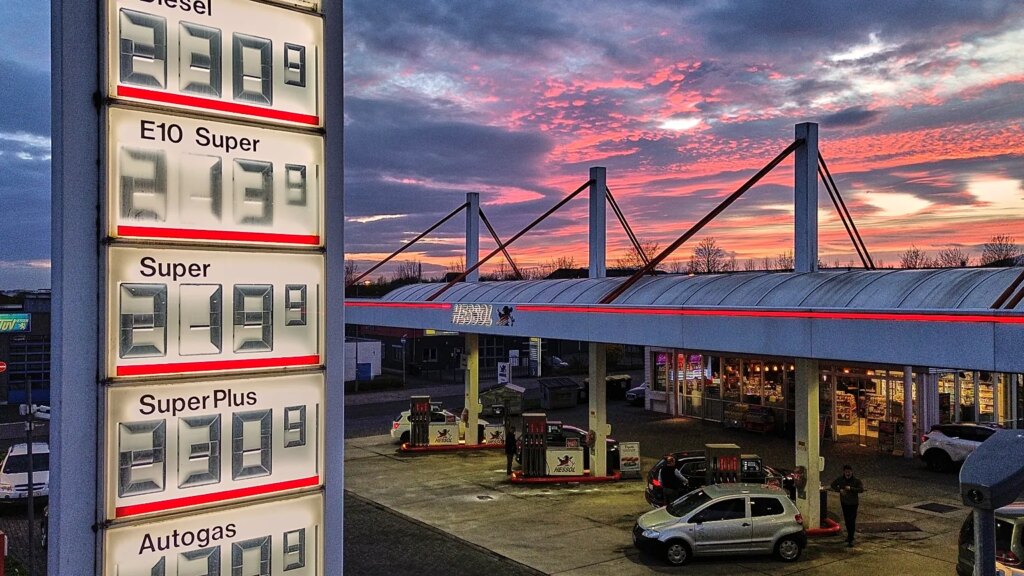
The declaration of a two-week truce in the Middle East caused an immediate decline in oil and natural gas prices, sparking hope for reduced energy costs. Nevertheless, consumers may not notice these changes for several months, despite optimistic predictions from the oil sector.
European gas prices plummeted by approximately 20%, and Brent crude experienced a notable drop following the announcement of a two-week ceasefire involving the United States, Israel, and Iran, raising expectations for lower energy expenses for consumers.
 ADVERTISEMENT
  ADVERTISEMENT
The agreement between the US and Iran included Tehran’s temporary commitment to reopen the Strait of Hormuz — a vital passageway responsible for roughly 20% of global oil and LNG trade — fostering hopes in global markets that energy shipments will resume and alleviate price pressures.
Still, while some analysts foresee a steep reduction in energy costs, others caution that the ceasefire’s fragility could jeopardize price stability.
Energy firms typically shield consumers and businesses from sudden price fluctuations by purchasing gas and electricity ahead of time, a method known as hedging.
Consequently, even when prices drop sharply, it may take between 6 and 9 months for those savings to appear on consumer bills, analysts explain. Additionally, customers with fixed-price contracts will not see reductions until their agreements expire.
The resumption of secure shipping through the Strait is also a crucial element in stabilizing energy supply in the upcoming months. Leading shipping companies, including Danish multinational Maersk, have called for «full maritime certainty.»
“Theoretically, this (ceasefire) should bode well for European economic prospects, at least by bringing prices back to pre-February levels,” stated Caspar Hobhouse, research analyst at the European Union Institute for Security Studies (ISS), in an interview with Euronews.
«However, implementation is less certain and depends on the ceasefire’s durability, whether it evolves into lasting peace, and the extent to which Europe prepares to cope with potential future oil and gas supply disruptions,” he added.
Natural gas markets
Despite the possibility of lower prices, experts expressed divergent opinions, underlining that geopolitical events will significantly influence natural gas price trends.
Yahdian Falah, a manager at trading firm Trianel, noted that if the Middle East ceasefire holds, it could represent a «turning point» facilitating a global gas market balance.
Falah told the energy market intelligence company Montel that an immediate decrease in risk premiums — the extra cost paid to investors to offset potential loss risk — is expected, yet ongoing price decreases will depend on clear confirmation of resumed shipping operations.
Gengyum Xie, an energy analyst at intelligence firm Kpler, told Euronews that current attention is on monitoring the 15 LNG vessels loaded and stranded in the Gulf region, assessing when they can pass through the Strait of Hormuz. This evaluation will provide an indication of upcoming LNG volumes entering the market.
Hobhouse predicted that gas prices are likely to remain elevated for an extended period, citing damage to LNG infrastructure in Qatar and the UAE caused by Iranian airstrikes on 18 March and 3 April, alongside the complexities involved in ramping up production again.
Qatar could initiate repairs on its Ras Laffan LNG facilities — the largest globally — if transit normalizes. Yet, boosting production within the limited ceasefire timeframe is improbable, since around 17% of QatarEnergy’s export capacity was affected.
Still, if normal conditions resume suddenly, some of these issues may be partly resolved over the next months, Hobhouse told Euronews.
The Abu Dhabi Media Office reported on 3 April that their facility had sustained “significant damage” and assessments were underway.
Oil markets
Olivier Gantois, president of the French Union of Petroleum Industries, offered a contrasting opinion on the matter, suggesting fuel prices might decrease by «5 to 10 cents» per liter «very quickly».
Gantois informed AFP on Wednesday that «oil markets reacted swiftly» to the ceasefire announcement overnight, and that consumers could see this impact at service stations within «one or two days».
His forecast depends on crude oil prices «stabilizing» at current levels of $93 to $95 per barrel, down from $100 during the conflict, which had peaked near $114.
Olivier Gantois explained that these crude oil rates then influence refined fuel markets, such as in Rotterdam, which supply European service stations.
«Distributors, who set daily fuel prices, will reflect this price drop within a day or two,» Gantois predicted.
Although the ceasefire might prompt a rapid decrease in global energy prices, analysts highlight that diesel prices could fall within weeks, while electricity bills may require several months to adjust accordingly.
A resumption of global fossil fuel trade should be mirrored in European stock markets, noted Hobhouse, suggesting that although lower prices are expected to reach Europe soon, the change will not be immediate.