
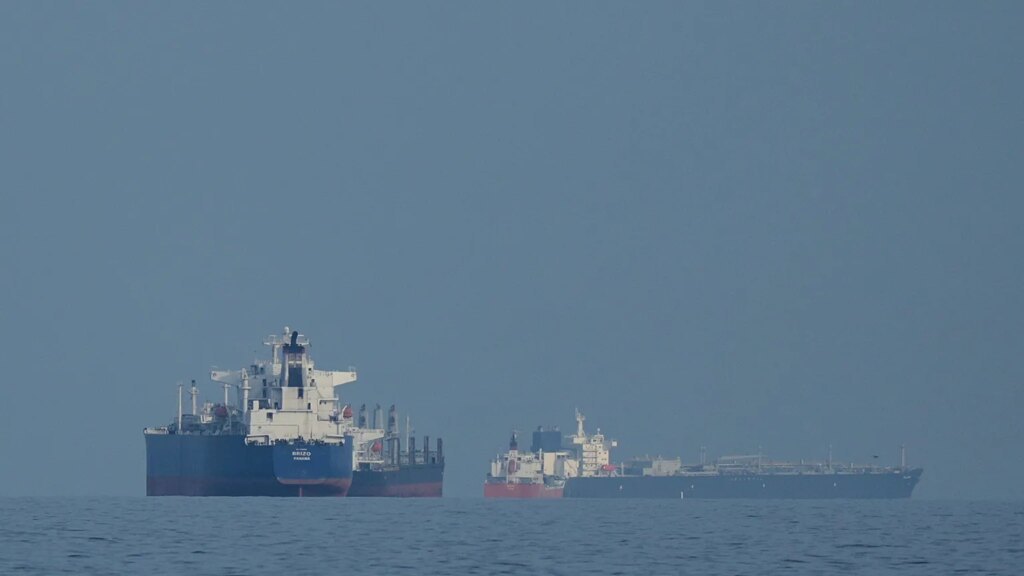
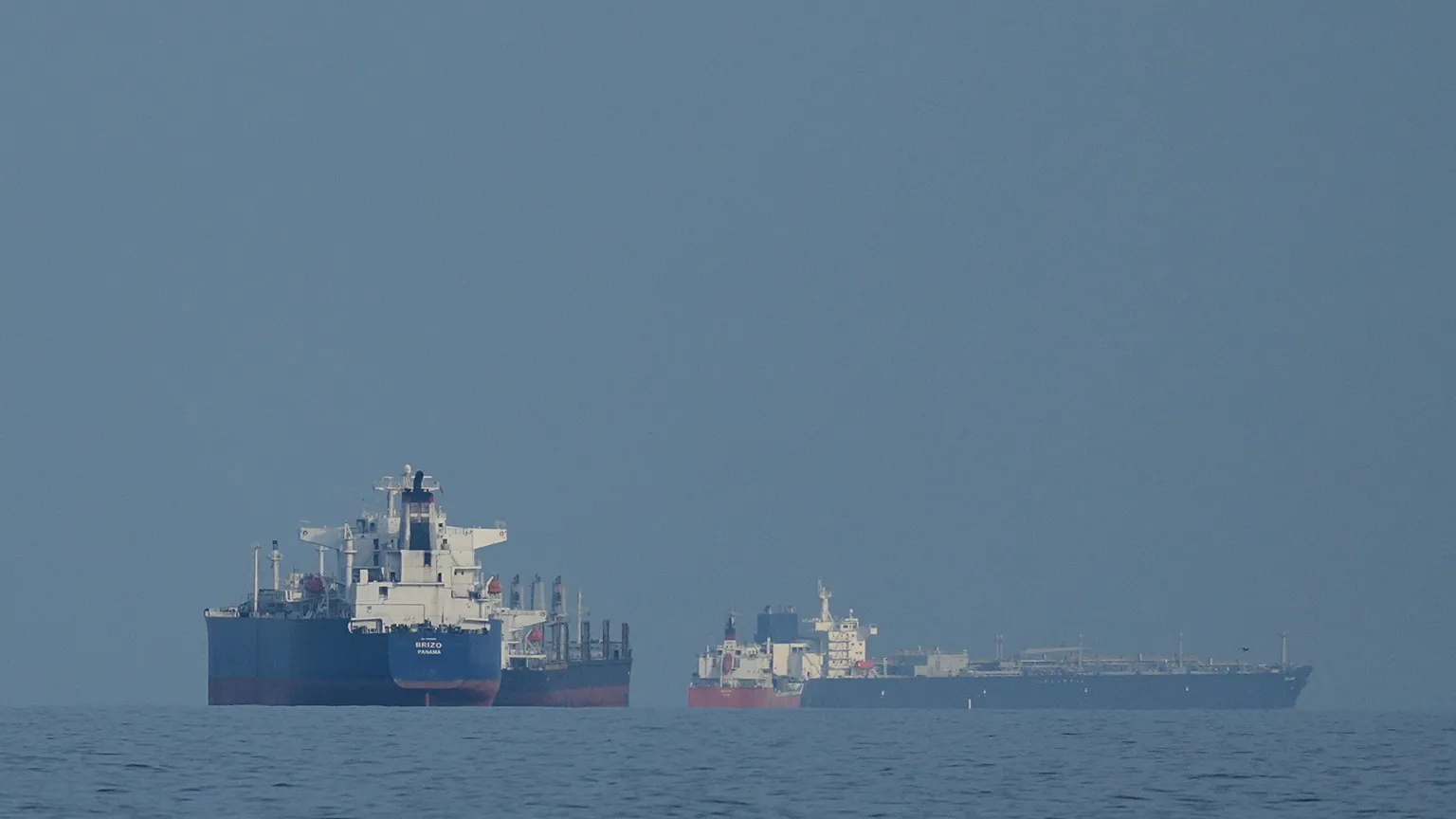
The blockade of the Strait of Hormuz impacts energy prices for both industries and households, but this crucial trade route also carries a substantial portion of fertiliser shipments, putting future food production at risk. Euronews’ explainer outlines the key issues affecting the Strait.
US President Donald Trump has appealed to allies to deploy naval forces to secure the Strait of Hormuz, which has been effectively shut since the war in Iran began last month, accounting for one-fifth of worldwide oil traffic. Trump warned of a «bad future» for NATO if allies do not cooperate or respond negatively to the US request.
 ADVERTISEMENT
  ADVERTISEMENT
While the US describes reopening the passage as «a minor effort,» European officials argue the situation is significantly more complex and hazardous, given Tehran’s indiscriminate missile and drone attacks.
But what makes securing this passage so vital? Euronews provides the explanation:
What makes the Strait of Hormuz strategically essential?
The answer is straightforward: it represents one of the most critical corridors for energy transportation.
Situated between the Persian Gulf and the Gulf of Oman, the Strait of Hormuz facilitates roughly 20% of global oil production. Without this route, the global energy market could face severe disruptions.
Indeed, oil prices have surged beyond $100 per barrel, with analysts warning they could reach $150 to $200 if the conflict intensifies and extends.
For Europe, which has struggled to maintain a stable energy supply since severing ties with Russia following its invasion of Ukraine, turmoil in the Middle East risks triggering another energy crisis affecting both industry and households.
The Strait also serves as a crucial route for fertiliser shipments into Europe. Besides oil and gas, approximately 13% of global fertiliser exports, according to the United Nations, pass through the Gulf’s sole access point to the open sea—a key factor in global food production.
«A fertiliser shortage this year will lead to food scarcity next year,» stated EU’s chief diplomat, Kaja Kallas, to reporters ahead of the foreign affairs council meeting.
What is Donald Trump requesting?
Trump called on the United Kingdom, France, China, and Japan to dispatch naval vessels to the area to safeguard oil shipments, as energy prices have surged following US-Israeli strikes on Iran and the waterway’s effective blockade in the current crisis.
The US President insisted that these nations protect their own interests, pointing out that the region supplies their energy needs. Last week, French President Emmanuel Macron announced that France will lead the EU mission aimed at reopening the Strait.
The International Energy Agency’s recent decision to release 400,000 barrels from reserves did not ease the energy markets, pushing EU leaders to seek ways to guarantee safe and unimpeded maritime passage through the Strait of Hormuz.
Trump’s appeal for support follows shortly after he described Europe as «weak,» highlighting its dependence on NATO for military security amid Russia’s advancing position against Ukraine.
So far, Japan, Australia, South Korea, and the United Kingdom have all declined Trump’s request for escorting ships through the Strait.
What is the EU’s planned response?
The foremost topic of discussion at Monday’s meeting of foreign ministers will be measures to secure access to the Strait of Hormuz and avoid major interruptions to the global oil supply.
Kallas indicated she intends to propose modifications to the EU’s Aspides operation, founded in February 2024 as a defensive response to repeated attacks on international shipping by Iran-aligned Houthis.
The mission’s mandate is to «protect vessels,» ensure freedom of navigation, and «monitor maritime conditions in the Strait of Hormuz and adjacent waters, including the Red Sea, Gulf of Aden, Arabian Sea, Gulf of Oman, and the Persian Gulf,» per the Council.
Nevertheless, several countries have expressed hesitation about altering Aspides’ mandate.
A European diplomat told Euronews the goal is to enhance capabilities and coordination under the EU framework, but no large European coalition is expected to form to escort vessels through the Strait as Trump has requested.
Germany and Romania have voiced doubts about undertaking such a mission. Romania’s Foreign Minister, Oana-Silvia Toiu, noted that Bucharest prefers to concentrate on its naval operations in the Black Sea rather than engage in the Aspides mission.
Italian Deputy Prime Minister and Foreign Affairs Minister Antonio Tajani emphasized that diplomacy must prevail, stressing that freedom of navigation through Hormuz concerns not just Western countries but the entire world, including China.
Still, Tajani is generally supportive of expanding Aspides operations to patrol Hormuz. «We lead the Aspides mission, which I believe must be strengthened to secure maritime traffic in the Red Sea and Suez. Efforts will continue in this direction,» he said.
What is the Aspides naval mission?
Established in 2024, Aspides is an EU naval operation designed to protect commercial shipping in the Red Sea and surrounding areas after attacks attributed to Yemen-based Houthis.
The mission includes naval units from several member states such as France, Germany, Greece, Italy, and Spain. Its focus lies on defense, escorting merchant shipping, and intercepting drones or missiles threatening international maritime routes.
The mandate requires protecting vessels, maintaining freedom of navigation, and monitoring maritime conditions in the Strait of Hormuz and adjacent waters including the Red Sea, Gulf of Aden, Arabian Sea, Gulf of Oman, and Persian Gulf, according to the Council.
Could Russian energy be part of the bloc’s crisis solution?
The controversial suggestion to resume Russian energy imports came from Belgian Prime Minister Bart De Wever, who told local media over the weekend that ending the war requires negotiating with Russia. His foreign minister, Maxime Prévot, criticized this view as a sign of weakness.
De Wever argued this approach reflects «common sense» in light of the EU27’s cascading energy crisis, which risks causing an economic downturn in the bloc.
Tajani also expressed openness to future Russian energy imports but stressed that as long as Russia continues military aggression against Ukraine, sanctions should remain in place and the EU must maintain a firm stance.
He added that once peace is attained, a new chapter can begin.
«When peace is established, the EU will no longer be at war with Russia and can resume previous relations, but the current situation demands vigilance toward the Russian Federation,” Tajani said Monday.
However, other ministers reacted less favorably to De Wever’s proposal.
Swedish Deputy Prime Minister and Energy Minister Ebba Busch warned that reversing the decision on Russian oil imports would undermine the EU’s credibility and values.
EU energy chief Dan Jørgensen reaffirmed the bloc’s commitment to resisting renewed Russian energy imports despite the ongoing Middle East crisis.
“We remain determined to follow our course. Repeating past mistakes is not an option. The message is clear: we will not import any more energy molecules from Russia in the future,” Jørgensen declared.