
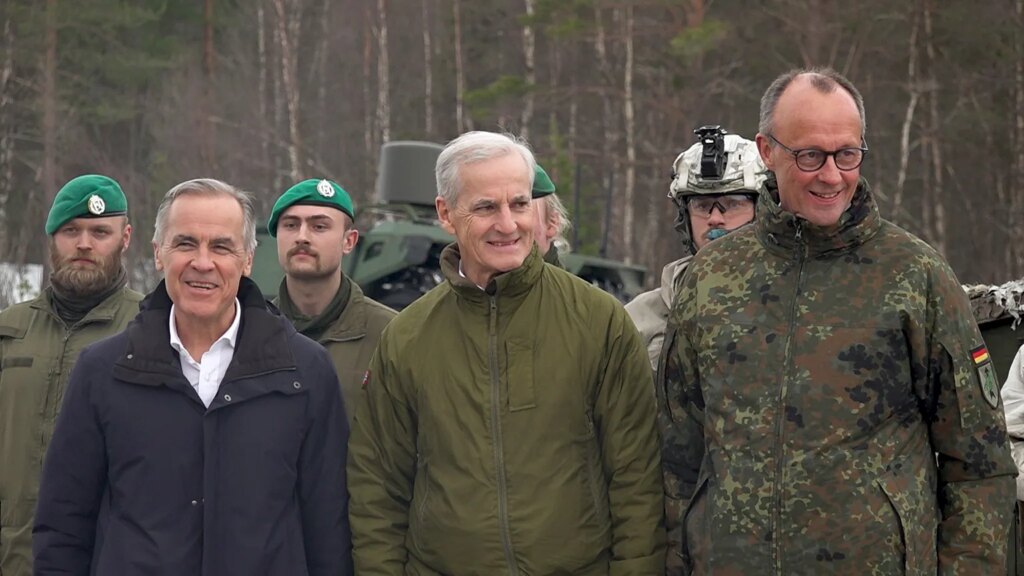
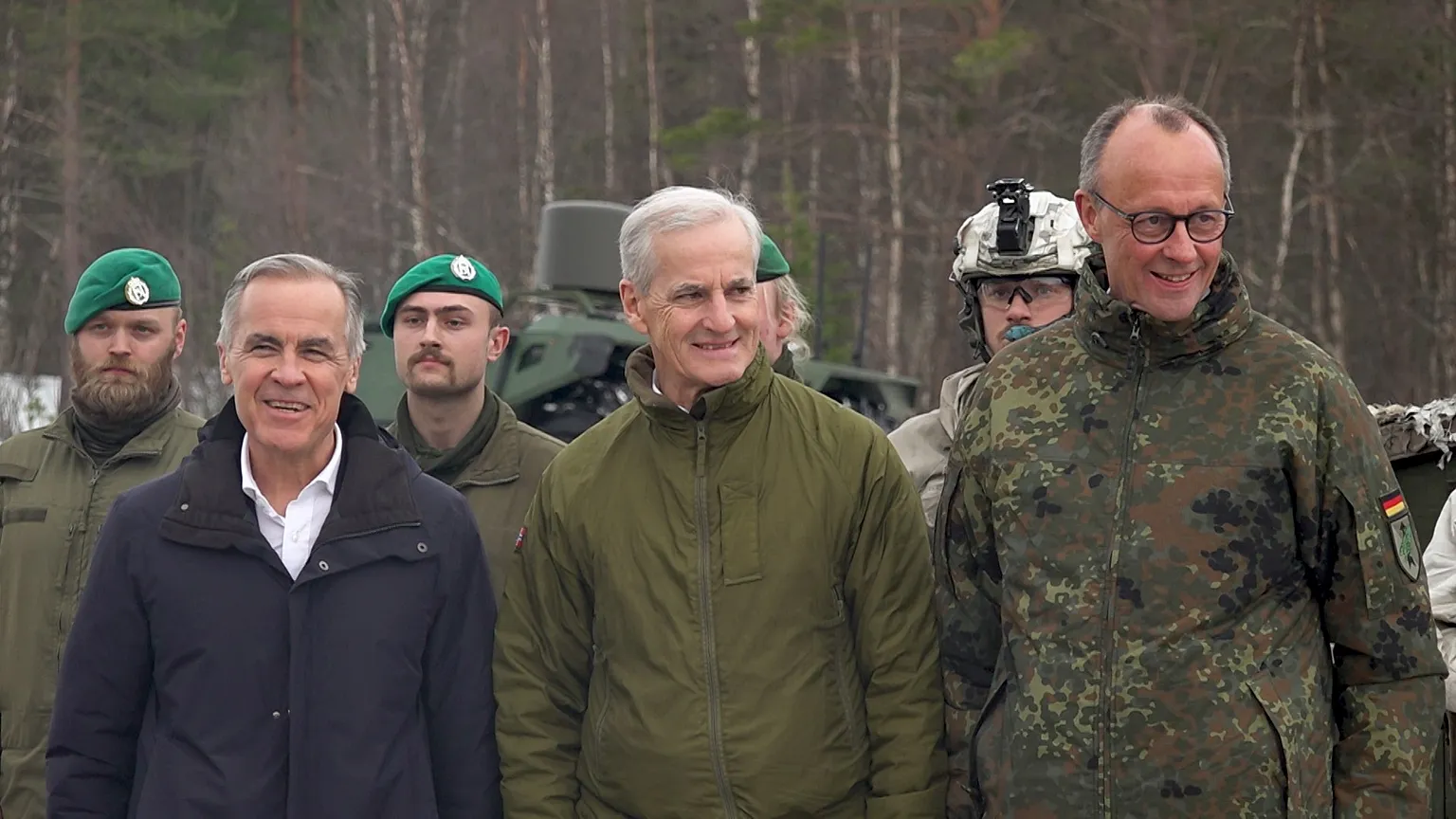
The heads of state from Canada, Germany, and Norway are urging Trump to reconsider his decision to suspend sanctions on Russian oil. German Defence Minister Boris Pistorius expressed his «concern» to Euronews about the possible effects on Ukraine.
On Friday, German Chancellor Friedrich Merz stated that six of the seven G7 nations opposed the US decision to pause sanctions on Russian oil. US President Donald Trump implemented this measure to increase global supply amid rising prices caused by the US-Israeli conflict initiated against Iran on 28 February.
 ADVERTISEMENT
  ADVERTISEMENT
The leaders from Germany, Canada, and Norway—NATO member countries—announced plans to engage through official channels with the White House to persuade Trump to reverse his stance.
They reaffirmed the alliance’s position that stringent pressure must remain on the Kremlin regarding its war in Ukraine and the broader threat it poses to global stability.
«Six out of seven were firmly convinced that sanctions on Russia should not be lifted,» Merz confirmed.
«We were somewhat taken aback to learn this morning that the US administration took a different approach,» he told journalists at a press event in Norway.
The trio concurred that firm pressure must persist against the Kremlin for its large-scale invasion of Ukraine and insisted Russia should not regain access to the international oil markets.
«Allowing this would directly benefit Russia,» Merz stressed.
«Increasing pressure on Russia to hasten the end of this devastating conflict is essential, which explains our differing perspective on last night’s decision in Washington DC,» he added.
When asked if G7 nations or NATO would lobby Trump to amend his decision, Canadian Prime Minister Mark Carney replied, «We all maintain direct communication with the president and intend to utilize those channels.»
Merz mentioned plans to discuss with French President Macron potential strategies to counter Trump’s policy: «We will have the chance to coordinate over the weekend and explore possible actions.»
Arctic Sentry military exercise
These leaders participated in an official visit to observe NATO’s Arctic Sentry military exercise, established last January in response to Trump’s assertion that he planned to «take» Greenland.
The alliance committed to enhancing NATO’s presence in the Arctic region after Trump claimed the area lacked adequate security infrastructure.
German Defence Minister Boris Pistorius also joined the military demonstration, which showcased multiple German Leopard tanks and Norwegian Infantry Fighting Vehicles.
Pistorius expressed to Euronews that he is «deeply concerned» about the war’s trajectory if Russia regains oil revenues, which could significantly bolster its capacity to sustain the expensive invasion.
«Ultimately, the key to compelling Putin to enter negotiations lies in clearly cutting off his income from oil and gas exports,» he asserted.
«This decision moves in the opposite direction and represents a clear disadvantage for Ukraine,» he added.
Conversely, the Kremlin welcomed the White House’s move, claiming that US and Russian goals align in stabilising energy markets. «We view US actions as efforts to stabilise the energy market; in this respect, our interests coincide,» stated Russian presidential spokesperson Dmitry Peskov.
«We have heard from US officials that this exception applies specifically to oil shipments loaded before 12 March,» Peskov noted.
Video editor • Shona Murray