
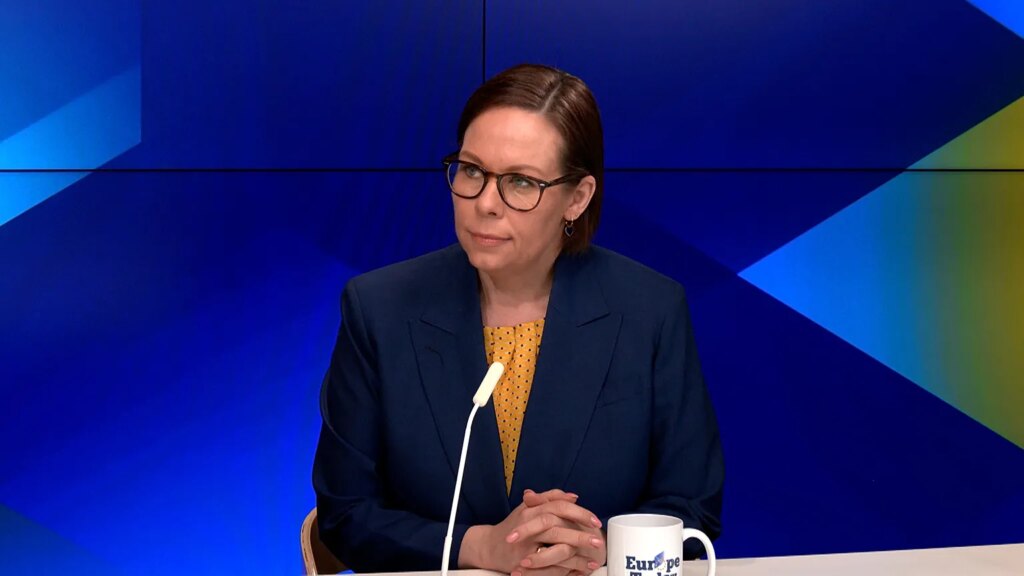
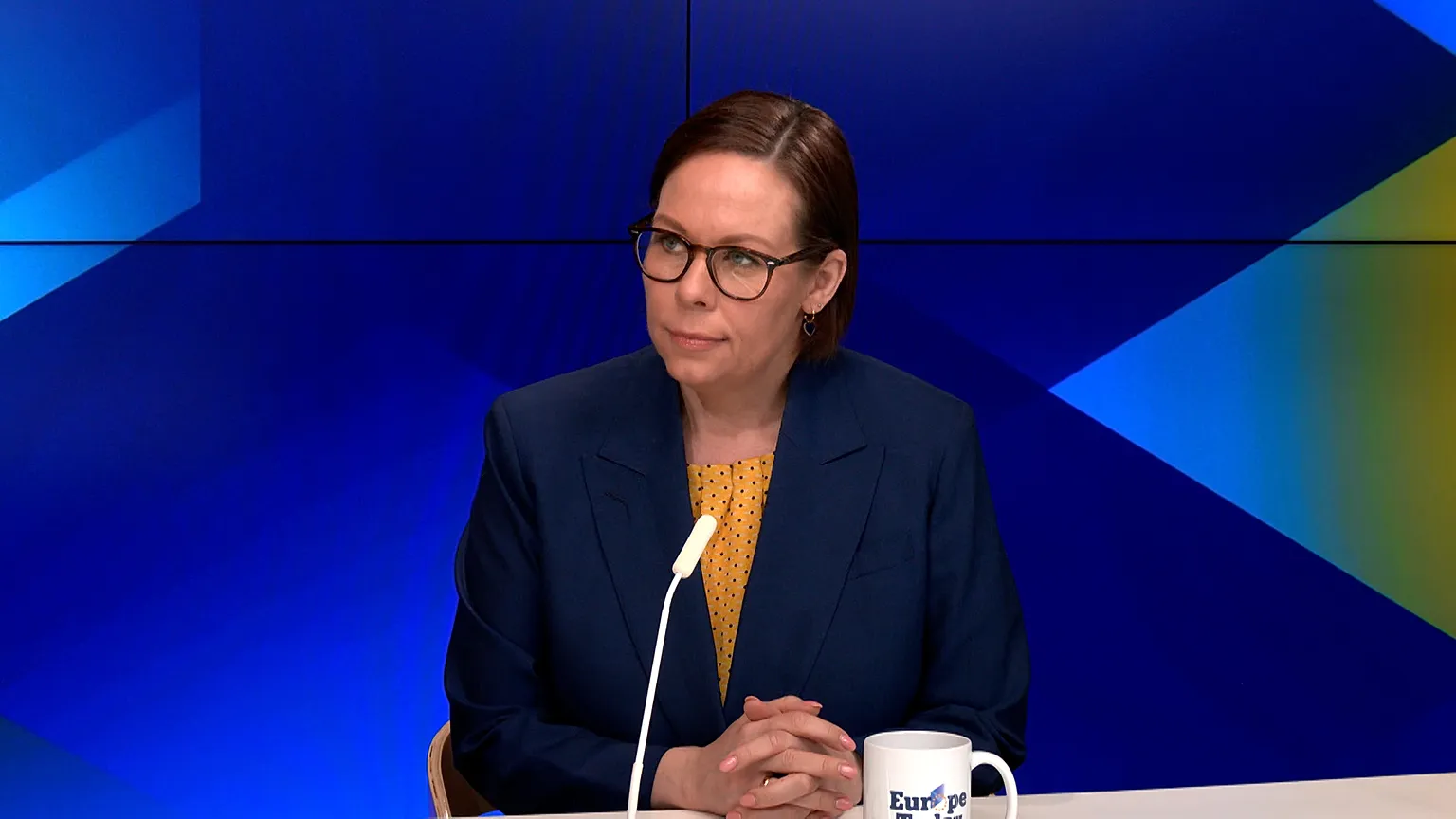
The Swedish Foreign Minister emphasized on Euronews’ Europe Today that any postponement in EU sanctions or aid to Ukraine diminishes the pressure on Moscow at a pivotal moment in Russia’s conflict, just before the four-year mark.
Delays in enforcing sanctions against Russia represent a «failure» for Europe, stated Sweden’s Foreign Minister Maria Malmer Stenergard during Euronews’ Europe Today morning broadcast on Monday.
 ADVERTISEMENT
  ADVERTISEMENT


«Every postponement in approving sanction measures is a setback for Europe,» the minister asserted, urging increased assistance for Ukraine.
«It is crucial to amplify pressure on Russia through sanctions, and I expect them to respond as European partners today; however, I remain uncertain,» she remarked.
Her statements followed Hungary’s Foreign Minister Péter Szijjártó’s declaration just a day earlier that Budapest would obstruct any further EU sanctions against Russia at the foreign ministers’ meeting unless Ukraine reestablishes oil transit to Hungary and Slovakia via the Druzhba pipeline.
On Monday, EU foreign ministers convened in Brussels to finalize the 20th sanctions round targeting Moscow. The goal was to ratify the sanctions package by Tuesday, corresponding with the four-year anniversary of Russia’s full-scale invasion of Ukraine.
Recently, Hungary and Slovakia halted diesel exports to Ukraine, accusing Kyiv of intentionally limiting Russian oil flow through the Druzhba pipeline.
This development threatens the unanimity required from all 27 EU states to endorse new sanctions.
The disagreement underscores ongoing tensions between these EU member governments—which import substantial Russian oil and gas volumes—and Kyiv, which consistently calls for them to end their reliance on Russian energy sources.
Hungary also announced it would block a €90 billion EU loan to Ukraine, causing discontent among other EU nations. Malmer Stenergard labeled this decision as a “disgrace.”
«Refusing approval is disgraceful, yet pressure on them will persist. I suspect domestic political concerns, especially upcoming elections in Hungary, play a significant role,» she concluded.