
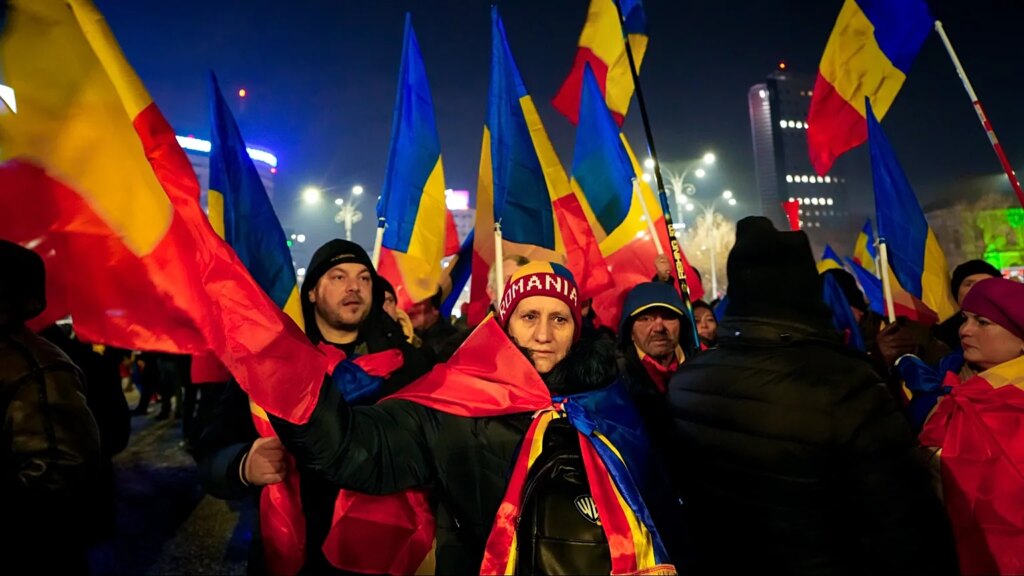
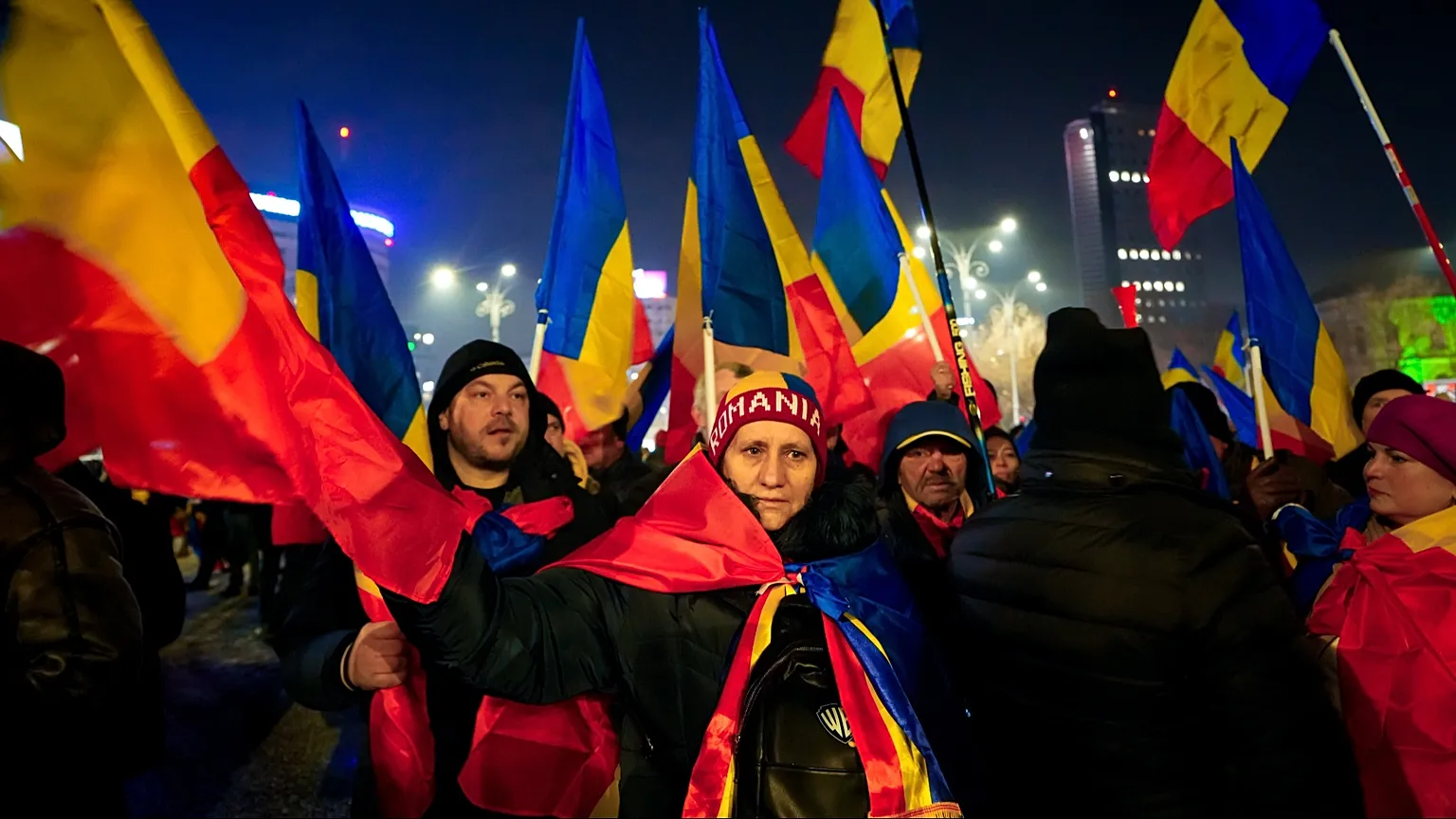
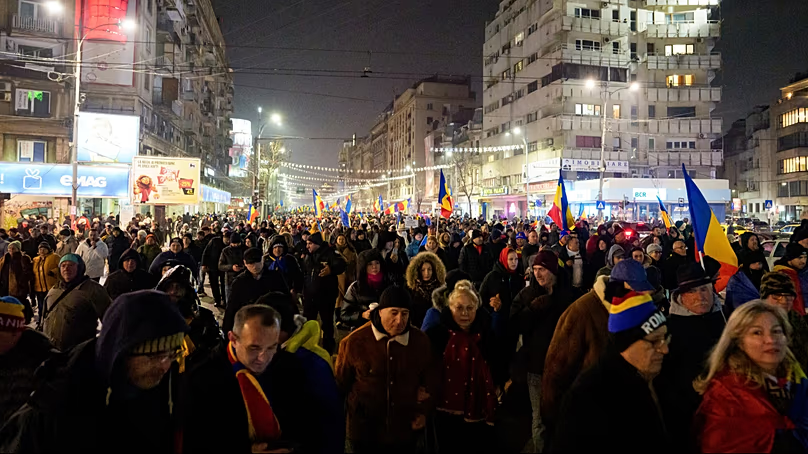
Last week, thousands marched through Bucharest to voice opposition against a law they claim threatens Romania’s freedom of expression. Nevertheless, an investigation by The Cube indicates the law aims to curb extremist activities.
Massive demonstrations erupted in central Bucharest recently, driven by fears that a new law would undermine freedom of speech in Romania. Social media widely circulated messages claiming the legislation could imprison individuals for their online opinions.
Yet, an in-depth review of the bill reveals a more nuanced scenario.
The rally, attended by just above 10,000 people, was organised by far-right MEP Claudiu Târziu, founder of the recently formed Conservative Action Party.
Participants demanded the repeal of the so-called «Vexler Law», which they argue imposes significant constraints on civil rights.
A statute aimed at combating extremism
This law was introduced by MP Silviu Vexler, who also leads the Federation of Jewish Communities in Romania. Its declared purpose is to fight extremist ideologies.
It prohibits public praise of fascist leaders and establishes criminal sanctions for spreading antisemitism, racism, or xenophobia, both online and offline.
Advocates claim the regulation closes gaps in current laws that previously permitted extremist content to be distributed openly, especially on social networks.
The bill initially passed in June 2025, but Romanian President Nicușor Dan returned it to parliament for further scrutiny, citing imprecise definitions, especially concerning what qualifies as fascist, legionary, racist, or xenophobic content.
Parliament dismissed these concerns, a judgment later confirmed by the Constitutional Court.
After being re-approved in December, the law reignited debates over free speech boundaries.
Arguments regarding national identity
While addressing the protesters, Târziu labeled the law «the gravest assault on Romanians in the last 35 years». He cautioned that it might be used to «expunge the heroes, geniuses, and saints from the nation’s collective memory».
Proponents often refer to Mihai Eminescu, Romania’s national poet, a pivotal cultural figure whose journalism and poetry contain instances of xenophobic and antisemitic expression.
Nonetheless, scholars argue the law does not back claims that such figures would be excluded from public discourse or education.
The actual provisions of the law
Adina Marincea, researcher at the Elie Wiesel National Institute for the Study of the Holocaust in Romania, informed Euronews’ fact-checking team, The Cube, that the legislation «criminalizes certain extremist content such as fascist, legionary, racist, and xenophobic material».
«There is nothing in the legislation that would prohibit the national poet,» she affirmed.
The law mandates evaluating historical personalities and their works within the context of their time but does not forbid discussion, scholarly analysis, or the educational and artistic use of cultural artifacts.
It also differentiates between artistic creations and political actions.
While the law bars granting public awards to war criminals or fascist leaders, it does not ban their literary or artistic legacies.
For instance, Eminescu’s works remain included in Romania’s school curriculum.
Lack of evidence for free speech violations
Legal analysts consider the law an update to existing hate speech regulations, filling gaps that had gone unaddressed previously.
They add that there have been no reported incidents of free speech abuses under either the prior or current legislation.
Although the protests reflect sincere public concerns about expression rights, experts contend that accusations of a comprehensive speech ban are not grounded in the actual text of the law.