
Public remarks from Washington, Brussels, and European capitals since the US operation in Caracas have exposed a significant divide between the two sides of the Atlantic.
The European Commission has described the ousting of Venezuelan President Nicolás Maduro as a «chance for a democratic transition» that should be guided by the Venezuelan citizens themselves, rather than Maduro’s immediate successor, Delcy Rodríguez.
This position contrasts with United States President Donald Trump’s claim that he is «in charge» of Venezuela and insists on «full access» to the country’s lucrative oil reserves following Saturday’s military action.
Trump has additionally warned Rodríguez to comply with US demands or face a «very heavy price».
Initially condemning the US for an unlawful invasion of Venezuela, Rodríguez has since moderated her public rhetoric, extending an «invitation» to the White House to «collaborate on a cooperative agenda focused on shared development».
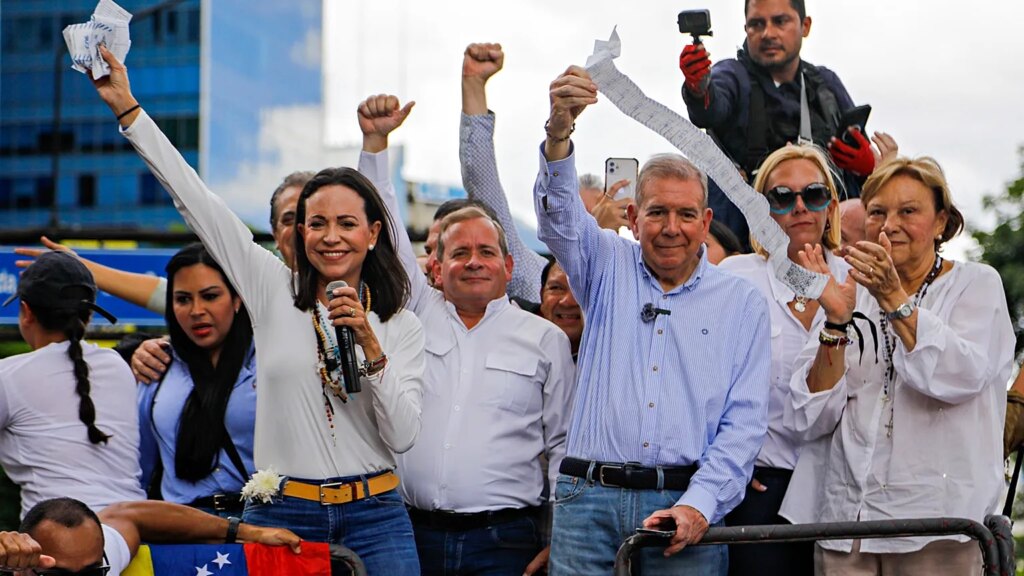
On Monday, the European Commission rejected recognizing Rodríguez as a legitimate head of state, citing the 2024 presidential election results where opposition leader Edmundo González won decisively, according to official tallies. González was supported by María Corina Machado, Nobel Peace Prize laureate, whom Trump has already dismissed as a viable successor.
Both González and Machado presently reside in exile.
«It is important to note that Nicolás Maduro lacked the legitimacy of a democratically elected leader, and therefore recent events open a pathway for a democratic transition led by the Venezuelan people,» stated Paula Pinho, the Commission’s chief spokesperson, on Monday afternoon.
«We also emphasize, within this same framework, the necessity to respect international law and the UN Charter,» she added.
When pressed by journalists, Pinho declined to comment on the legality of the US intervention, which numerous legal and political analysts have characterized as a violation of state sovereignty. Instead, she underscored the «opportunity for those democratically elected in Venezuela to govern,» clearly referencing González and Machado.
«Ultimately, it’s the Venezuelan people’s right to govern their country, as it is with any nation worldwide,» Pinho remarked. «This principle applies everywhere.»
Subdued condemnation
This statement aligns with the approach of most EU leaders, who emphasize Maduro’s illegitimacy and the democratic potential that his removal presents.
To date, Spain’s Pedro Sánchez has been the most outspoken critic of the US operation, denouncing it as a breach of international law that establishes an «extremely dangerous precedent».
On Monday, French President Emmanuel Macron expressed his disapproval of the «method» chosen by Washington to depose the Venezuelan leader.
«France upholds popular sovereignty, which was demonstrated in 2024,» Macron told his cabinet, according to his spokesperson. «If a transition occurs, then the 2024 winner should have a leading role.»
The public declarations from European capitals have unveiled a considerable rift with the US.
Following the military action, Trump has repeatedly asserted that the US will «control» Venezuela and impose its agenda, showing little regard for a potential democratic transition. On Saturday, Trump stated that Machado lacked the essential «support» and «respect» from Venezuelans to become their head of state.
The Washington Post later revealed that Machado’s receipt of the Nobel Peace Prize alienated Trump, who has openly campaigned to obtain the award himself.
«We are dealing with the officials who were just sworn in,» Trump said to reporters, referring to Rodríguez.
Asked about his expectations for Rodríguez’s administration, Trump made clear that his primary objective is to exploit Venezuela’s oil reserves, which are the largest globally.
«We require complete access,» he stated. «Access not only to the oil but also to other resources in their country that will enable us to rebuild it.»
According to Secretary of State Marco Rubio, the US intends to exercise control through a military «quarantine» of Venezuela’s oil exports, rather than deploying troops on the ground.