
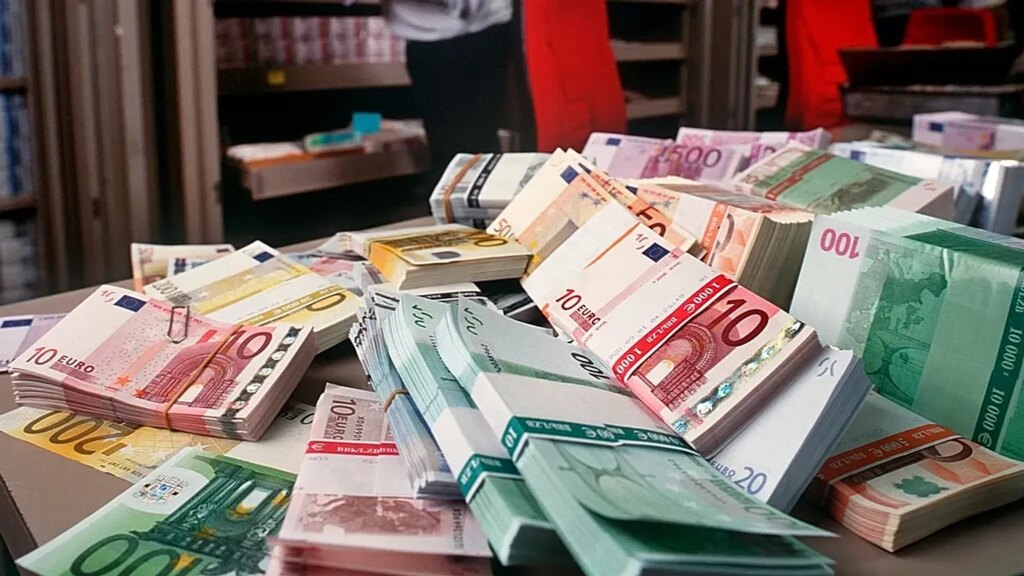
The Balkan nation with a population of 6.5 million joined the EU in 2007 and officially initiated the eurozone accession process in 2018.
From 1 January 2026, Bulgaria will switch from the lev to the euro as its official currency.
This Balkan country of 6.5 million inhabitants joined the European Union in 2007 and formally commenced the eurozone entry process in 2018.
Both Brussels and Sofia anticipate that adopting the euro will enhance the nation’s economic performance and deepen its integration within the EU.
«The most significant impact is the long-term one, essentially increasing trust related to the currency’s strength, purchasing power, foreign investor confidence, and the willingness of stakeholders to buy Bulgarian debt and invest across various sectors,» explained Petar Ganev, Senior Research Fellow at the Institute for Market Economics, in an interview with Euronews.
The euro adoption might also positively influence Bulgaria’s credit rating.
«Credit rating agencies reduce our rating due to the currency board arrangement,» Ganev noted.
«They argue that since our debt is denominated in a foreign currency—the euro—they apply a downgrade. If a country holds debt in a currency that is not its own, the credit rating is negatively affected. This deduction has persisted for 28 years, but it will now be removed.»
Furthermore, he considers that joining the eurozone will only slightly raise inflation rates.
«Inflation is not the primary driver; the main contributors are consumption supported by an inflation-driven budget and record-high loans, particularly for new housing,» he stated.
Political turmoil
Nevertheless, political instability could harm Bulgaria’s economic prospects. The government resigned in mid-December after weeks of anti-corruption demonstrations.
Bulgaria experienced «seven elections within three years, and now the government has resigned again, making it impossible to establish stable long-term governance,» Ganev clarified.
«This creates budgetary issues because timely budget approval becomes unattainable. In four of the last five years, the country started the fiscal year without an approved budget,» he added.
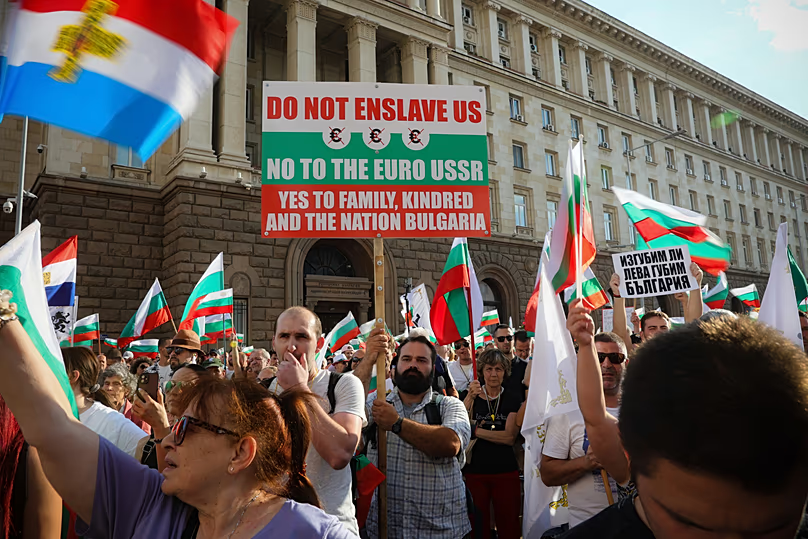
The official fixed exchange rate will be 1.95 lev to €1.
Since August, prices have been shown in both lev and euro, helping consumers and businesses adapt. Furthermore, both currencies will be accepted for cash payments in January to ensure a smooth transition.
Sofia has fulfilled the four Maastricht criteria required for eurozone accession: price stability (with an inflation rate of 2.7% in 2024), responsible public finances (public debt and deficit at 24% and 3% of GDP respectively in 2024), exchange rate stability, and long-term interest rate stability.
In 2024, Bulgaria ranked as the EU’s poorest country per GDP per capita.
Additionally, it remains the EU member state with the highest poverty rate, with over 21% of the population living below the poverty threshold.