
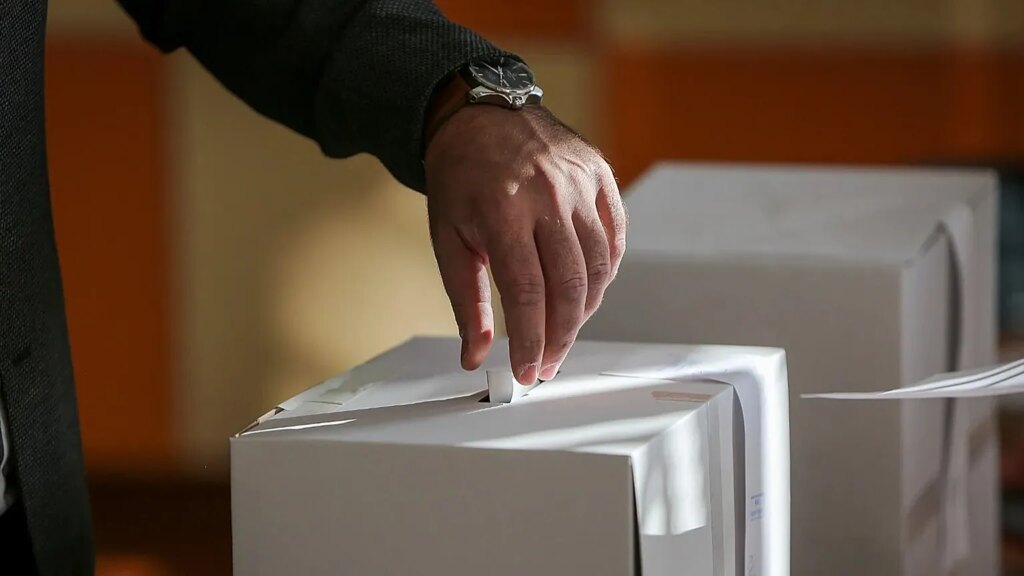
Voters across Europe face significant decisions at the ballot box in the year ahead. Euronews reviews the major electoral challenges confronting the EU and beyond in 2026.
2025 proved to be a crucial year marked by high-impact elections throughout the European Union.
Romania was targeted by coordinated foreign influence campaigns on social media, whereas Poland’s Prime Minister Donald Tusk did not manage to solidify his party’s position against conservative opponents in the presidential contest.
Meanwhile, the Christian Democrats regained control in Germany, and right-wing billionaire Andrej Babiš secured re-election in the Czech Republic.
Now, as 2026 begins, the EU remains embroiled in the ongoing conflict following Russia’s invasion of Ukraine on its eastern border. With divisions among member states on the best way to aid Kyiv and growing tensions between the EU and the US, the approaching elections have the potential to alter Europe’s political and geopolitical dynamics once again.
Euronews outlines the main electoral events to watch for within the EU this coming year.
Hungary: Is the Orbán era drawing to a close?
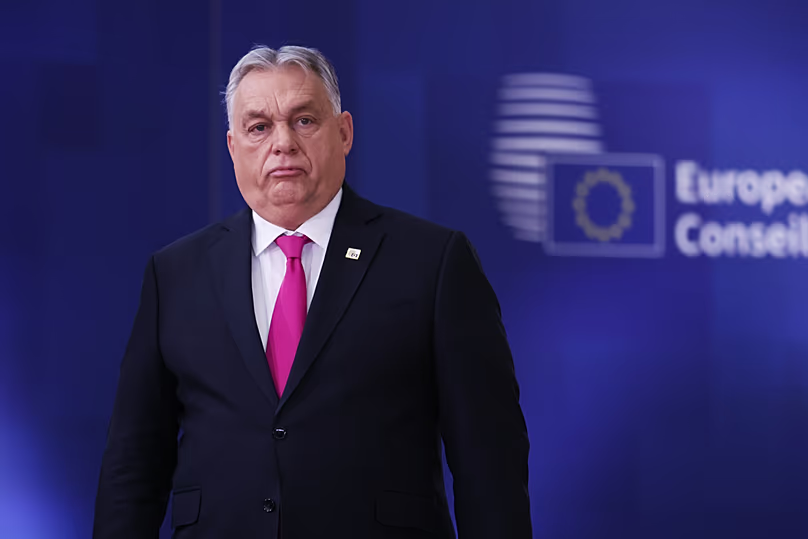
2026 may mark the conclusion of the longest uninterrupted tenure in power within the EU.
Viktor Orbán initially served as Hungary’s prime minister from 1998 to 2002 and has held office continuously since his re-election in 2010. In his bid for a sixth term, he confronts a formidable opponent: Péter Magyar, a former Fidesz insider who has become an opposition leader.
Although Orbán’s Fidesz party and Magyar’s Tisza party share similar positions on societal matters like LGBTQ+ rights and immigration, Magyar is emphasizing the need to boost Hungarians’ purchasing power—a figure that remains among the lowest in Europe—as well as to improve relations with Brussels. The European Union conditions tens of millions in cohesion funds on compliance with the rule of law.
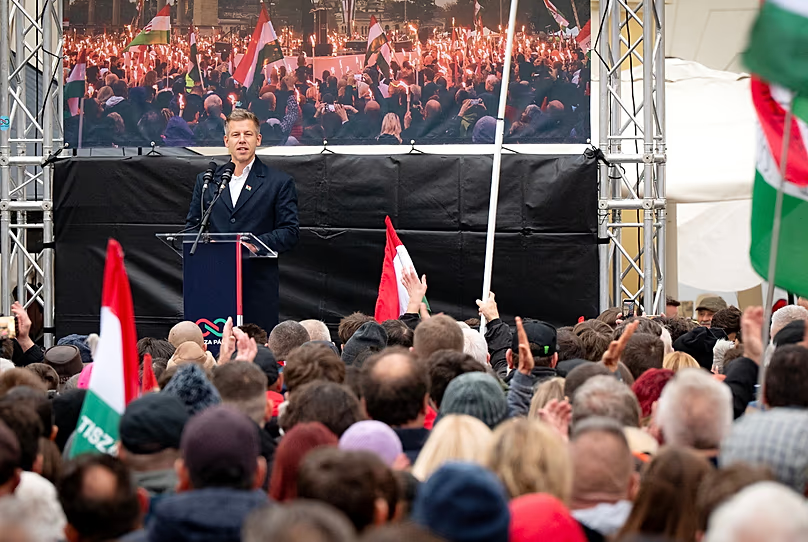
Magyar’s message seems to resonate, with recent polls placing Tisza 13 points ahead. Regardless of the result, this election could have far-reaching consequences beyond Hungary.
Orbán leads Europe’s national-conservative faction, closely aligning with the worldview of US President Donald Trump and openly opposing mainstream EU stances on migration, democratic norms, and especially the Ukraine conflict.
Budapest’s hesitation to impose sanctions on Moscow or extend support to Kyiv has intensified rifts within the bloc. A leadership change could significantly alter power relations within the European Council at a critical juncture for Ukraine’s prospects.
Spain, Germany, France, and Italy: Regional votes as indicators for national governments
Four of the EU’s major powers are preparing for regional and municipal elections that will reveal the extent of far-right influence and serve as a measure of public distrust towards governments in Madrid, Berlin, Paris, and Rome.
In Spain, the socialist PSOE party led by Prime Minister Pedro Sánchez is reeling from a historic loss in the Extremadura regional elections on 21 December, suffering its worst defeat in what was a long-standing stronghold.
Simultaneously, Sánchez’s governing coalition in Madrid is struggling amid multiple corruption scandals and is facing difficulties passing a budget for the third year running.
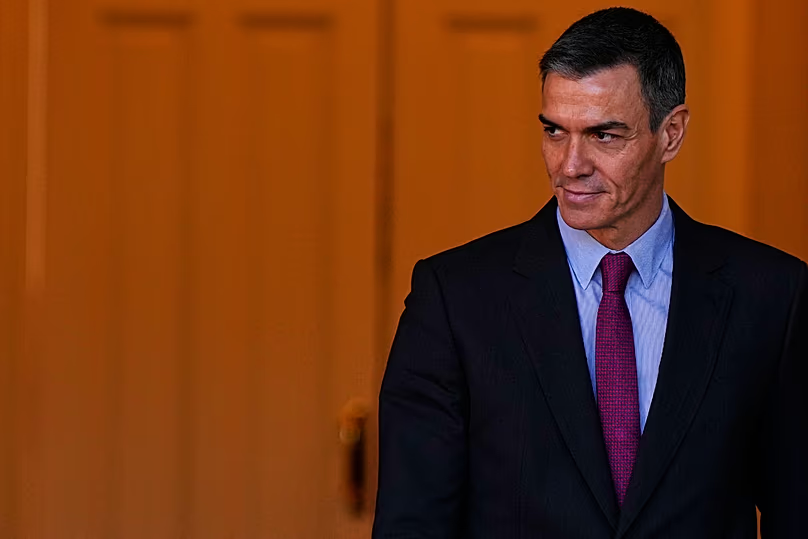
Upcoming regional elections in Aragon (8 February), Castilla y León (15 March), and Andalusia—the largest region in Spain by area and population—on 30 June will be critical for both PSOE and the centre-right People’s Party (PP).
The key issue will be whether the PP can establish majorities ahead of the 2027 general election without relying on the far-right Vox party’s support.
On 15 and 22 March, French voters will elect mayors nationwide. Like in Spain, these elections will serve as an indicator ahead of the 2027 presidential vote.
France is contending with a political crisis marked by persistent government instability, record-low public approval of President Emmanuel Macron, and a continuing rise in the far-right National Rally (RN), despite its leader Marine Le Pen being barred from running.
In Italy, municipal elections in key cities such as Rome, Milan, Bologna, and Turin were postponed due to the pandemic and rescheduled for spring 2027. Instead, voters will participate in 2026 elections in fewer cities, including Venice, Reggio Calabria, Arezzo, Andria, and Pistoia.
Additionally, Italians will vote on a referendum regarding constitutional reform of the justice system. This referendum, slated for spring but without a confirmed date, will be regarded as a test of public support for Meloni’s coalition before the 2027 general election.
Several German states will hold regional elections: Baden-Württemberg and Rhineland-Palatinate in March, and Saxony-Anhalt, Berlin, and Mecklenburg-Vorpommern in September.
These elections will assess the popularity of Chancellor Friedrich Merz, in office since May, and also gauge the rise of the far right in both the deindustrialized east and the comparatively affluent west.
Sweden: The looming threat of foreign influence
Ahead of the general election in September, Prime Minister Ulf Kristersson posted on X that “when Sweden goes to the polls next year, it must do so amid a serious security situation that requires caution.”

Kristersson leads a coalition encompassing centrists, socialists, liberals, and Christian Democrats, holding polling numbers comparable to results in 2023 elections.
Since then, Sweden has seen an increase in violent crime, fueling right-wing rhetoric prevalent across Europe, where such incidents are frequently emphasized to support anti-immigration narratives.
However, the “serious security situation” of concern to the prime minister refers to the threat of foreign election interference.
In November, Sweden’s defence ministry announced enhancements to its cybersecurity capabilities, remaining vigilant against election meddling similar to that experienced in Germany. Germany has asserted that Russia will “pay a price” for its “hybrid attacks” targeting electoral infrastructure this year.
Such interference efforts tend to benefit parties critical of immigration, skeptical about EU integration, and ambiguous towards Moscow, a pattern embodied by the Sweden Democrats.
The Swedish election will be viewed as a measure of the EU’s democratic resilience following the adoption of the Digital Services Act (DSA), which combats election manipulation on social media, alongside the bloc’s forthcoming Democracy Shield initiative.
Denmark: Facing internal and external pressures
After losing Copenhagen for the first time since 1938, Mette Frederiksen and her Social Democrats prepare to face a national vote.
Analysts suggest Frederiksen’s hardline immigration policies have not yielded the desired results. Current polls indicate the prime minister, in office since 2019, risks losing her position, while the ruling coalition—comprising parties across the centre-left to centre-right—is increasingly unstable.

Denmark is also addressing concerns over its territorial sovereignty. Earlier this month, Donald Trump reiterated expansionist ambitions regarding Greenland, an autonomous part of the Kingdom of Denmark.
The election must be held before October 2026, though an official date has yet to be declared.
Bulgaria: Without a government, but euro adoption is imminent
From 1 January 2026, Bulgaria will officially transition to the euro currency. Yet, the country is grappling with political instability since the government resigned in November amid widespread demonstrations protesting corruption and oligarchic influence.
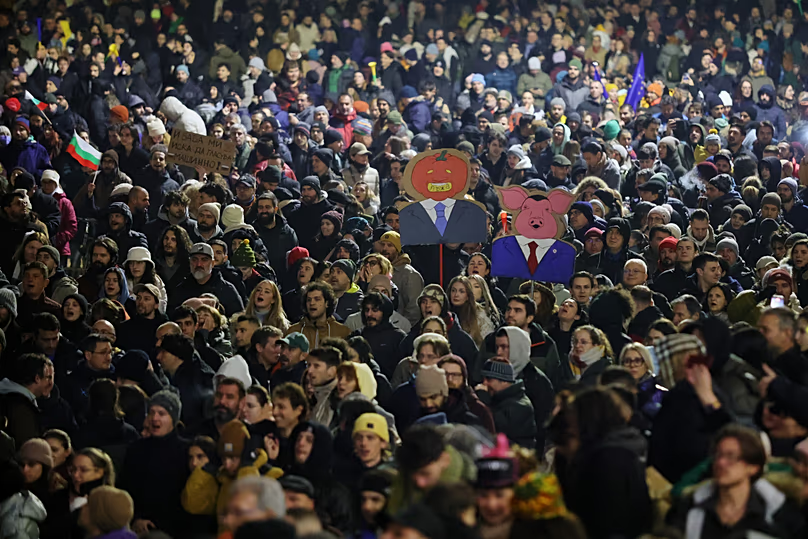
An 8 November presidential election is already on the calendar, and a parliamentary vote is anticipated to resolve the ongoing political deadlock.
Latvia and Slovenia: Prospective new leadership
Slovenia and Latvia have parliamentary elections planned for March and October respectively.
In Slovenia, polls show the centre-right Democratic Party slightly ahead of the incumbent centre-left Freedom Movement, led by Prime Minister Robert Golob. Analysts warn that forming a new government post-election may be complex, given the entry of several new, smaller parties into the race.
In Latvia, the vote will determine the successor to the current centre-right coalition government headed by Prime Minister Evika Siliņa. Her party currently holds second place in the polls, just behind the conservative National Alliance.
Earlier in 2025, local elections exposed vulnerabilities in Latvia’s voting IT system, but the Central Election Commission confirms these issues have been resolved ahead of the October elections.
US, Brazil, Israel, and Russia: Global votes impacting the EU
The EU’s future is also influenced beyond its borders.
In November 2026, US voters will participate in midterm Congressional elections, selecting members of the House of Representatives and one-third of the Senate seats.
The results will likely influence the Trump administration’s domestic and international authority.
Europe will monitor these developments closely, especially after the US administration released a National Security Strategy pledging to “cultivate resistance to Europe’s current trajectory within European nations” to prevent its “civilisational decline.”
Brazilian citizens will vote in October 2026, with current President Luiz Inácio Lula da Silva—who leads in polls—seeking re-election.
The EU’s stake in this election concerns the future of the Mercosur agreement, a two-decade-old free trade pact.
Israel is also set to hold parliamentary elections and a prime ministerial vote, potentially altering power balances that have shaped regional conflicts.
Lastly, Russia will conduct parliamentary elections expected to be manipulated in favor of President Vladimir Putin, with opposition parties heavily suppressed and media freedom increasingly restricted.
Follow Euronews in 2026 for comprehensive coverage of political developments across the European Union and global affairs.