
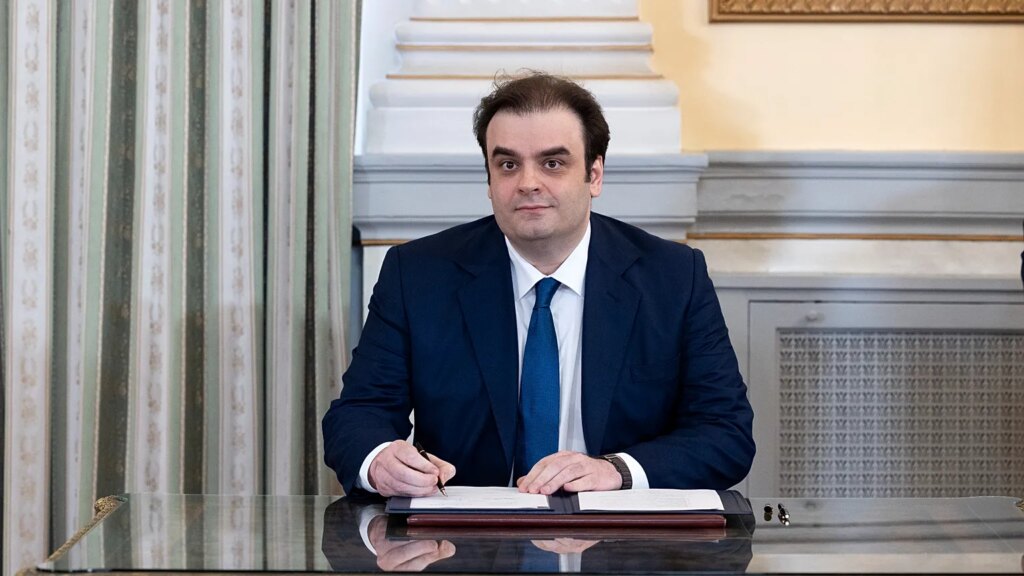
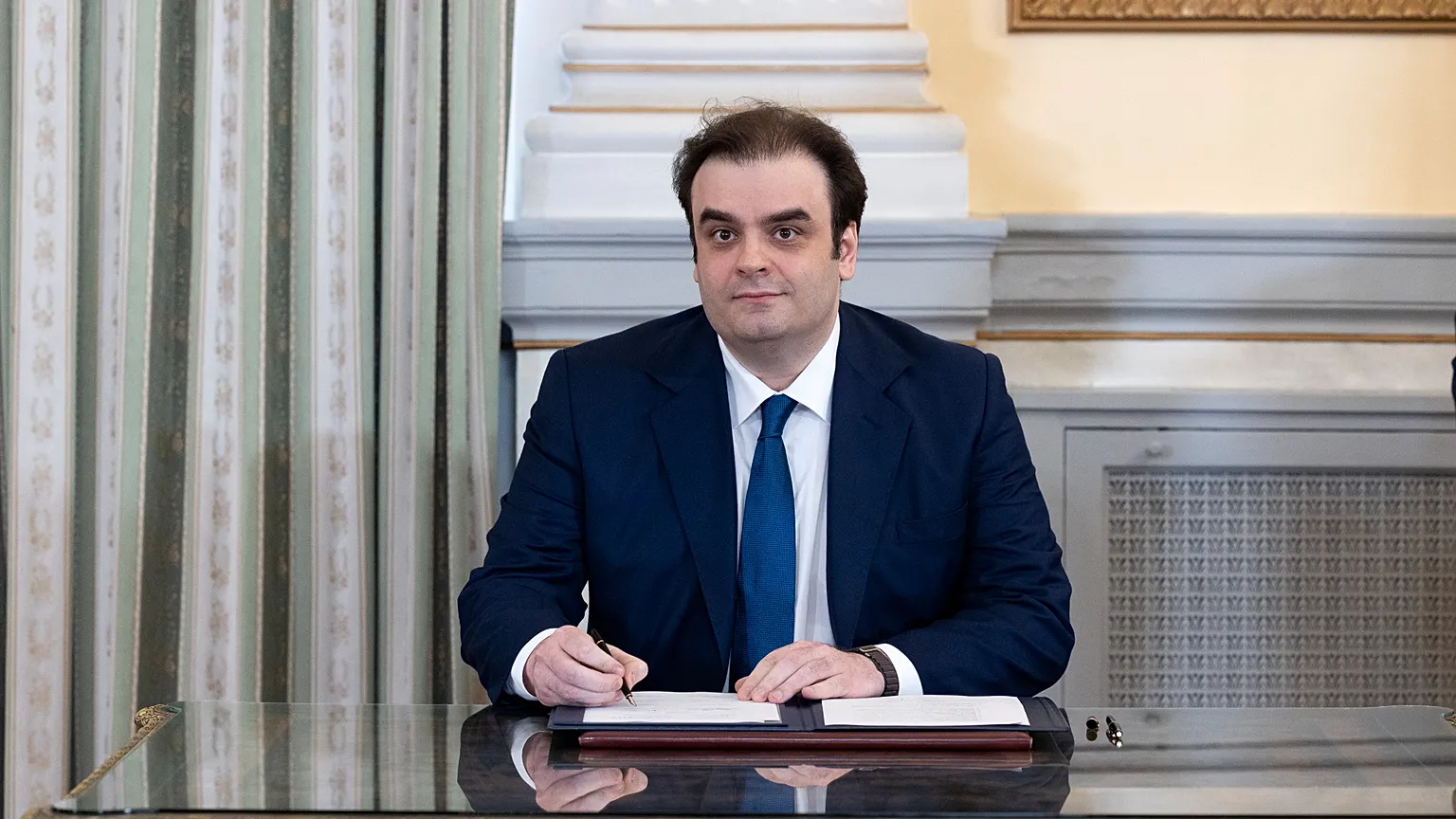
Kyriakos Pierrakakis appointed head of Eurogroup as recognition of Greece’s reform efforts. Belgian contender enmeshed in dispute over Ukraine reparations loan. The Eurogroup manages key economic and financial matters.
On Thursday, Greek Finance Minister Kyriakos Pierrakakis was chosen president of the Eurogroup, marking acknowledgement of the nation’s recovery a decade after Greece nearly exited the eurozone amid a severe economic crisis.
According to sources close to the situation who spoke with Euronews, ministers valued Greece’s reform agenda and regarded the Greek finance minister as a positive figure for the union.
Pierrakakis’s opponent, Belgian Budget Minister Vincent Van Peteghem, whose candidacy was impacted by a political clash over a reparations loan for Ukraine—opposed by Belgium but supported by most member states—faced heightened challenges.
A diplomat familiar with the discussions told Euronews that while Van Peteghem commanded respect due to his handling of financial portfolios during Belgium’s rotating EU presidency, Pierrakakis emerged as the candidate capable of uniting consensus.
Earlier, another diplomat indicated a closely contested election, but ultimately the Greek nominee secured a significant majority.
He will assume office on 12 December, succeeding former chairman Paschal Donohoe, who, despite being re-elected this year, stepped down suddenly to take the leading role at the World Bank in Washington.
The Eurogroup convenes finance ministers to address critical economic issues, including the EU’s capital markets and the investment union—both vital to Europe’s economy, which faces challenges from China’s expanding global market share and US tariffs.
The new Greek president will serve a term of 2.5 years and also chair the European Stability Mechanism, overseeing the EU’s bailout fund.
Following his election, Pierrakakis expressed gratitude to eurozone ministers and outlined his political strategy, aiming to bridge divisions between Europe’s periphery and core members like Germany.
“The old divide between north and south, east and west, the so-called frugals versus the so-called spenders, seems to have diminished. This is because the challenges we face are largely shared,” he stated.
Pierrakakis also supported the Draghi report, authored by former ECB president Mario Draghi, which calls for significant reforms in the EU to avoid prolonged decline. “We understand the actions needed,” Pierrakakis added.
“My focus will be on advancing the agendas of the Savings and Investment Union, the single market, the digital euro, as well as reinforcing the Eurozone’s fiscal foundations while promoting economic growth,” he concluded.