
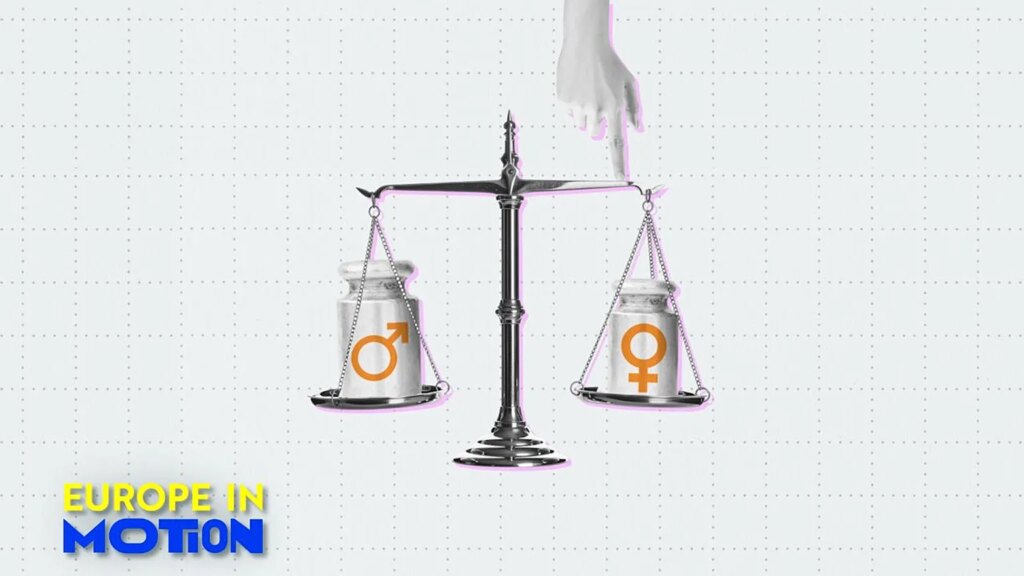
Despite new statistics revealing that full gender equality in decision-making remains out of reach, Spain and Ireland have shown the greatest advancements over the past decade.
Unequal distribution of power remains the primary barrier to gender equality within the European Union, notwithstanding notable progress made over the last ten years, according to the EIGE’s Gender Equality Index 2025.
Within the EU, the scores evaluating the power category—assessing the balance between men and women in decision-making roles across political, economic, and social sectors—vary significantly, from 80.3 points in Sweden down to 12.9 points in Hungary.
The Gender Equality Index scores both the EU and its member states on a scale of 0 to 100, where 100 signifies full gender equality between women and men.
During the previous decade, Spain, Ireland, France, and Italy have notably reduced gender disparities in leadership positions.
In which areas of the political arena do women experience the greatest inequality?
Women typically constitute a minority in parliaments and governments across all governance levels, as well as within the largest corporations and social institutions.
In 2024, men represented approximately 67% of national parliament members across EU countries, while women comprised 33%.
Last year, women were underrepresented among board members in the largest publicly listed EU companies by roughly half: 34% were women compared to 66% men.
Research indicates that women face challenges in obtaining campaign financing and often possess less sway over candidate selection compared to their male counterparts.
In the European Parliament elections, 10 EU countries implemented gender quotas for candidates, with Spain, France, and Croatia meeting their female MEP quotas.
Gender stereotypes, violence, and discrimination further deter women from entering or maintaining positions in public office, which weakens democratic representation and progress.
Among 2,600 locally elected female officials surveyed across 31 European nations, around one-third reported experiencing violence during their political tenure.
When asked about the effects of such violence on their professional and personal lives, these women cited a variety of consequences: feeling unsafe (41%), adverse impacts on private life (30%), self-censorship regarding political disagreements (21%), and withdrawal from public roles (12%).
The Gender Inequality Index authors highlighted that «gender stereotypes are especially relevant to the power domain, shaping public perceptions about who is deemed suitable for political offices or specific societal roles.»
In most member states, a larger proportion of men than women agree with the notion that men in politics are more ambitious than women.
The largest gender disparity in agreement is observed among respondents aged 15 to 24: 48% of young men concur, while only 34% of young women share this view.
Within the EU, 17% of women and 22% of men believe women lack the essential qualities and skills required for political leadership roles.
Support for this belief varies considerably across the EU, ranging from 49% agreement in Hungary to just 2% in the Netherlands.