
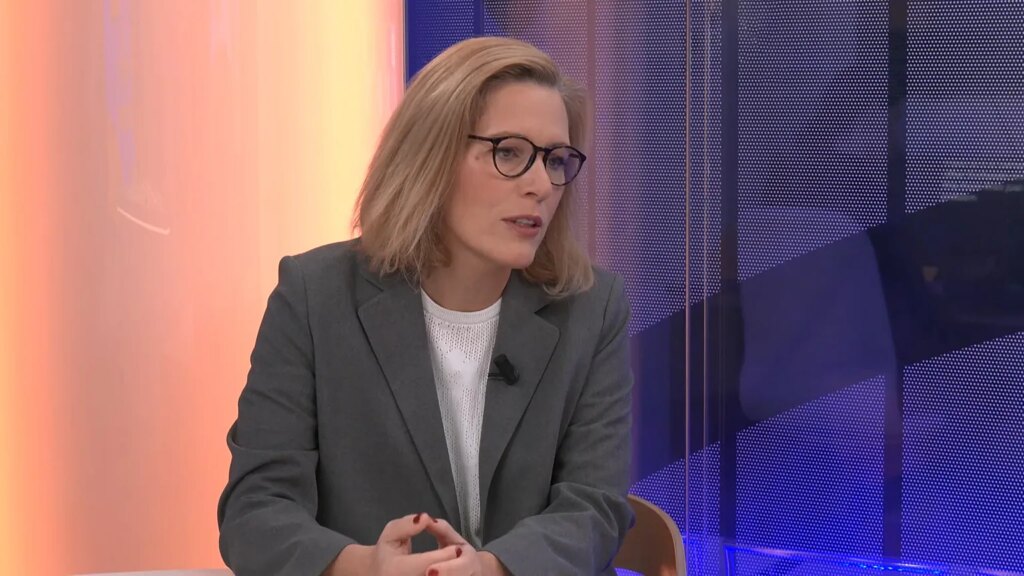
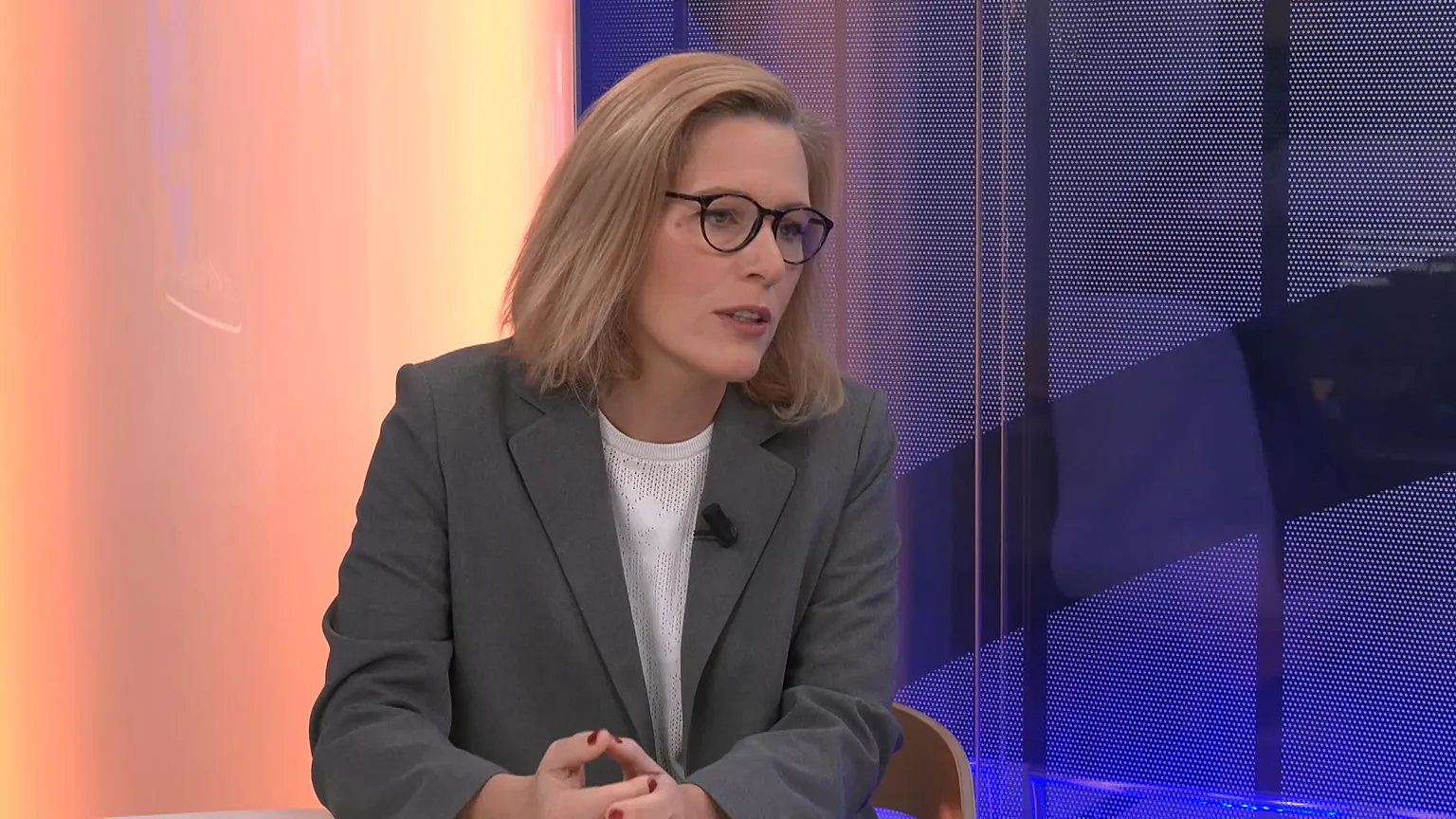
Ine Van Wymersch, Belgium’s inaugural National Drug Commissioner, tells Euronews that the European Union must intensify its efforts against encrypted messaging platforms that permit drug traffickers to manage their illicit activities.
The European Union holds significant regulatory authority that can aid in disrupting drug trafficking by compelling encrypted communication providers to collaborate with law enforcement agencies, according to Belgium’s National Drug Commissioner, Ine Van Wymersch, during an interview on Euronews’ program 12 Minutes With.
“There is a pressing need for European institutions to apply stronger pressure on these major companies that offer encrypted communication tools in our markets: they must be mandated to work with law enforcement,” Van Wymersch stated.
“These platforms enable not only legitimate communications but also facilitate illegal interactions,” she elaborated. “Criminal organisations exploit the reluctance of these companies to cooperate with authorities.”
Drug trafficking groups employ both legitimate and illicit encrypted services to organise their operations.
Recently, Europol, the EU’s law enforcement agency, dismantled extensive criminal networks active across Europe by leveraging intelligence gathered from known criminal messaging platforms like Sky ECC, Encrochat, and ANOM.
The agency regards these services as “effective tools” for investigators, given that both leadership and logistical functions of criminal organisations rely heavily on them.
Belgian authorities have cracked billions of messages on Sky ECC and Encrochat in the past, resulting in over 100 convictions and significant advances in combating drug trade.
Additionally, Van Wymersch identified commercial apps including Telegram and Signal as possible targets for upcoming enforcement actions.
Neither Telegram nor Signal currently fall under the EU’s Digital Services Act (DSA) category of ‘Very Large Online Platforms,’ as both claim under 45 million monthly users within the EU.
This status exempts them from adhering to the most stringent regulations concerning illegal content.
Telegram — whose CEO, Pavel Durov, was detained in France last year amid an investigation involving drug-related offenses on the app — has established its legal base in Belgium, making the Belgian telecom regulator, BIPT, responsible for its DSA compliance oversight.
Van Wymersch addressed criticism from technology leaders and former US President Donald Trump, who argue that EU regulations on tech platforms infringe on freedom of speech and expression.
“Permitting criminals to freely communicate in a digital realm ultimately undermines our liberty,” she asserted.
Our adversary lacks ‘values or ethical standards’
For two years, Van Wymersch has led Belgium’s efforts to disrupt the logistical frameworks supporting drug trafficking networks as the country’s Drug Commissioner.
“Organised crime may present many faces but shares a single core — money, which constitutes their criminal assets,” she explained to Euronews.
She noted Belgium’s enforcement actions are yielding results despite a notable rise in drug-related violence in Brussels and Antwerp, the nation’s two largest cities.
“Their anxiety is evident because enforcement targets their criminal assets, which are central to their existence,” Van Wymersch noted.
Key officials involved in Belgium’s crackdown have faced significant personal risk in recent years. An Antwerp investigating judge who warned about Belgium becoming a “narco-state” went into hiding after receiving death threats from drug cartels. Former Justice Minister Vincent Van Quickenborne has been provided protection with his family on two occasions due to similar threats.
Regarding concerns about her personal safety, Van Wymersch acknowledged: “Naivety is not an option. The enemy we confront operates without values or ethical considerations. Therefore, being mindful of security and safety risks is essential.”