
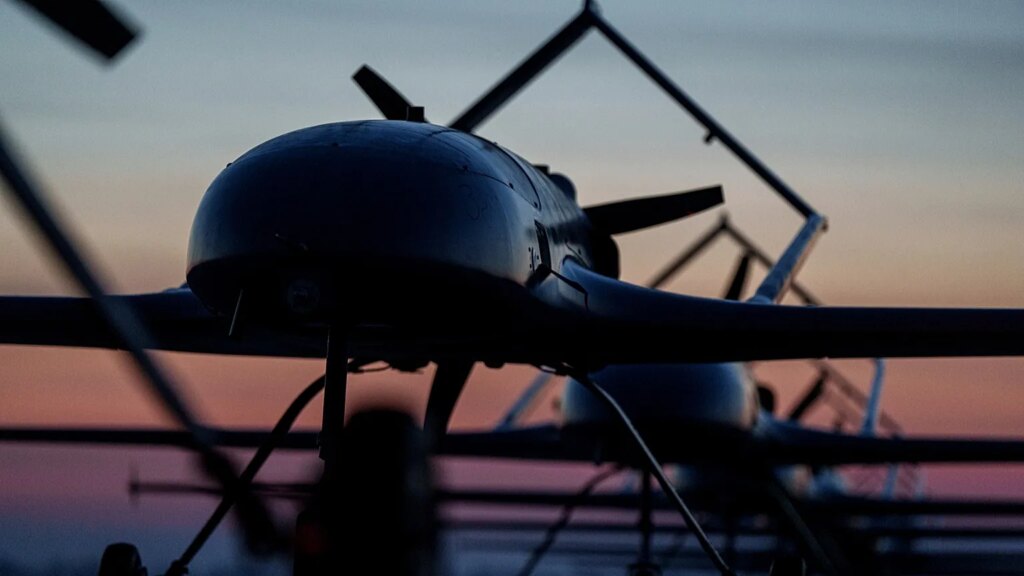
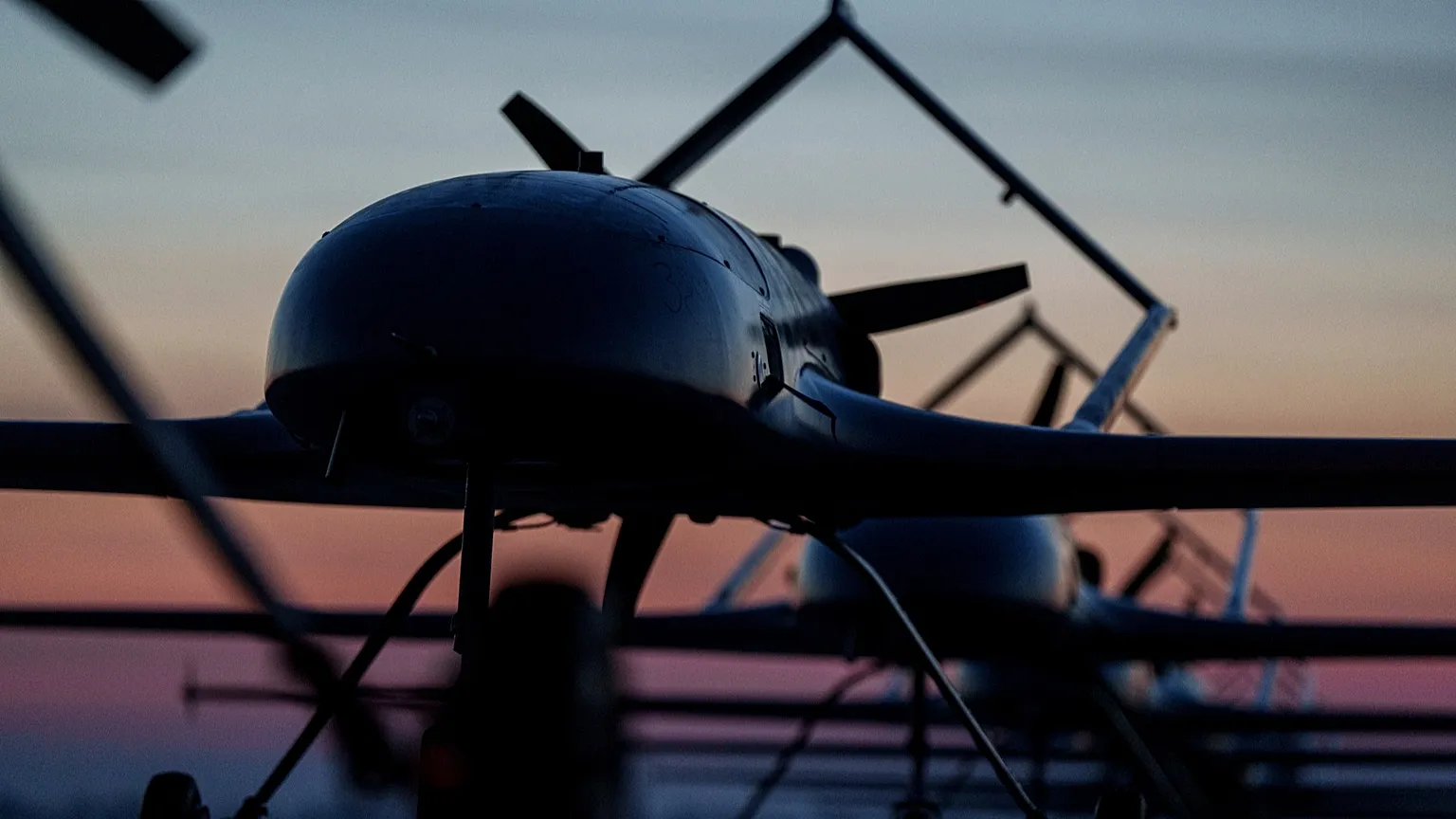
The EU’s newest sanctions round against Russia focuses on 56 military-industrial firms and individuals, encompassing long-range drones and communication networks. Specialists suggest these actions may enhance not only Ukraine’s combat operations but also Europe’s security framework moving forward.
Several defence-associated companies and individuals supporting the Kremlin’s war efforts have been targeted in the EU’s 21st sanctions package against Russia.
 ADVERTISEMENT
  ADVERTISEMENT
“More than 50 military-industrial entities have been included, along with key players in the production of Russia’s long-range drones,” stated EU foreign policy chief Kaja Kallas on Thursday when the sanctions were announced.
“Russia will only come to negotiations to end its unlawful war and halt civilian casualties if sufficient pressure is applied. Sanctions are part of enforcing that pressure.”
Alongside this sanctions package, the EU continues to focus on suppliers of dual-use goods and technology in third countries such as China and India. These components are frequently used in Russian weaponry, including missiles, drones, and tanks.
However, EU authorities and experts are paying particular attention to two recent measures included in the military segment of this package.
These measures comprise more than 30 listings aimed at the entire production and supply chains of the long-range Garpiya drones, plus Russia’s counterpart to the Starlink satellite network, known as Rassvet.
Garpiya
An EU senior official noted that Ukrainian civilians and infrastructure have endured intense Russian bombardments during the full-scale invasion, especially involving long-range attack drones.
After a US-brokered truce expired in May, Russia deployed over 200 long-range drones against Ukraine, striking energy systems, residential zones, and even a kindergarten.
This was the motivation behind the 21st sanctions package’s focused clampdown on manufacturing of long-range drones. Still, as explained by a senior EU official, the approach taken this time is notably distinct.
“Our strategy centered on a specific group of long-range drones, the Garpiyas, mapping effectively the full manufacturing and supply network,” the official explained. “With a single action, we targeted it today with over 30 entries.”
The EU’s sanctions list for this package encompasses 37 new entries targeting companies and individuals directly involved in producing the Garpiya/Garpiya-A1 attack drone.
This includes manufacturers of warheads, rocket motors, launch mechanisms, and other essential components for deploying these long-range weapons.
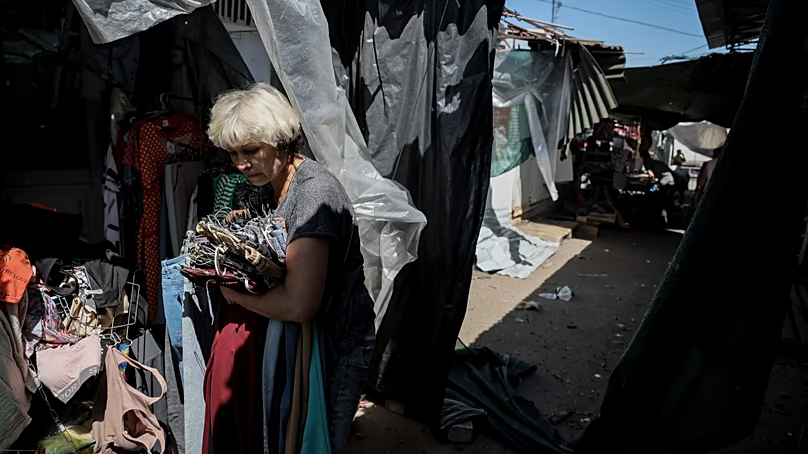
Jacob Funk Kirkegaard, senior fellow at the Bruegel think tank, told Euronews that although he approves of the military objectives of the newest sanctions package, he remains cautious about forecasting its impact.
“Russia operates various types of long-range drones,” he noted. “This doesn’t imply the effort is misplaced. It’s a worthwhile action. However, it should not be assumed that targeting a single model among many produced by Russia will alter significantly the strategic threat towards Ukraine now—or towards Europe in the long term.”
Rassvet
The sanctions package also aims at Russian corporations engaged in the nexus of military technology, electronics, and communications. The senior EU official who spoke to Euronews hinted that the focus includes a particular company and satellite platform.
“One critical area is the manufacturing of a system that Russia is developing as an alternative to Starlink; thus, the Russian Starlink project is included in this package,” they said.
The low-Earth orbit satellite constellation Rassvet, developed by Russian aerospace enterprise Bureau 1440, is commonly described by Russian outlets as a “Starlink alternative,” intending to provide Russians with high-speed internet connectivity.
In March 2026, sixteen satellites were initially deployed, with goals to have 250 satellites operational by 2027 and 900 by 2035.
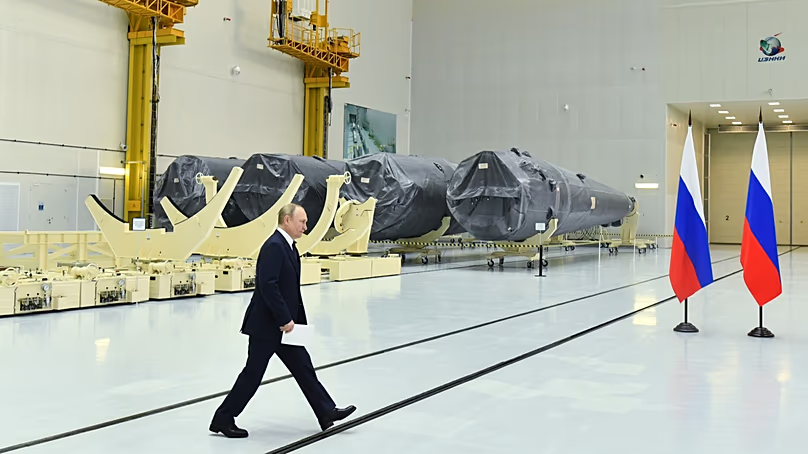
Kirkegaard explained that when Russia lost access to Starlink in February 2026, this had “major consequences for their battlefield effectiveness.”
“Preventing Russia from developing an alternative to Starlink over time is a priority of great importance,” he said—adding that the EU’s decision to target Rassvet could diminish Russia’s battlefield capabilities in Ukraine and reduce its long-term military threat to the EU.
“As the EU and Europe more broadly prepare for a future in which deterring Russia independently becomes essential, denying Russia military capabilities over the next several years is critical for European security.”
More generally regarding aid to Ukraine, Kirkegaard remarked that sanctioning Garpiya drones and Rassvet satellites is effective. Nevertheless, what more substantially strengthens Ukraine in combat is government funding for Ukraine’s long-range drone, ballistic, and cruise missile programs, efforts chiefly supported by the Dutch, German, and Nordic countries.